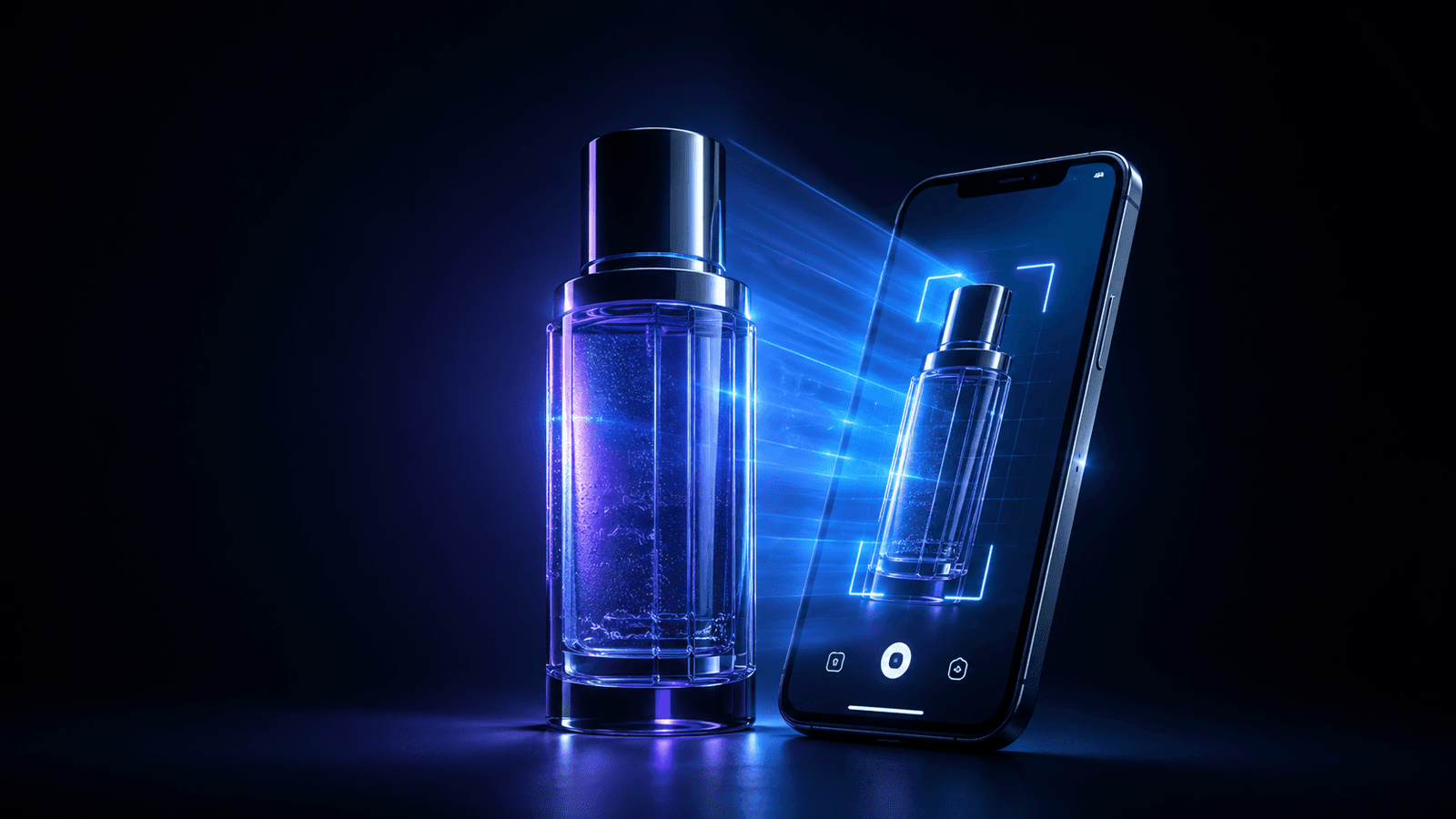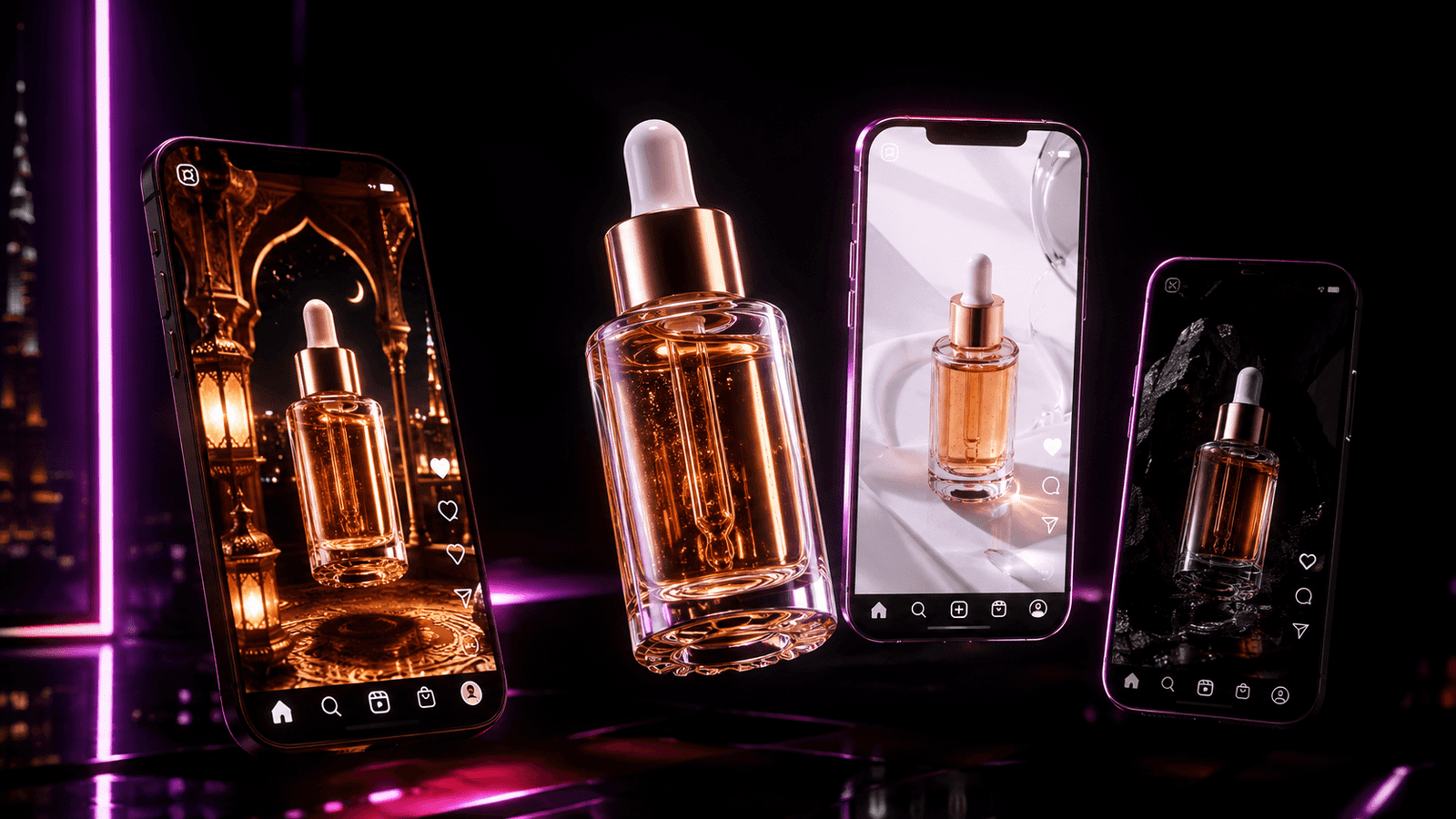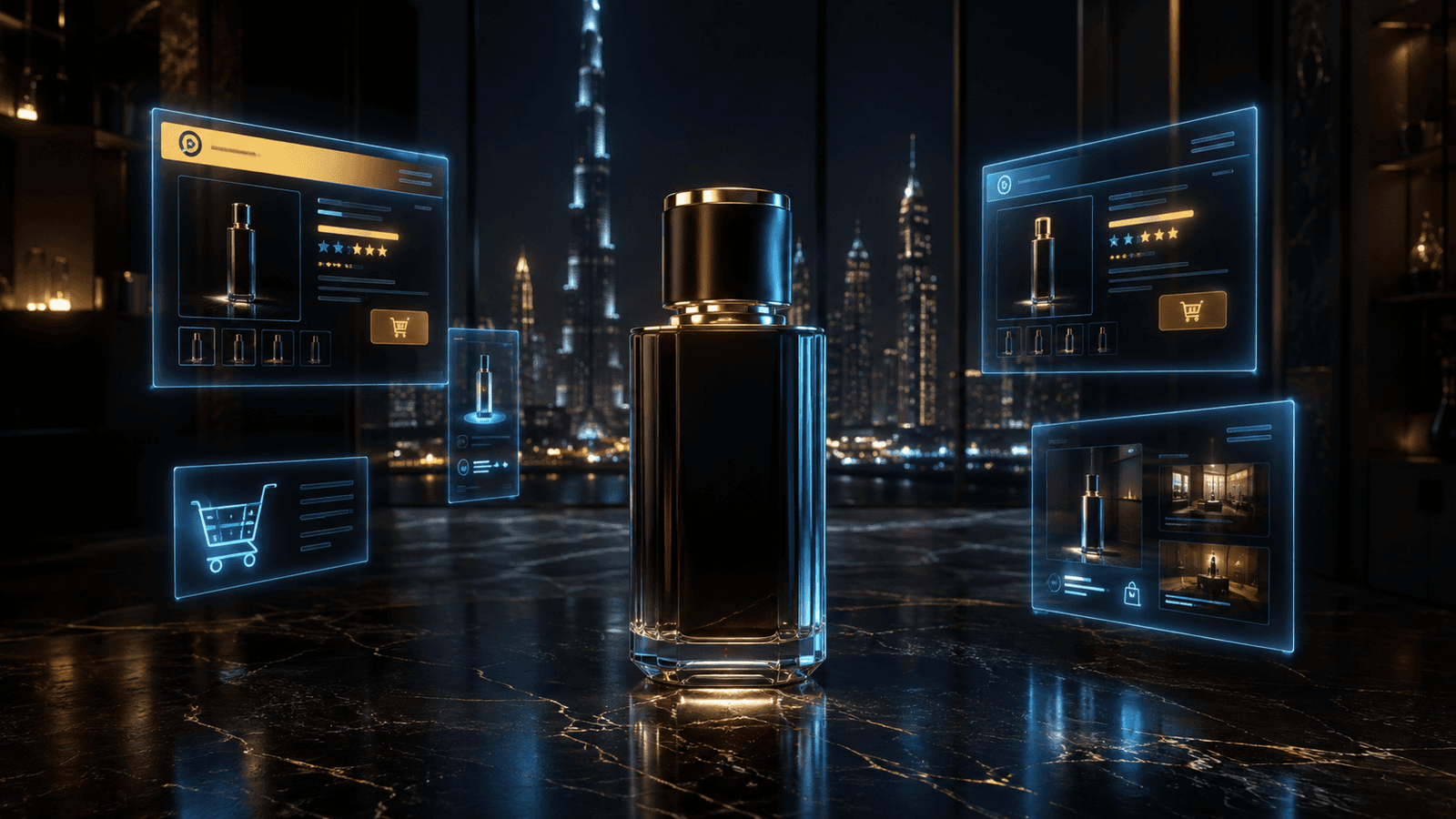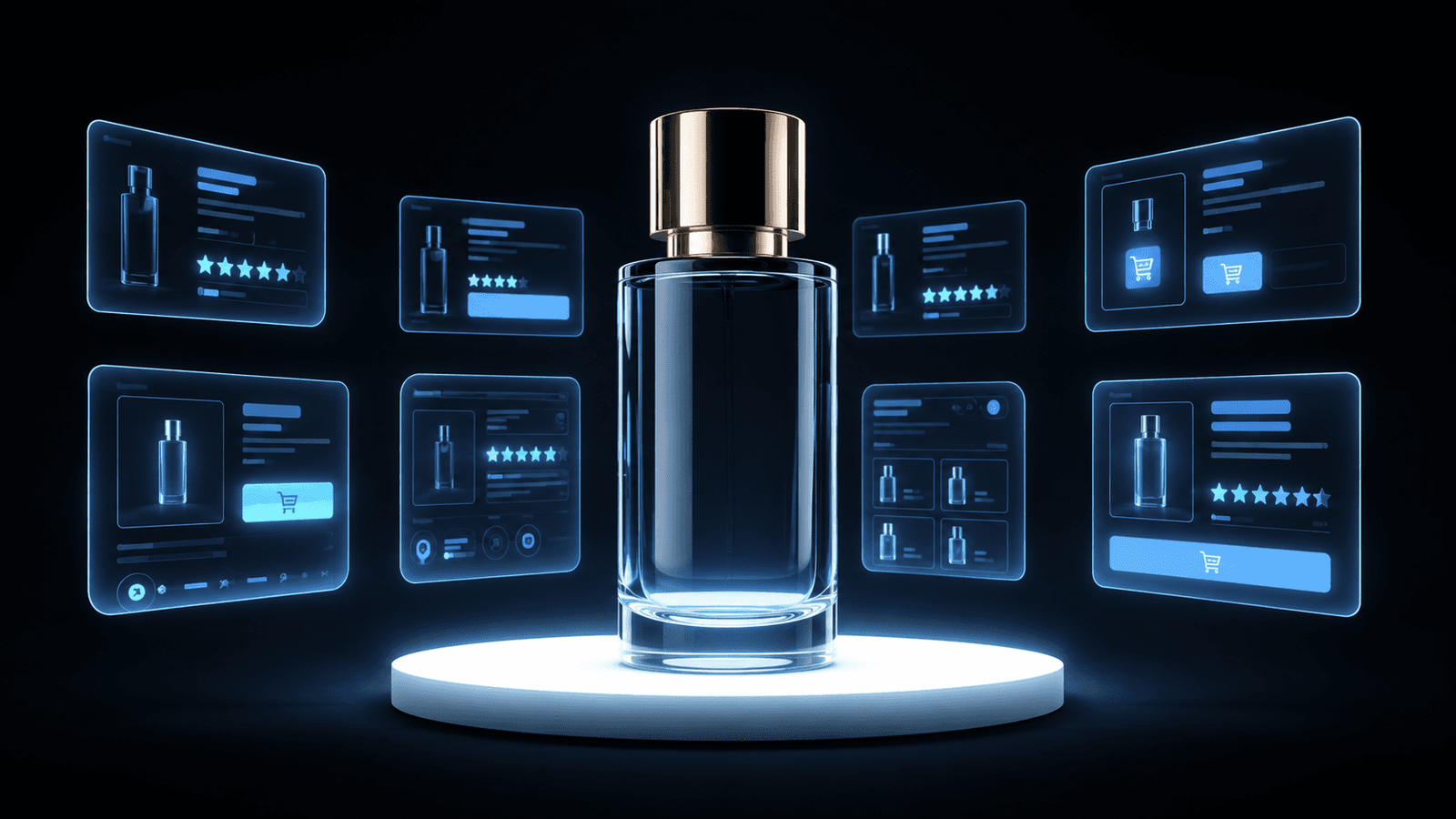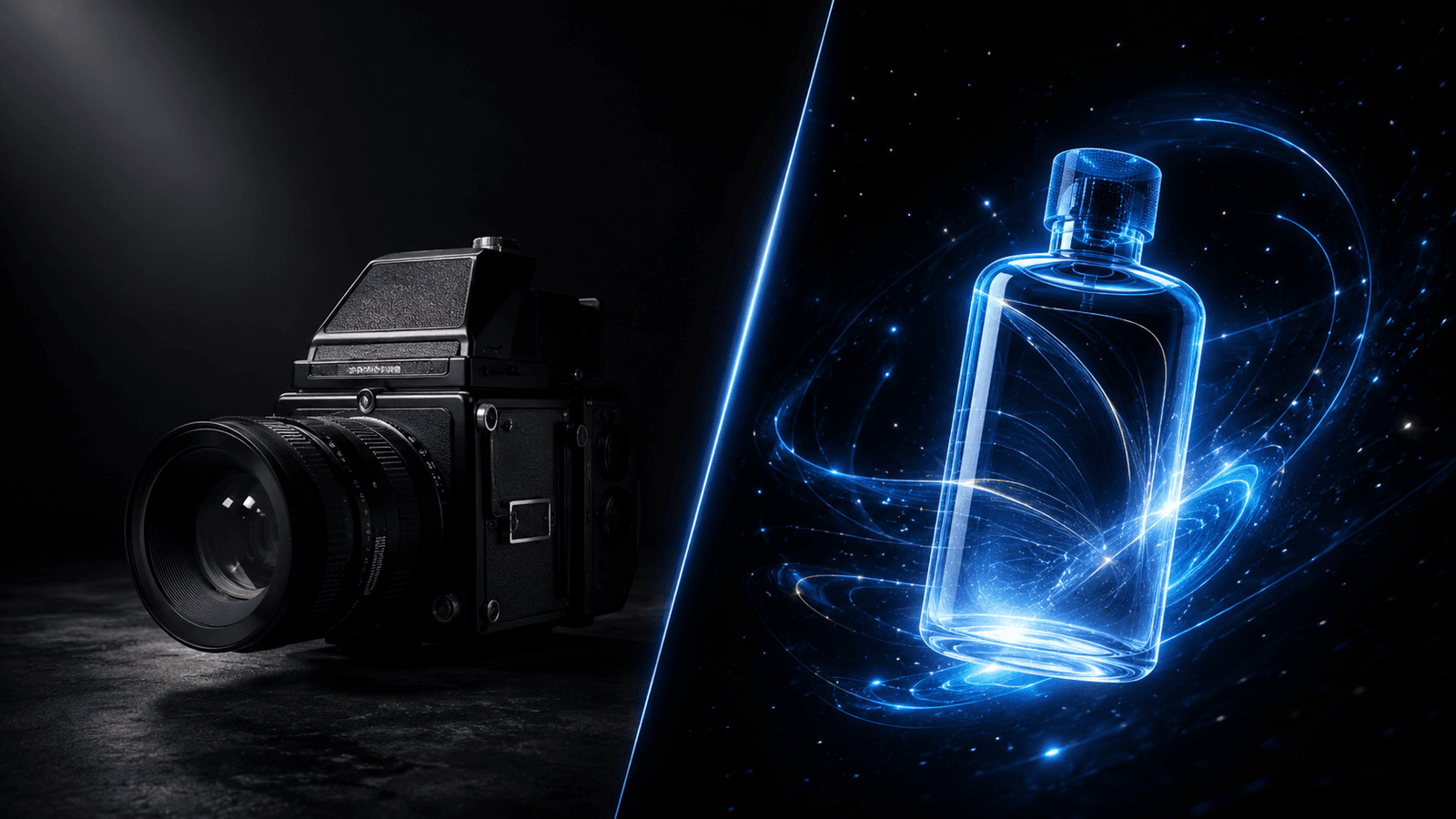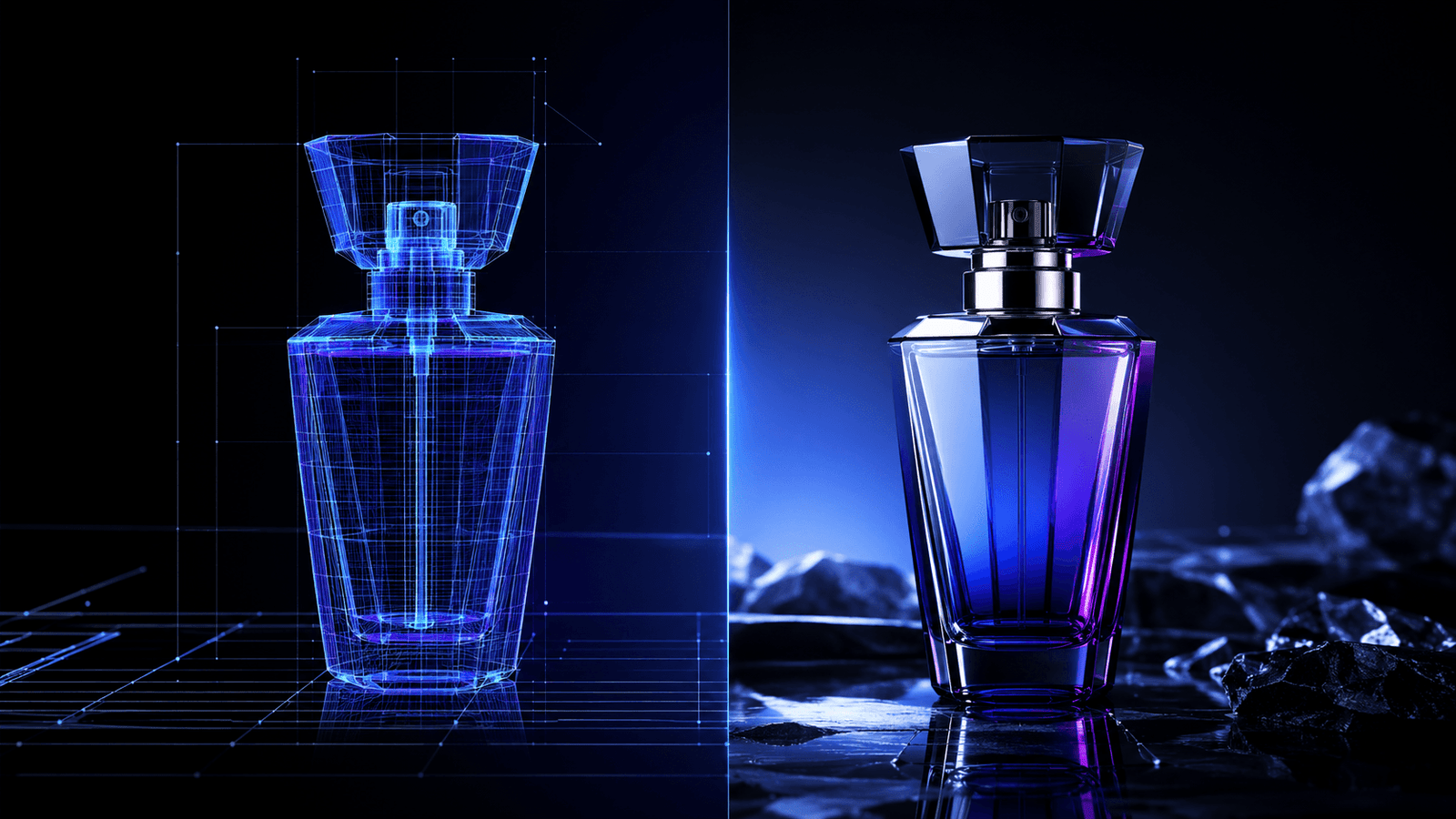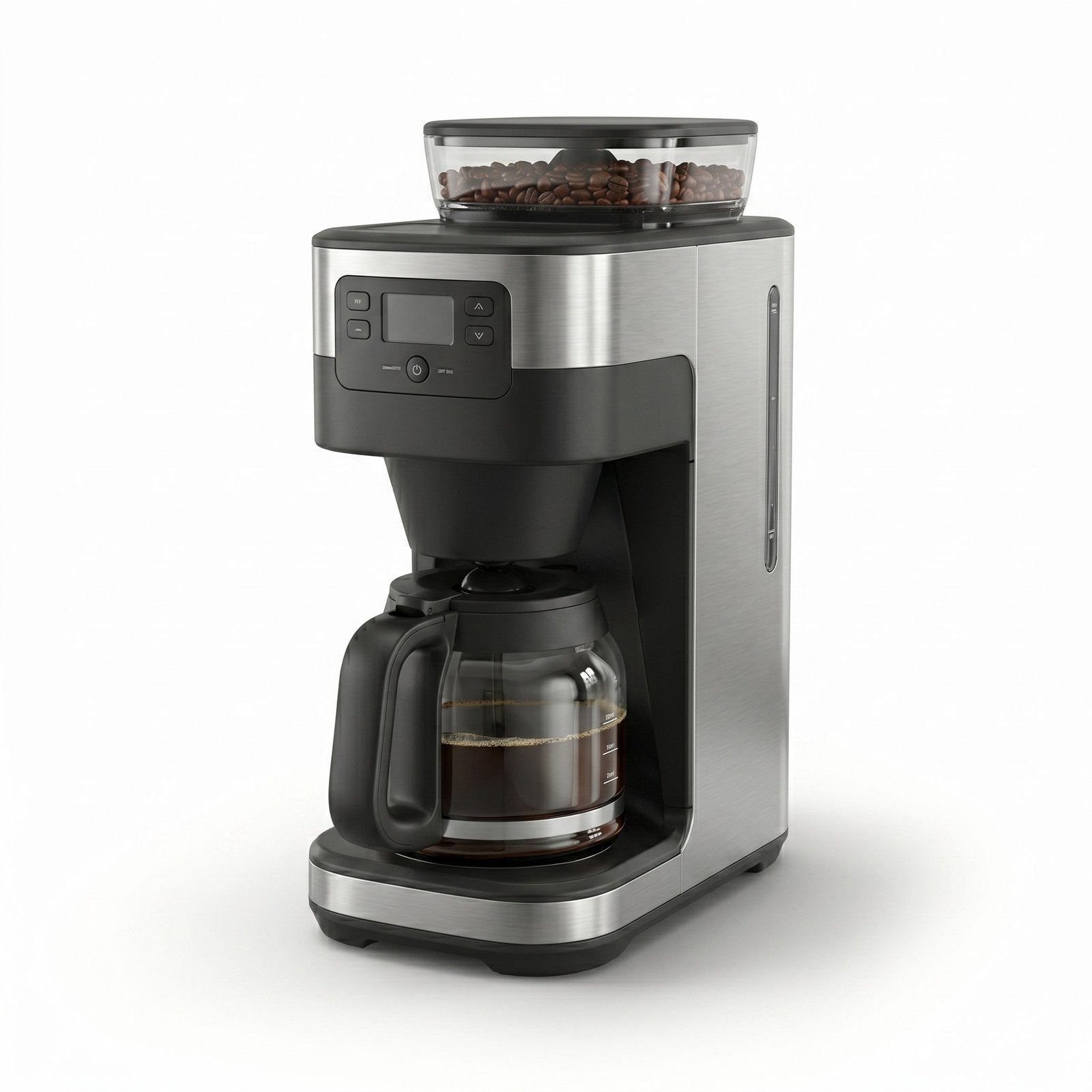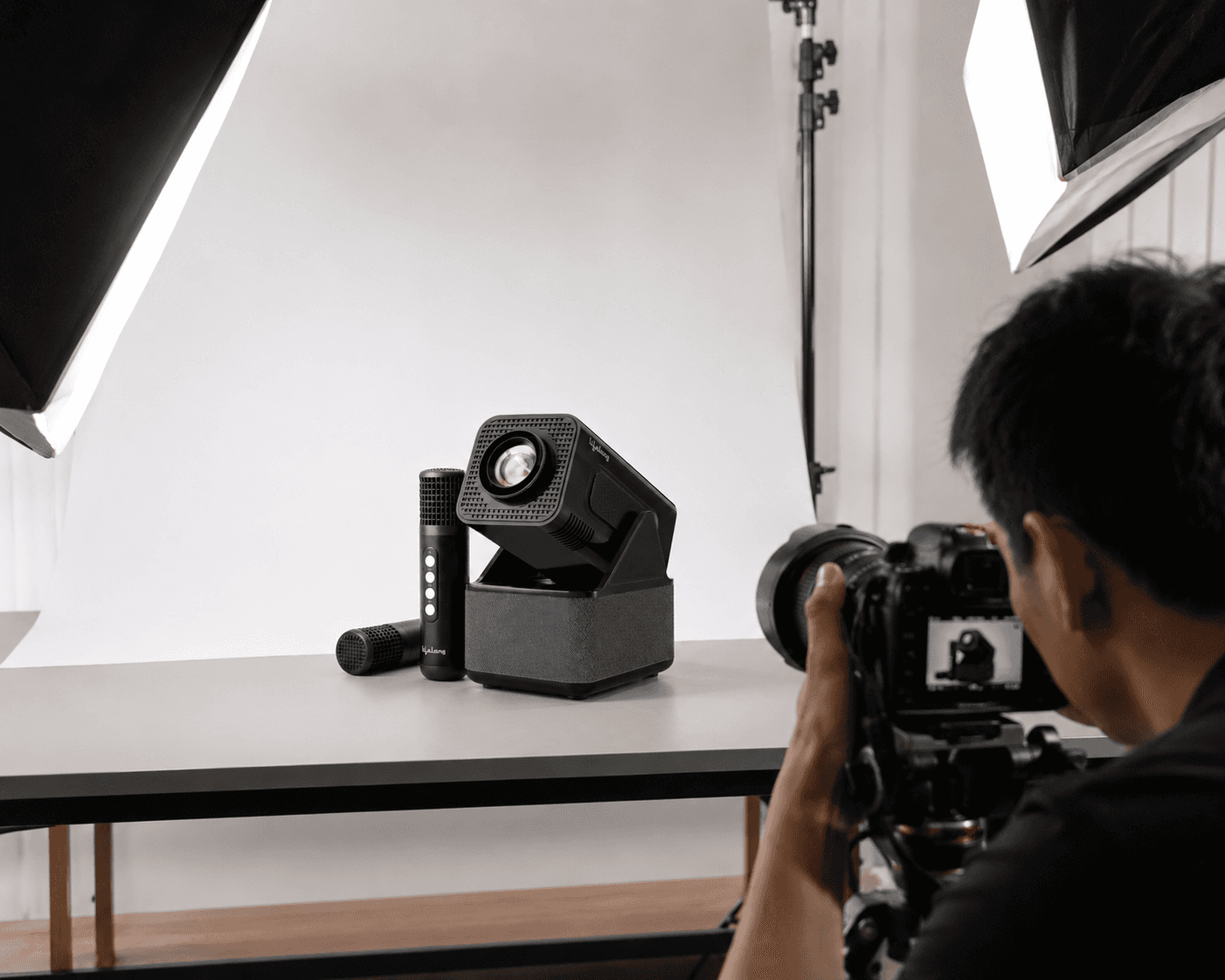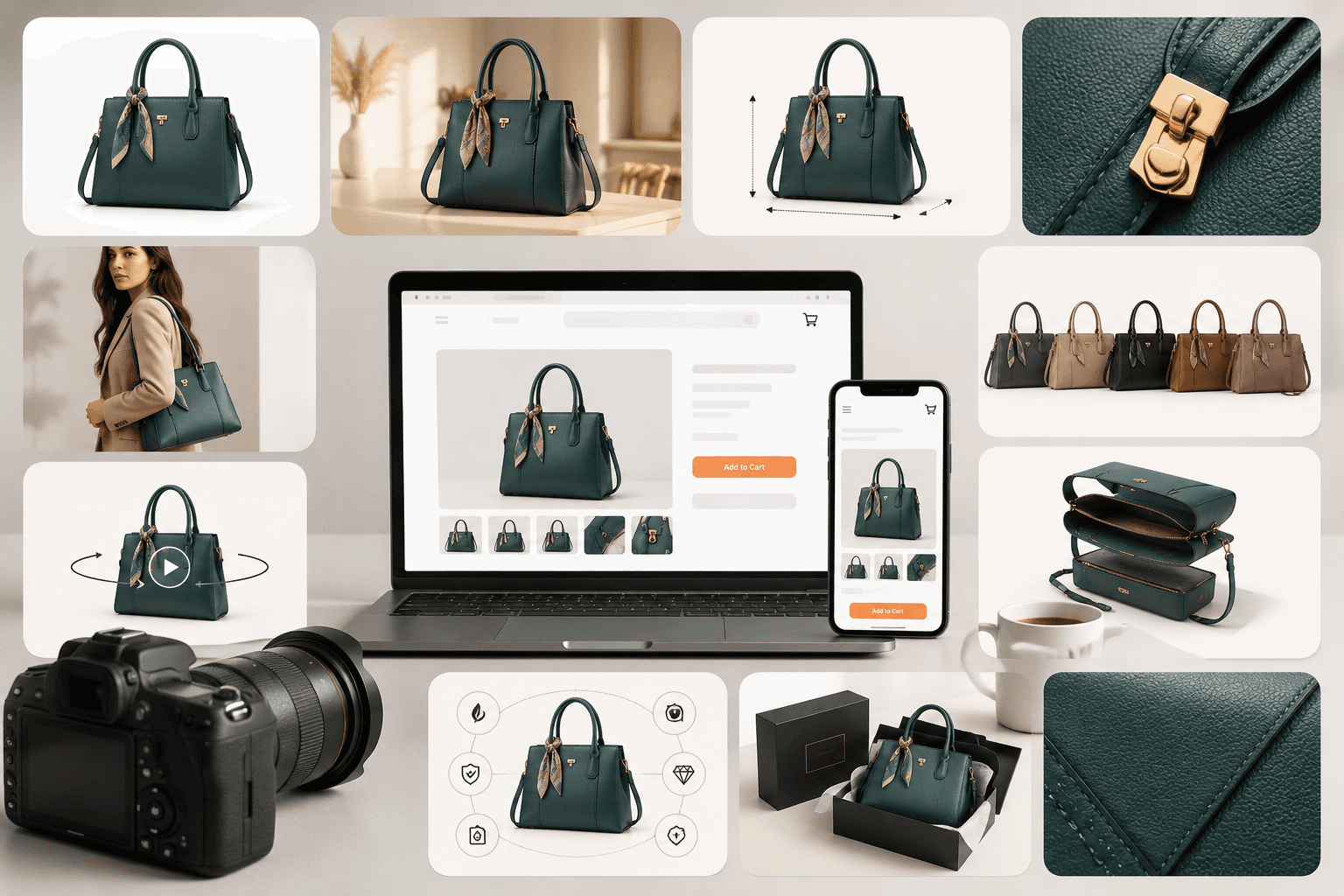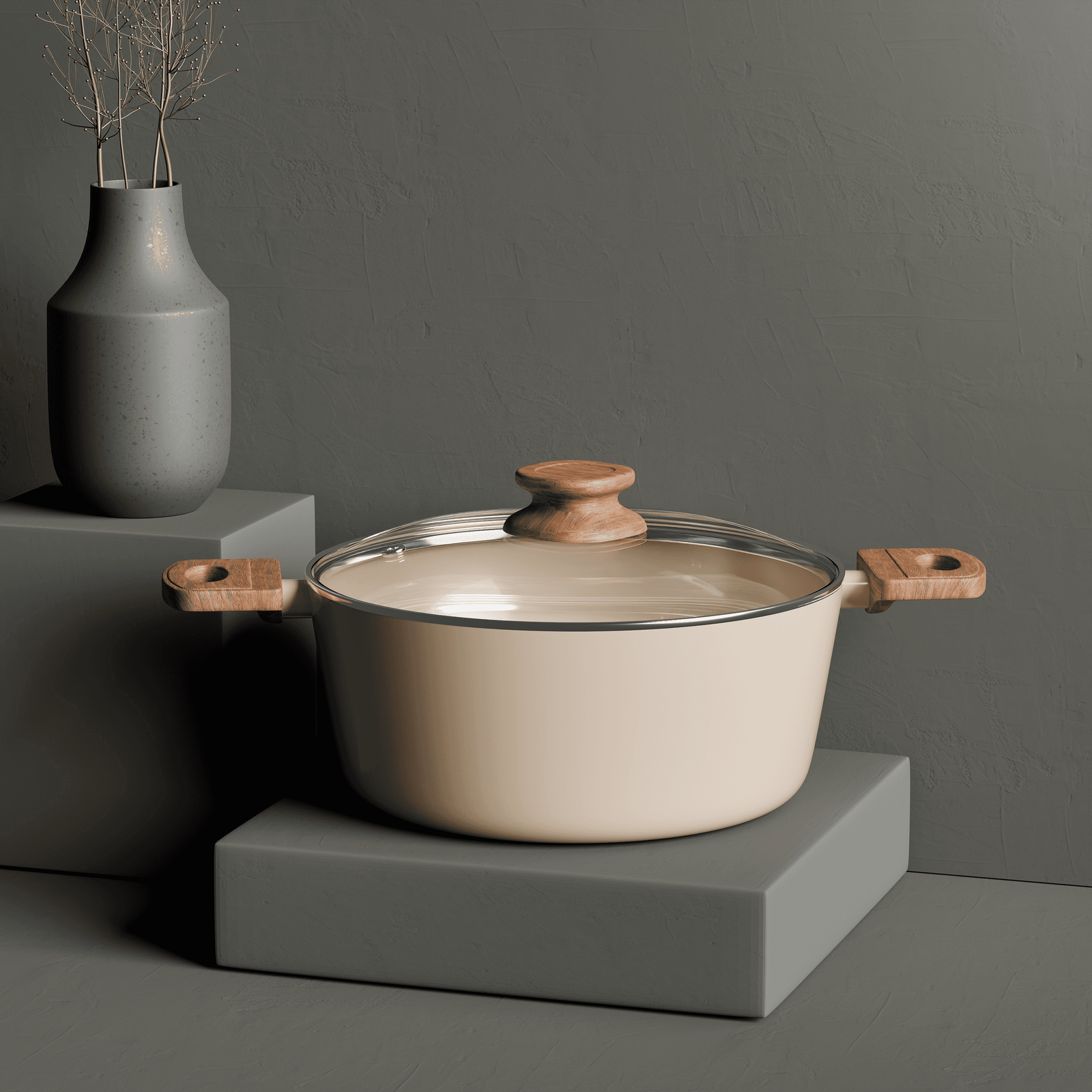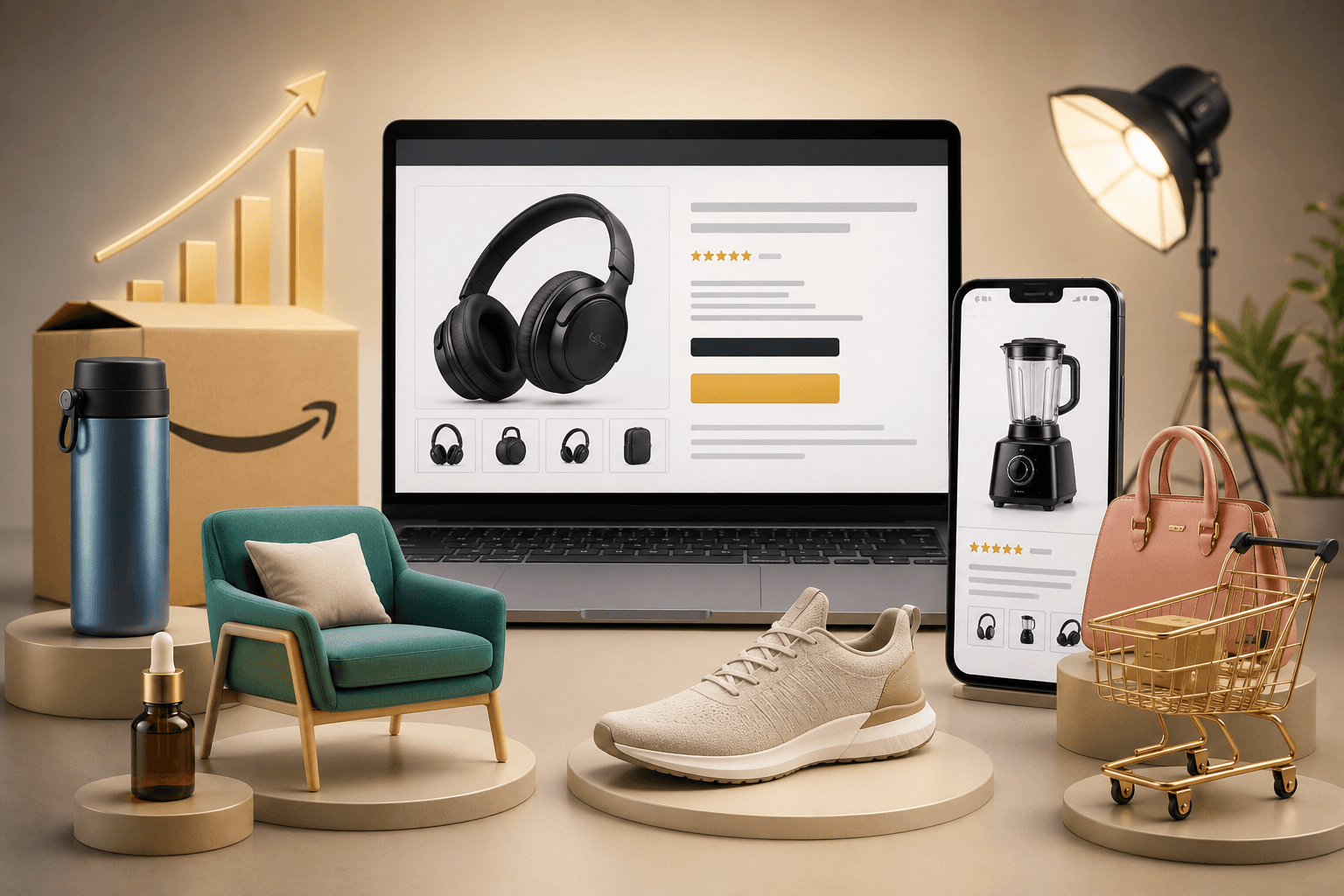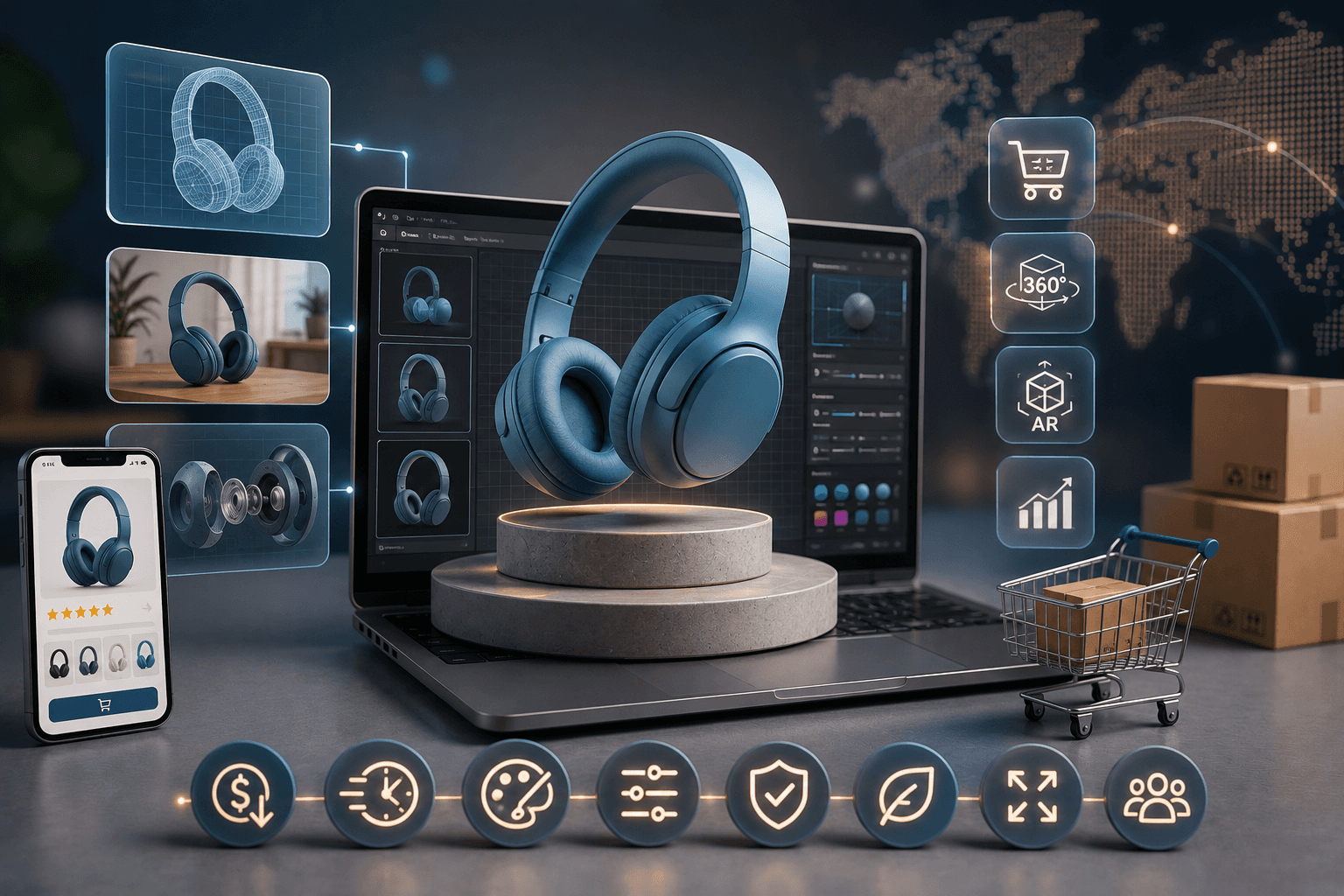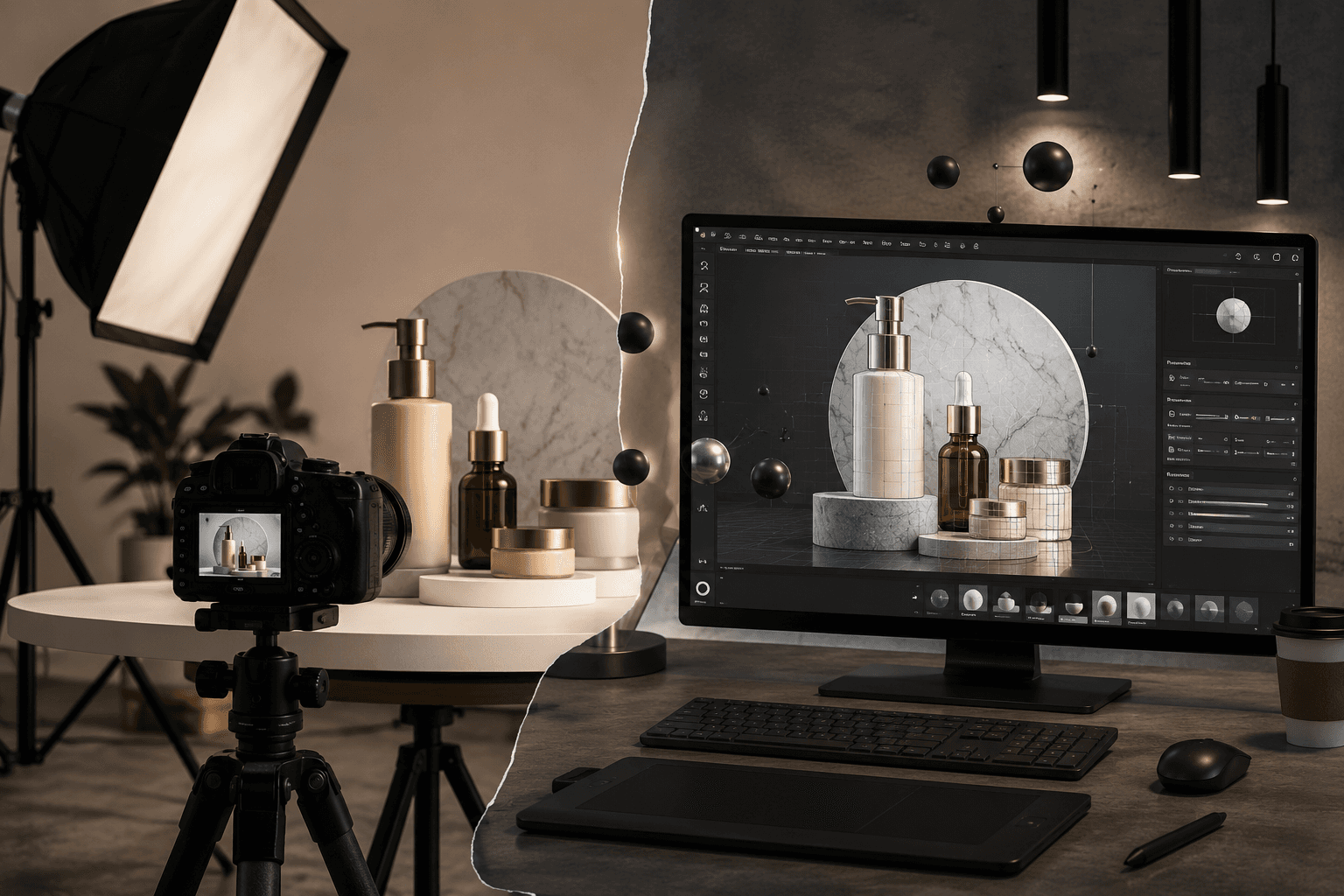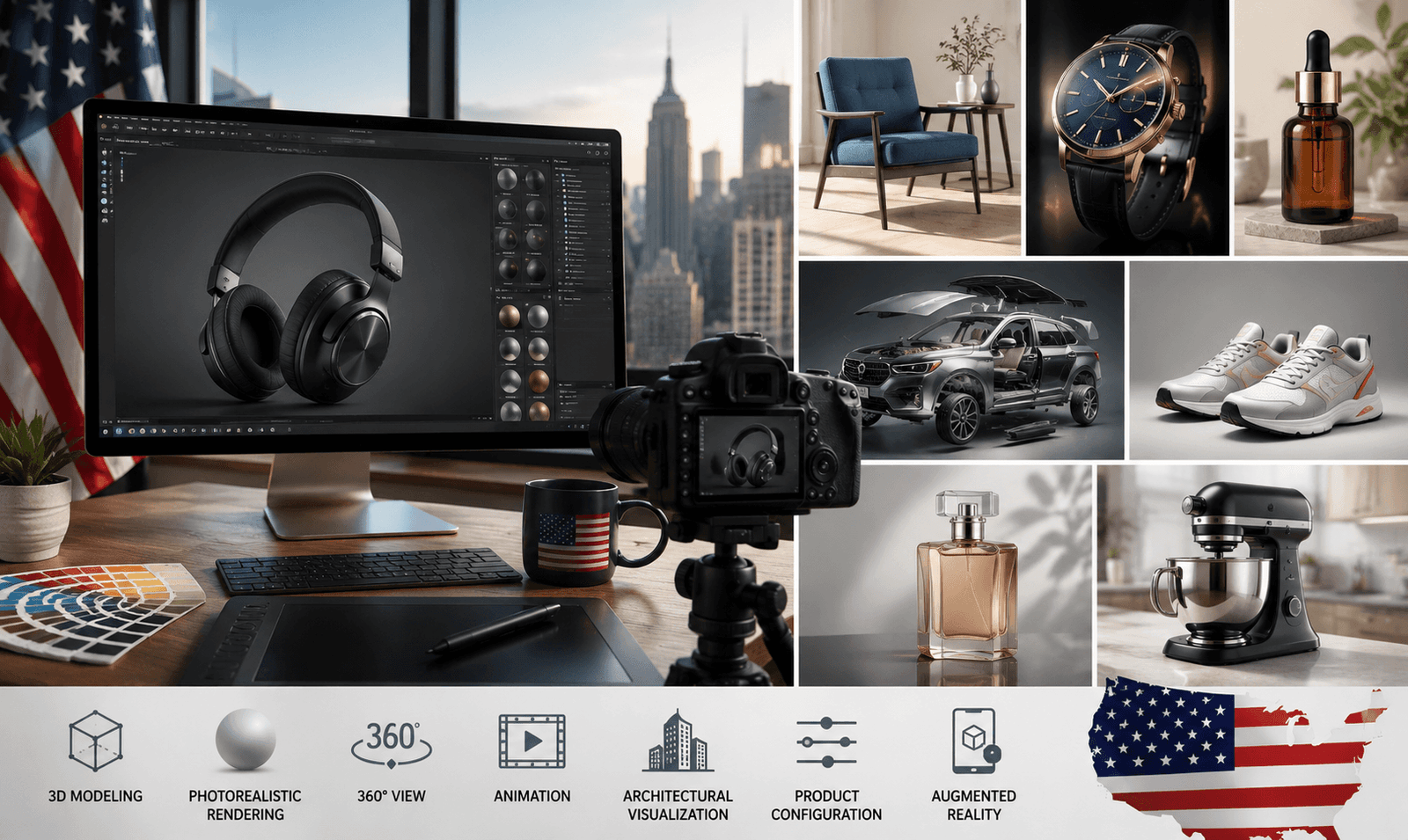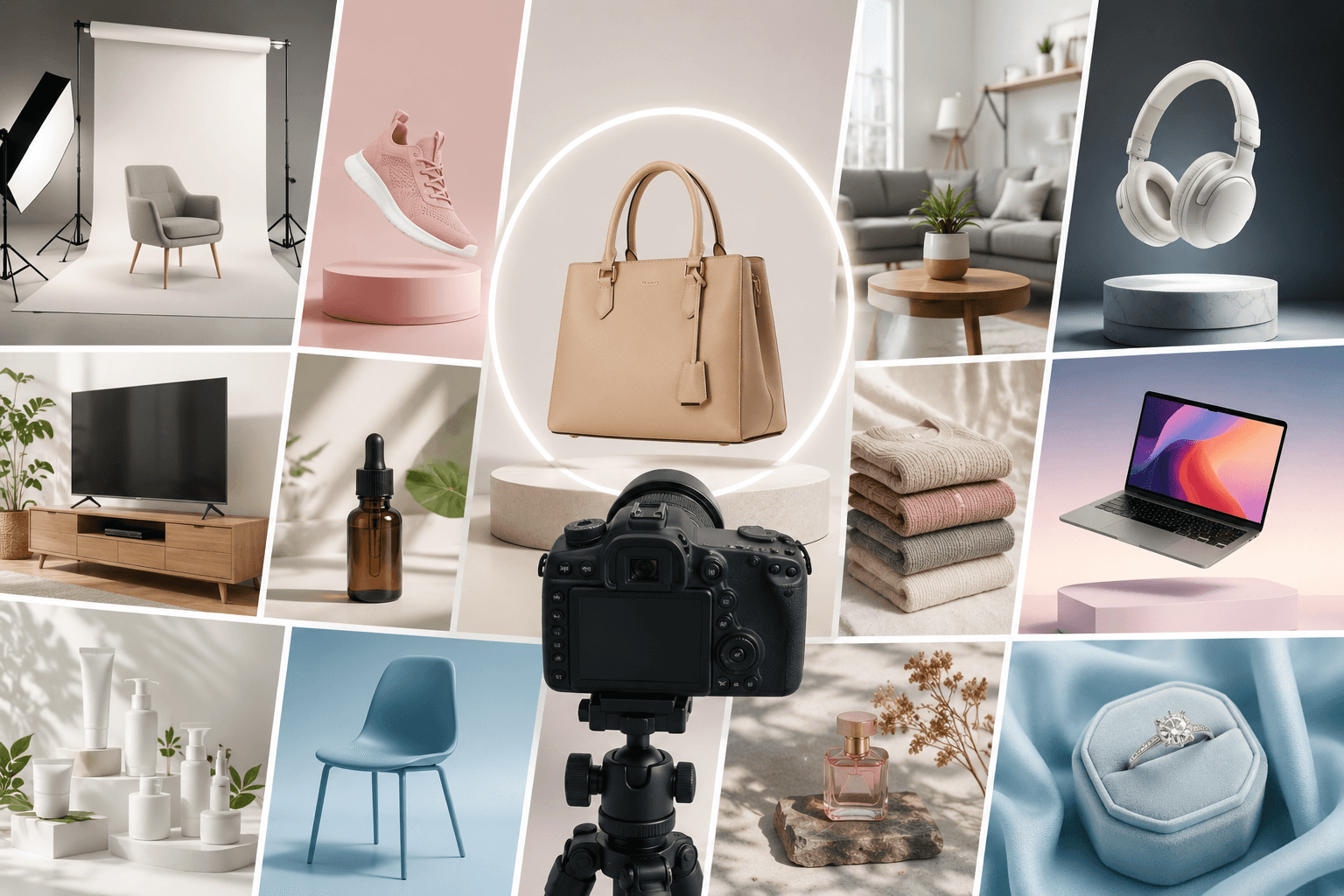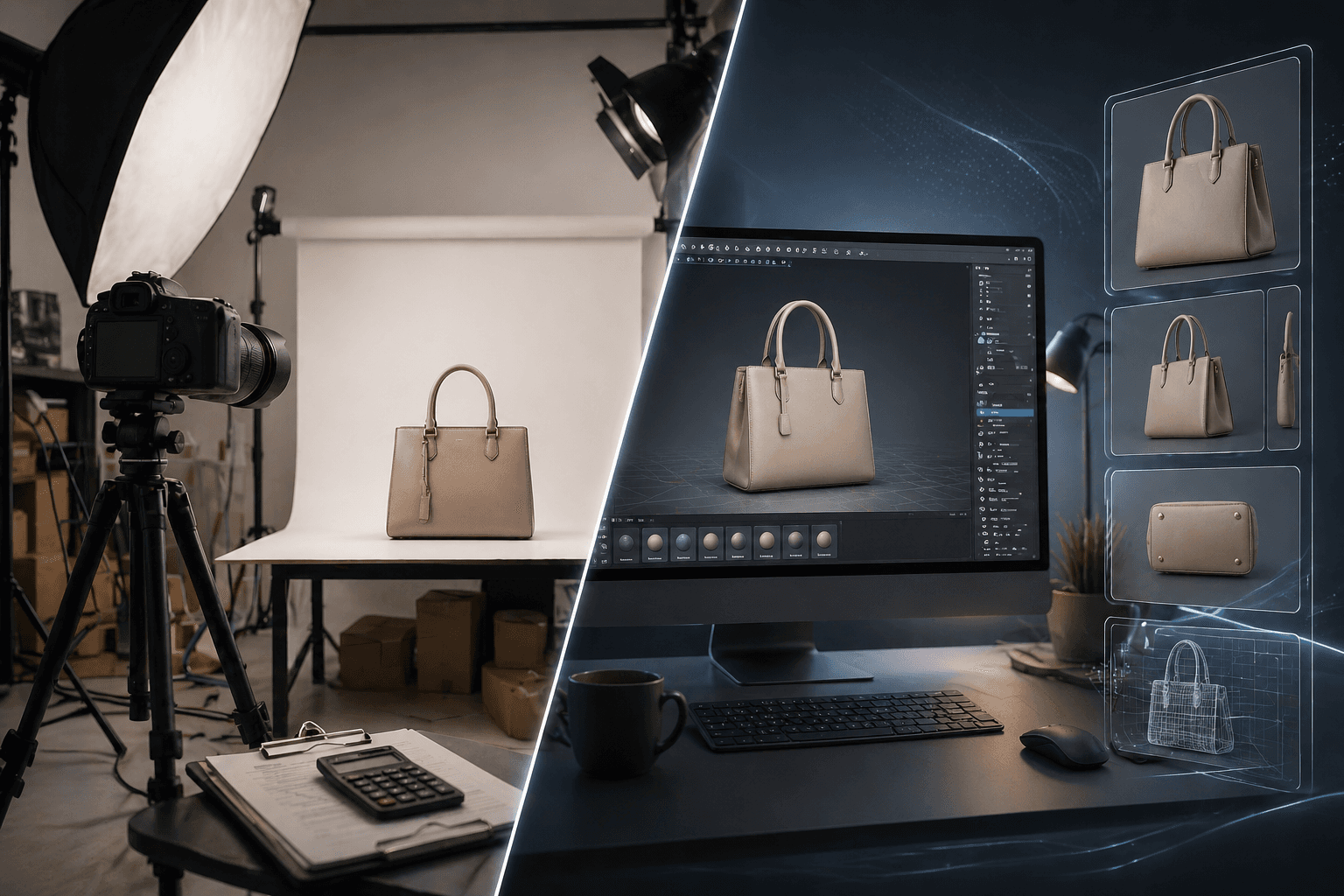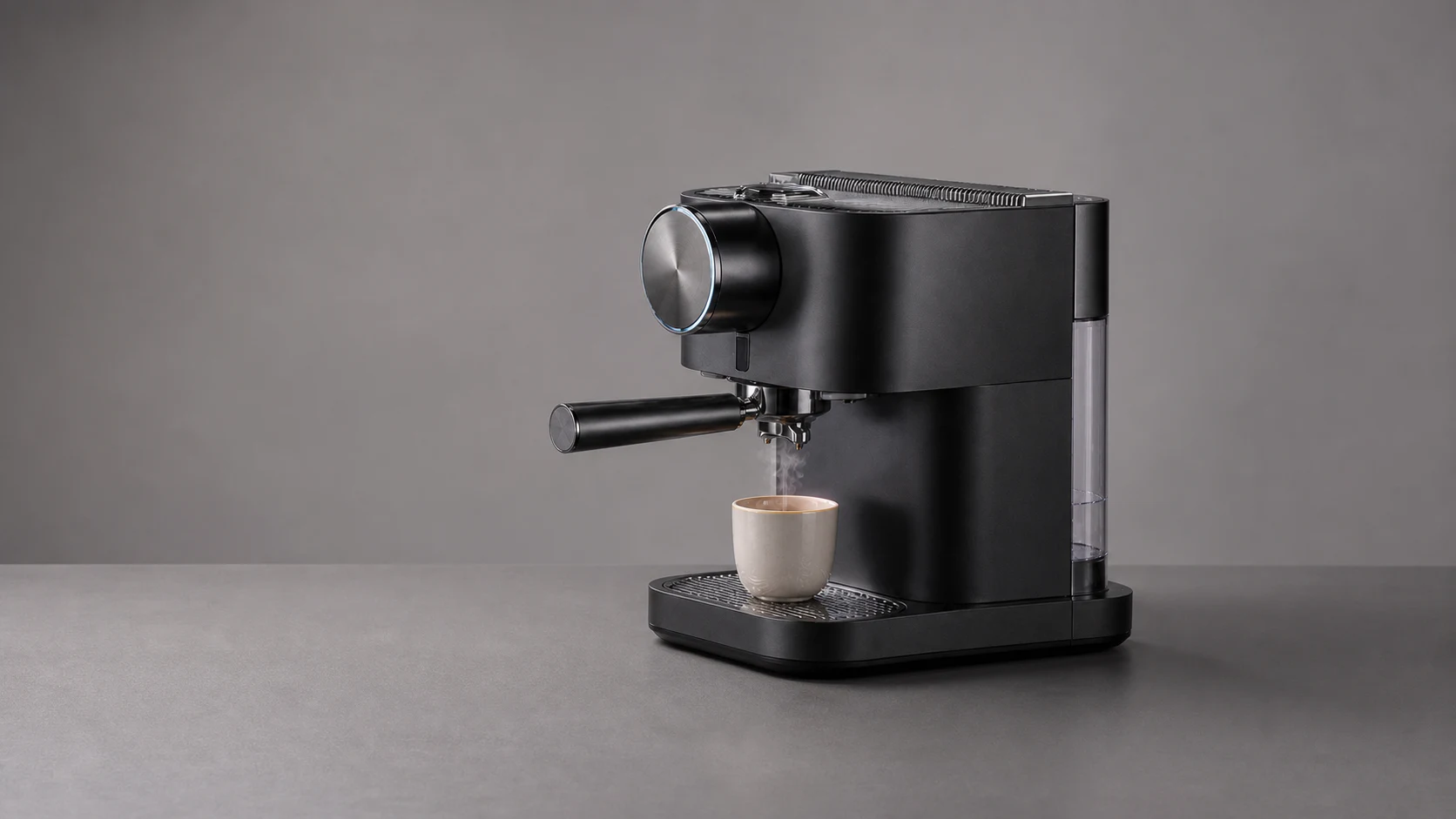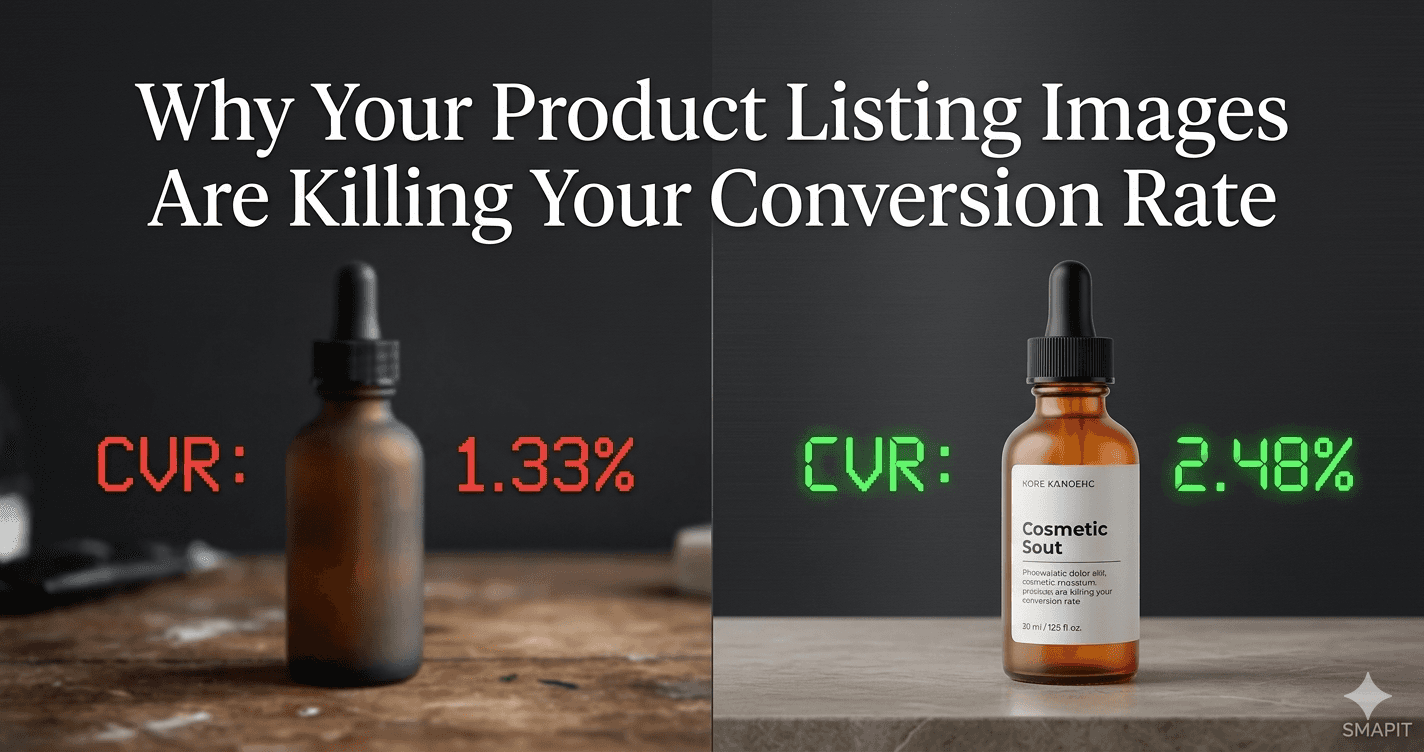
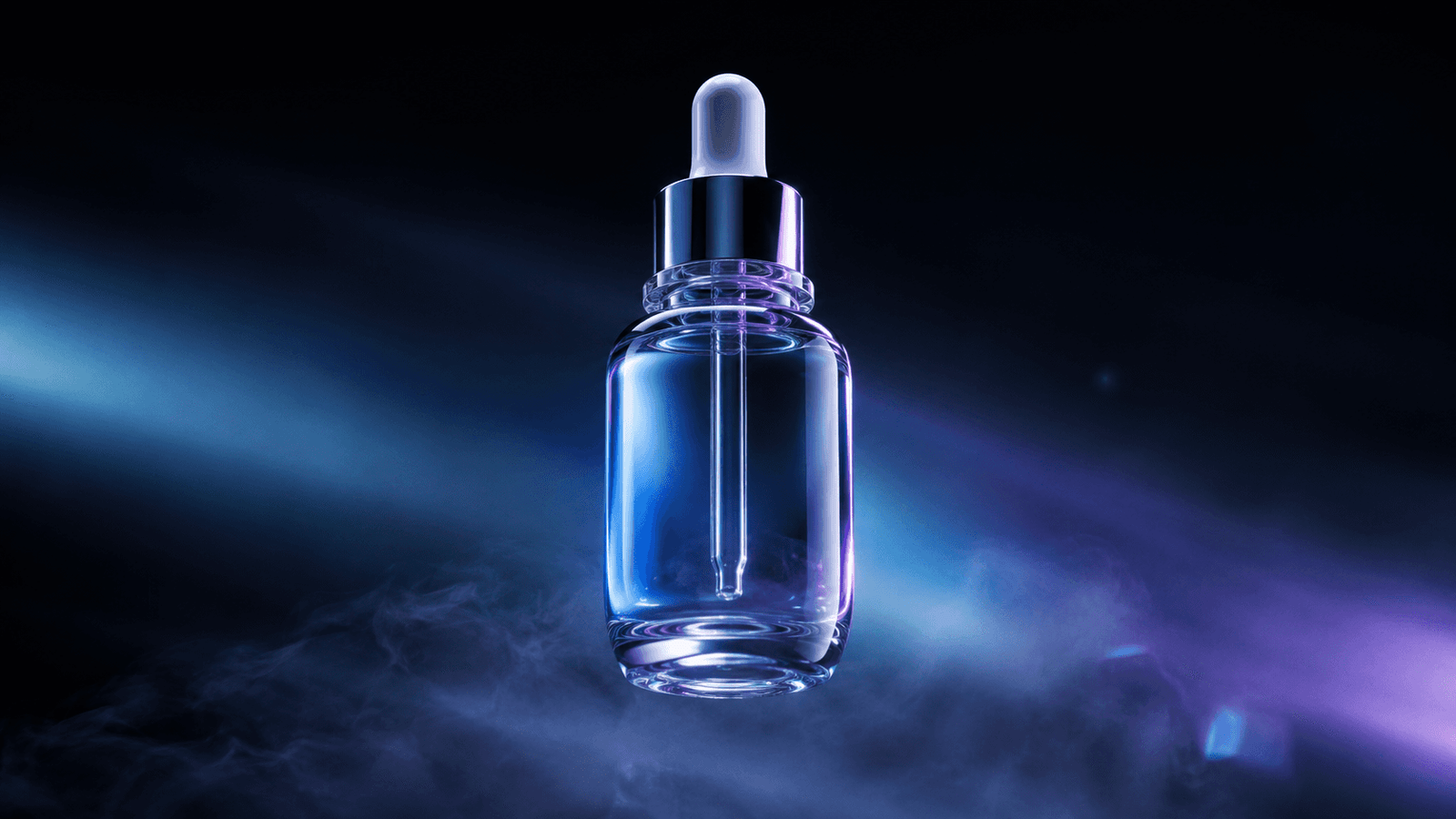
Product visualization services build photoreal images, animations and interactive media of physical products using 3D modelling, CGI and AI, instead of shipping samples to a studio and shooting them. Brands share reference (CAD, packaging artwork, samples or reference photos) and the studio produces the visuals inside a computer.
What is actually delivered
- 3D product modelling: an accurate model built from reference; the foundation asset every later visual is built from
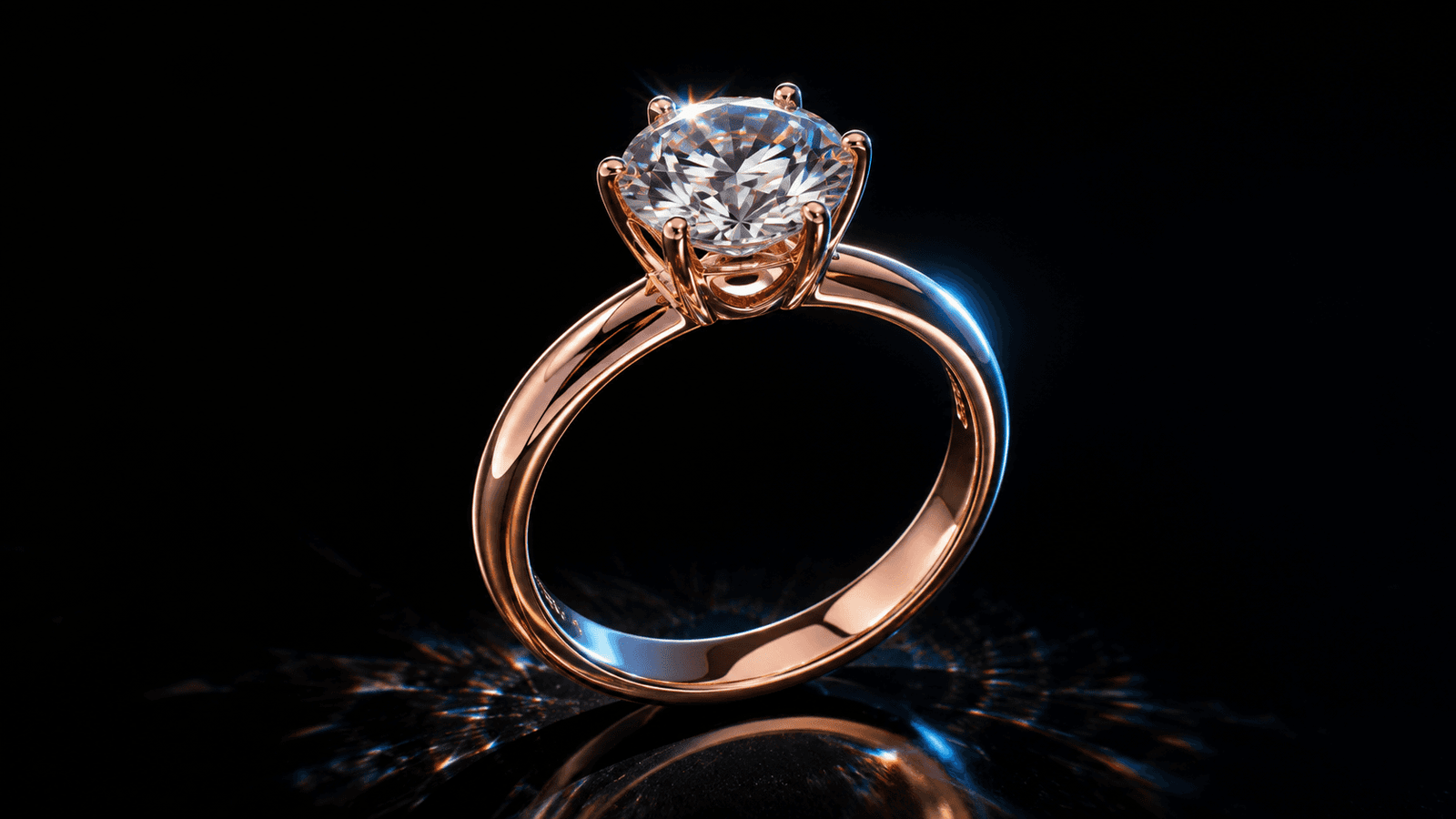
- Product rendering (CGI photography): high-resolution stills with full control over background, lighting, angle and finish
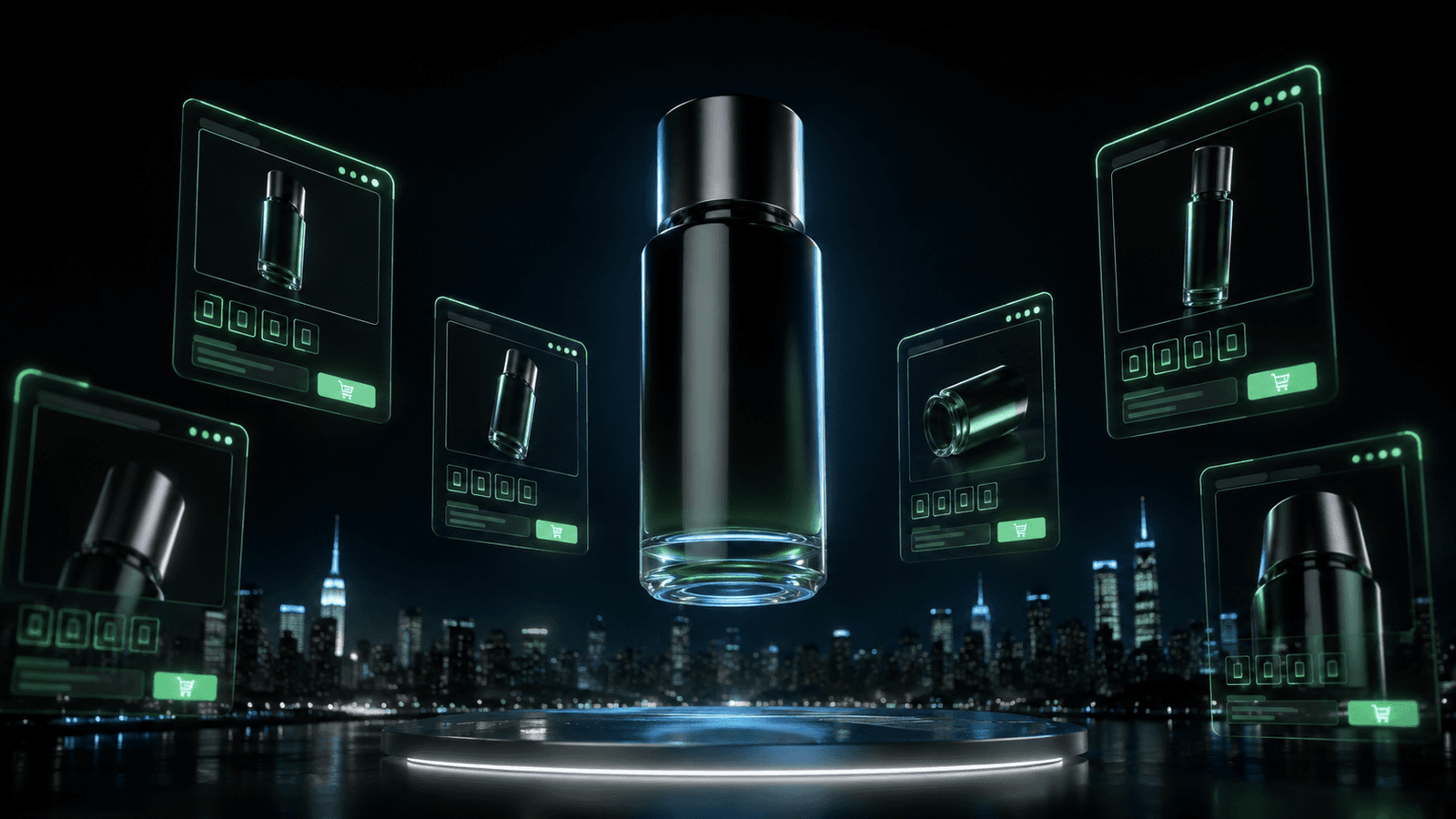
- Product animation: 360° turntables, unboxings, exploded views and dynamic motion without a video crew
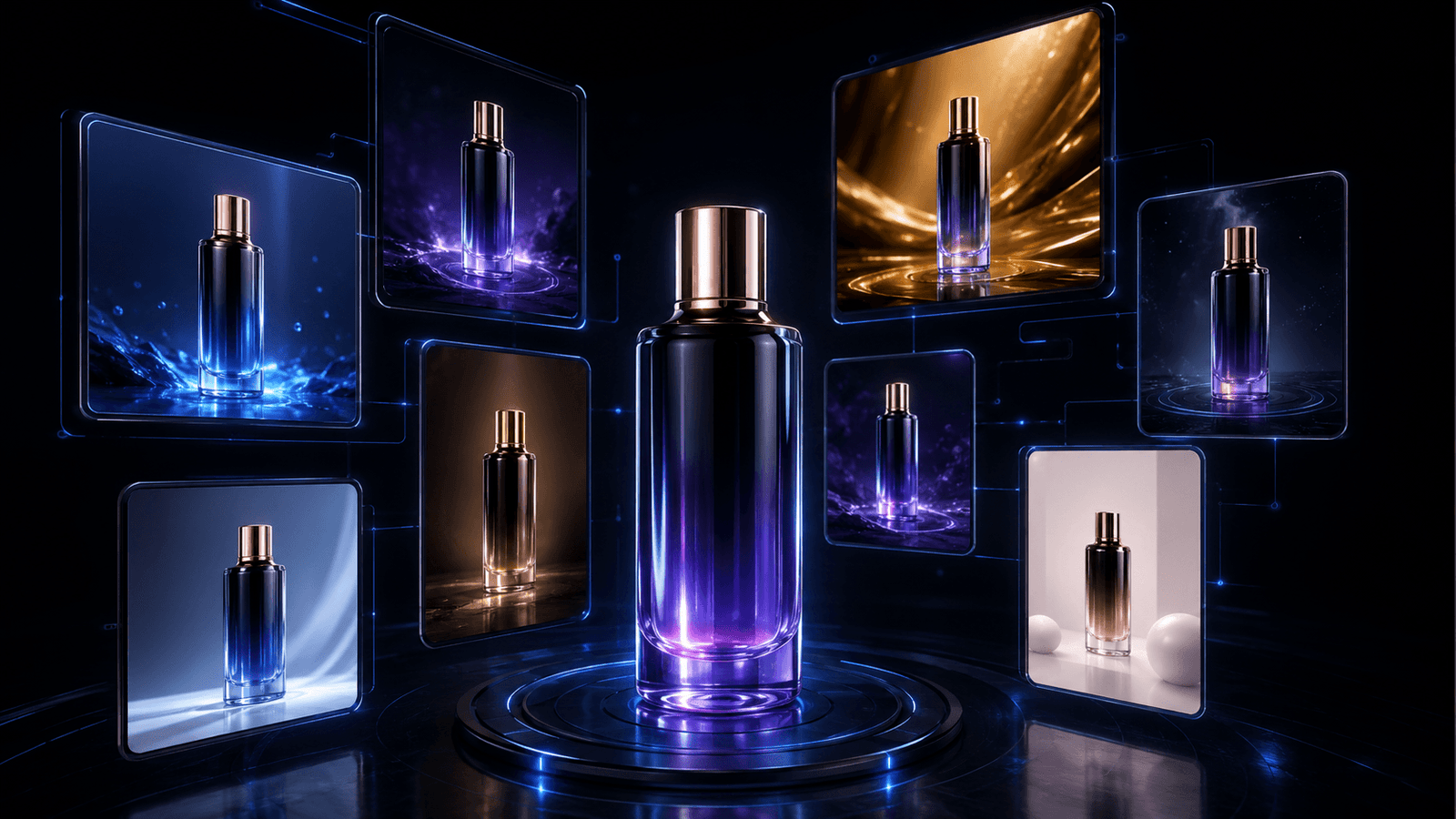
- Lifestyle composites: the product placed in kitchens, living rooms or outdoor scenes at a fraction of a location shoot cost
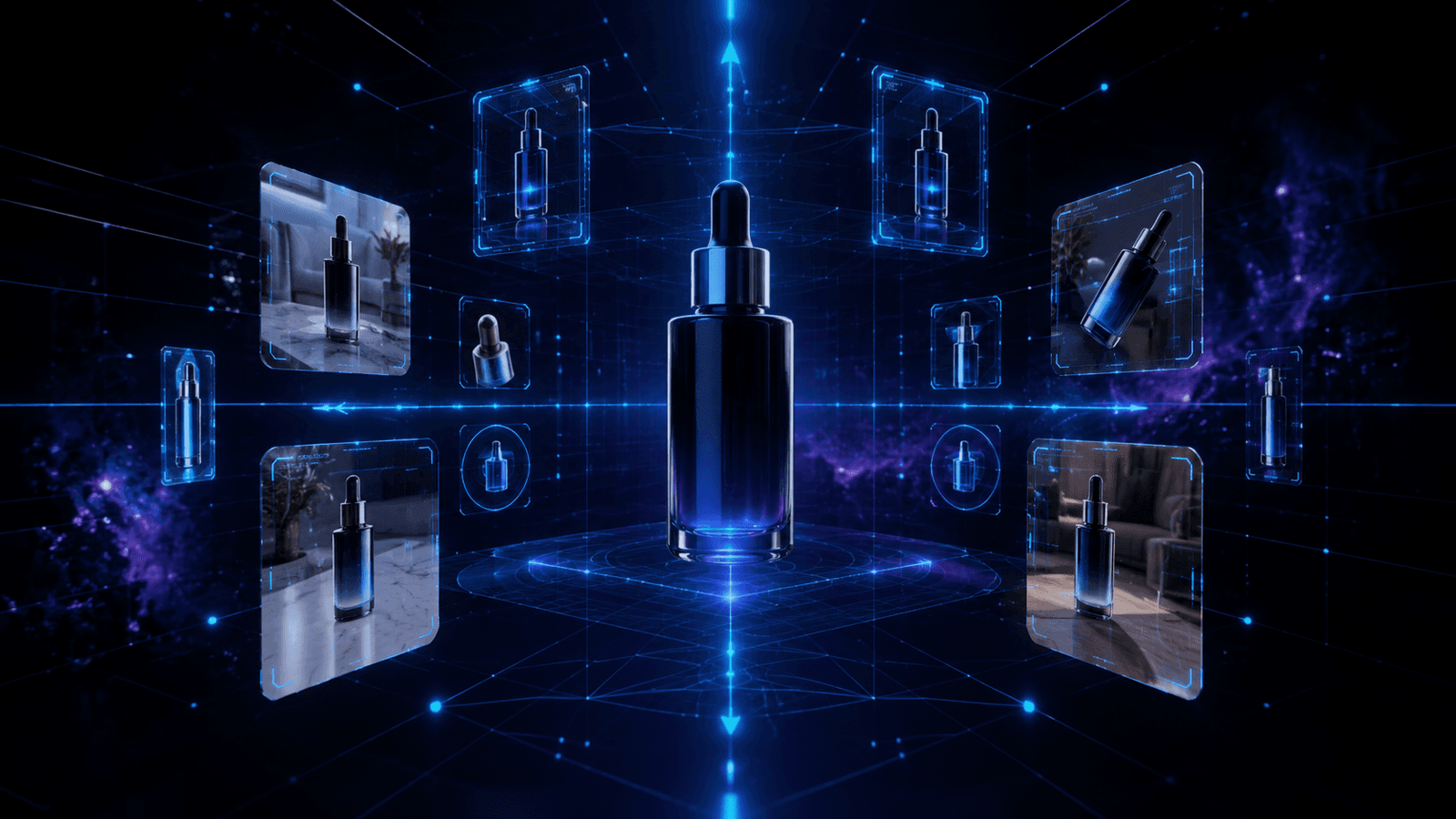
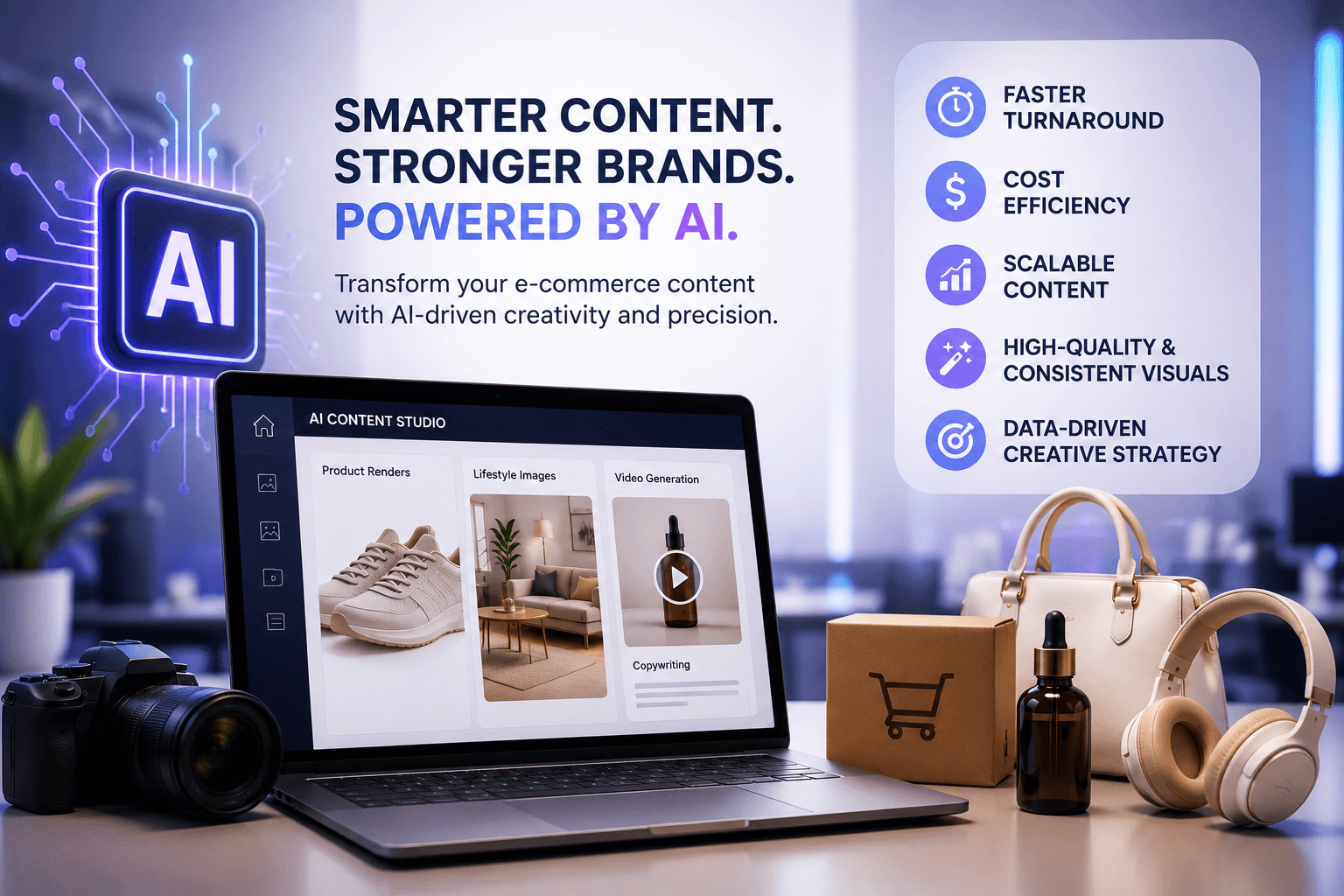
- AI-enhanced production: AI layered on the 3D model to speed up environments, background variants and creative iteration
Why brands are replacing photoshoots
Turnaround is three to seven business days versus one to three weeks for a shoot. Cost stops scaling with SKU count, one model is reused instead of one shoot per product. Creative control is per-pixel: colourways, finishes and camera angles adjust in minutes.
Consistency across the catalogue is pixel-perfect because every render comes off the same rig. Pre-launch imagery works from CAD files, so campaigns finish before the product ships. Iterations are re-renders, not reshoots.
Which categories use it most
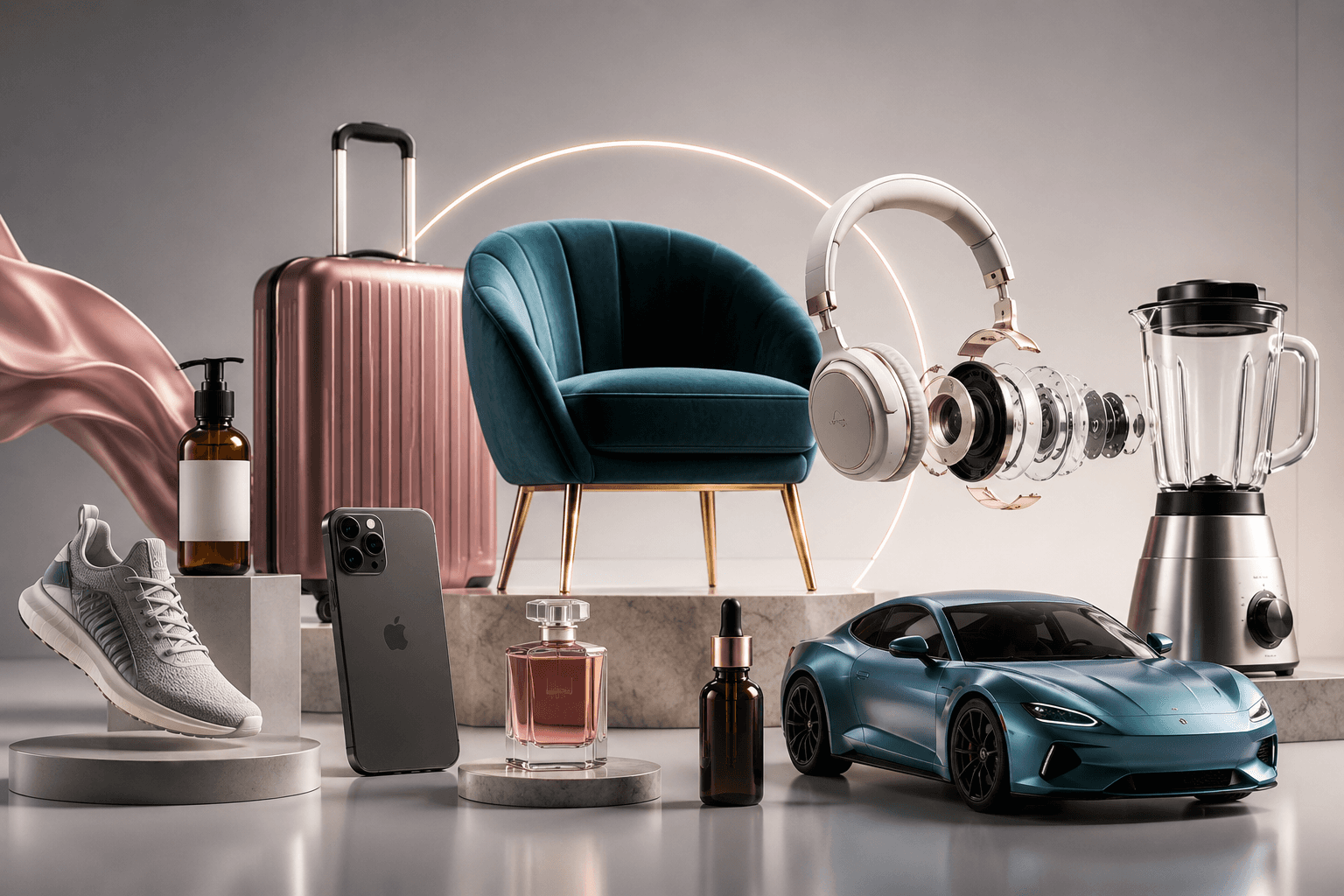
It is category-shape more than category-name that decides. Anything with hard geometry and repeating SKUs, beauty and skincare (glass, liquid, refraction), consumer electronics (exploded views, precise finishes), home and furniture (context without shipping the sofa), food and beverage (bottles and packaged goods with exact label detail), fashion and footwear (dramatic angles and lighting), automotive and industrial (parts, accessories, service catalogues).
What "AI-powered" actually means
The market conflates two things. Pure text-prompt AI generators produce aesthetic outputs that fail on accuracy, wrong labels, distorted logos, invented details. AI without 3D grounding is impressive art, not a brand asset.
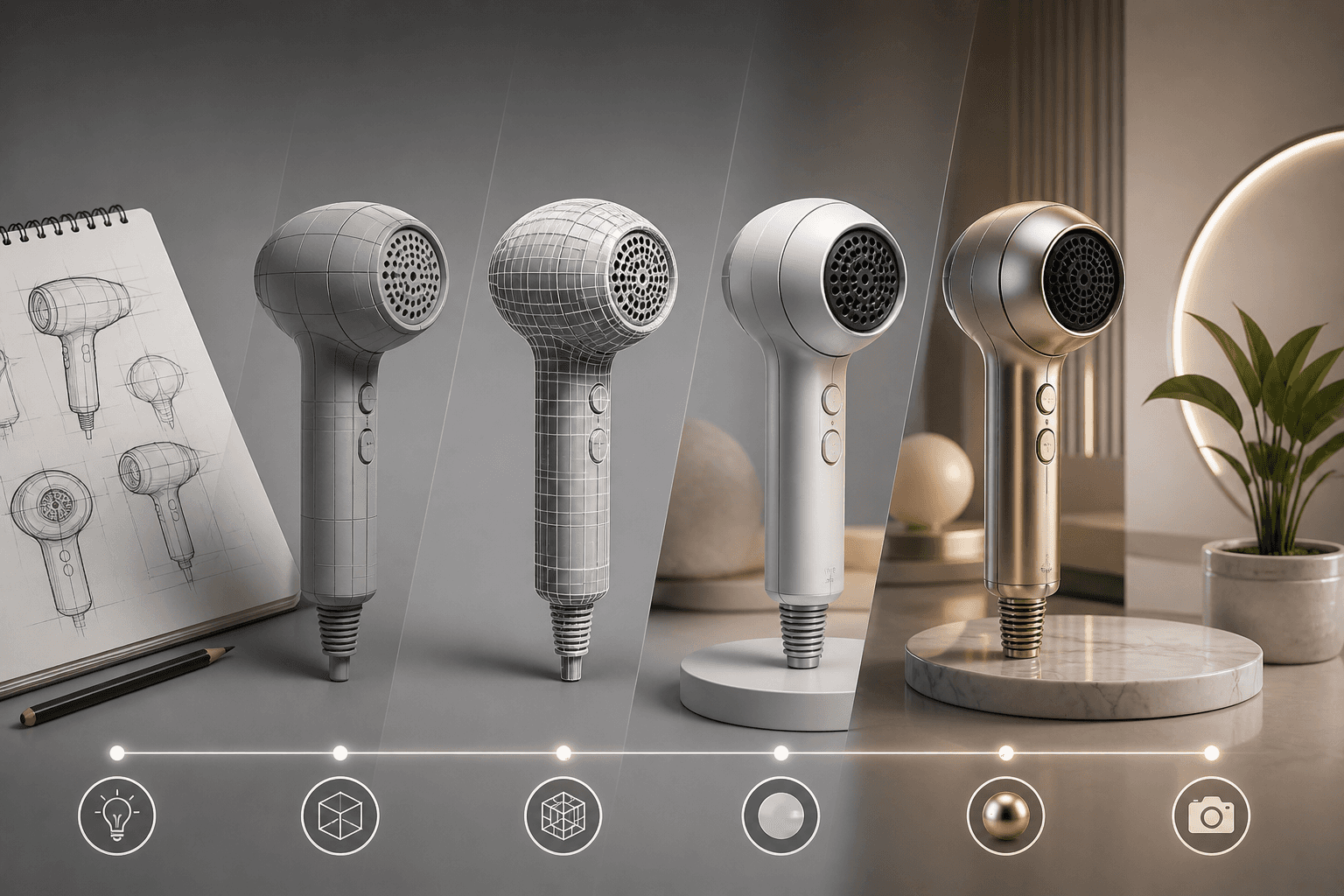
True AI-powered visualization layers AI onto 3D expertise: the product is modelled with precision first, then AI accelerates the environment, the background variants and the creative iterations while the product itself stays exact. That is the pipeline serious studios run.
How the process runs
- Brief and reference: samples, CAD, packaging artwork, mood direction; input clarity decides output speed
- 3D modelling: the master asset, approved before rendering starts
- Scene and lighting: environment, HDRI, camera angles built around the approved model
- Draft renders: low-res passes for feedback, one to two revision rounds is typical
- Final delivery: high-res in JPEG, transparent PNG, layered PSD or video, sized per placement
How to evaluate a studio
- Category experience, has the studio actually visualised products like yours? Material accuracy is category-specific
- End-to-end capability: modelling, rendering and animation in one house, not stitched across vendors
- AI honesty. Ask directly whether AI is layered on 3D or replacing it. The answer matters
- Revision transparency: how many rounds are included, and do you approve the 3D model before rendering starts
- Track record on timelines: proven consistency at scale, not one lucky project