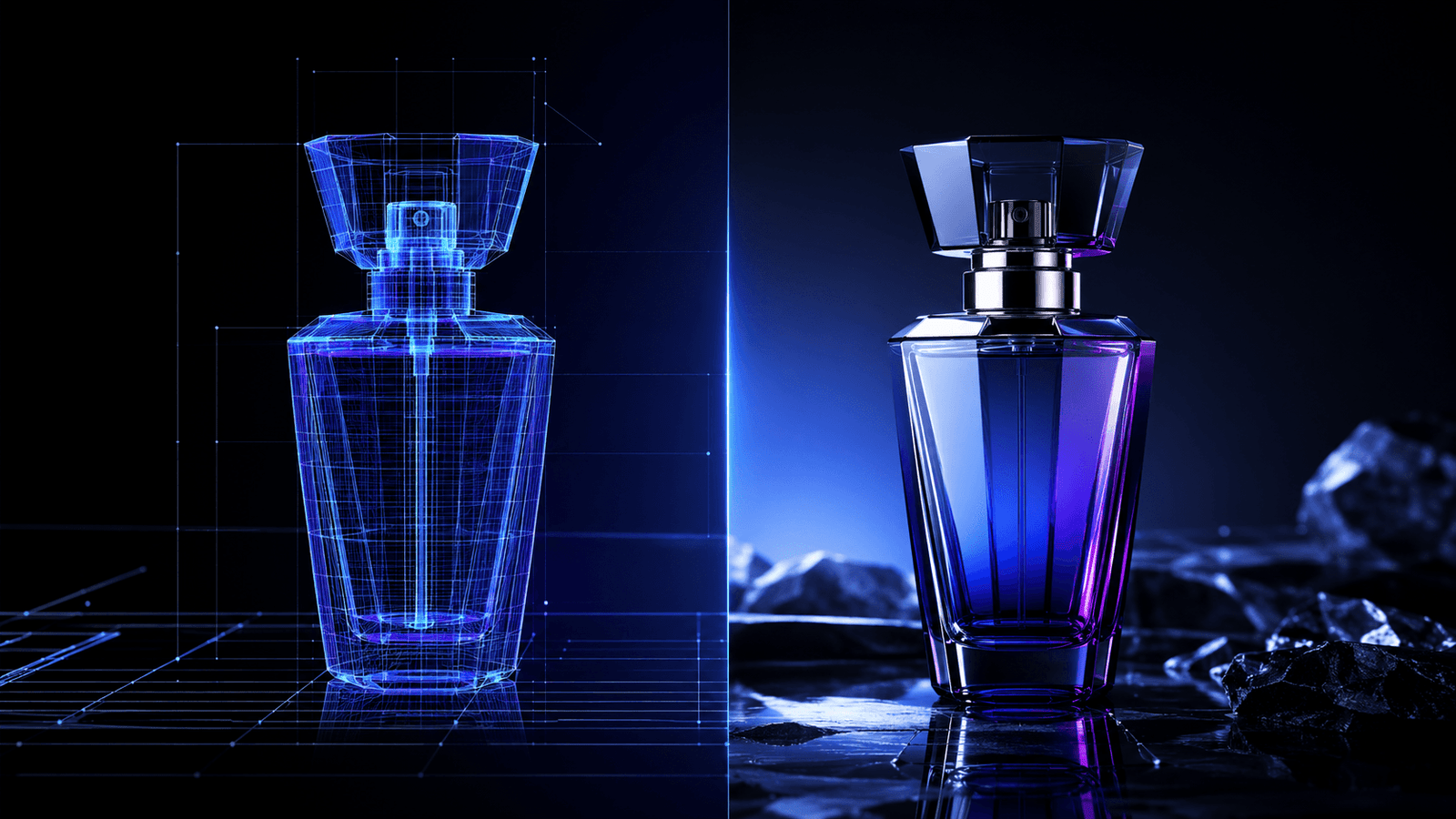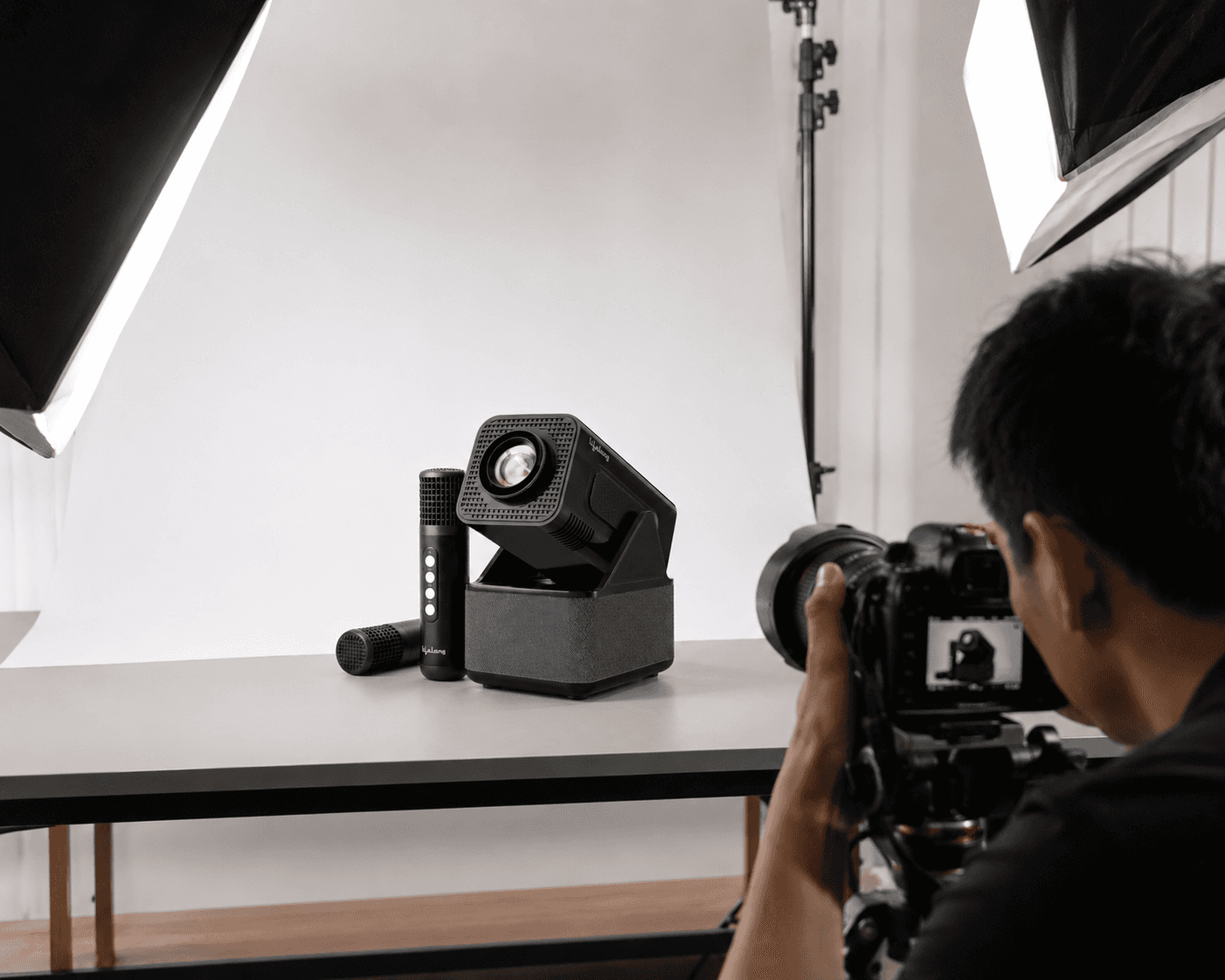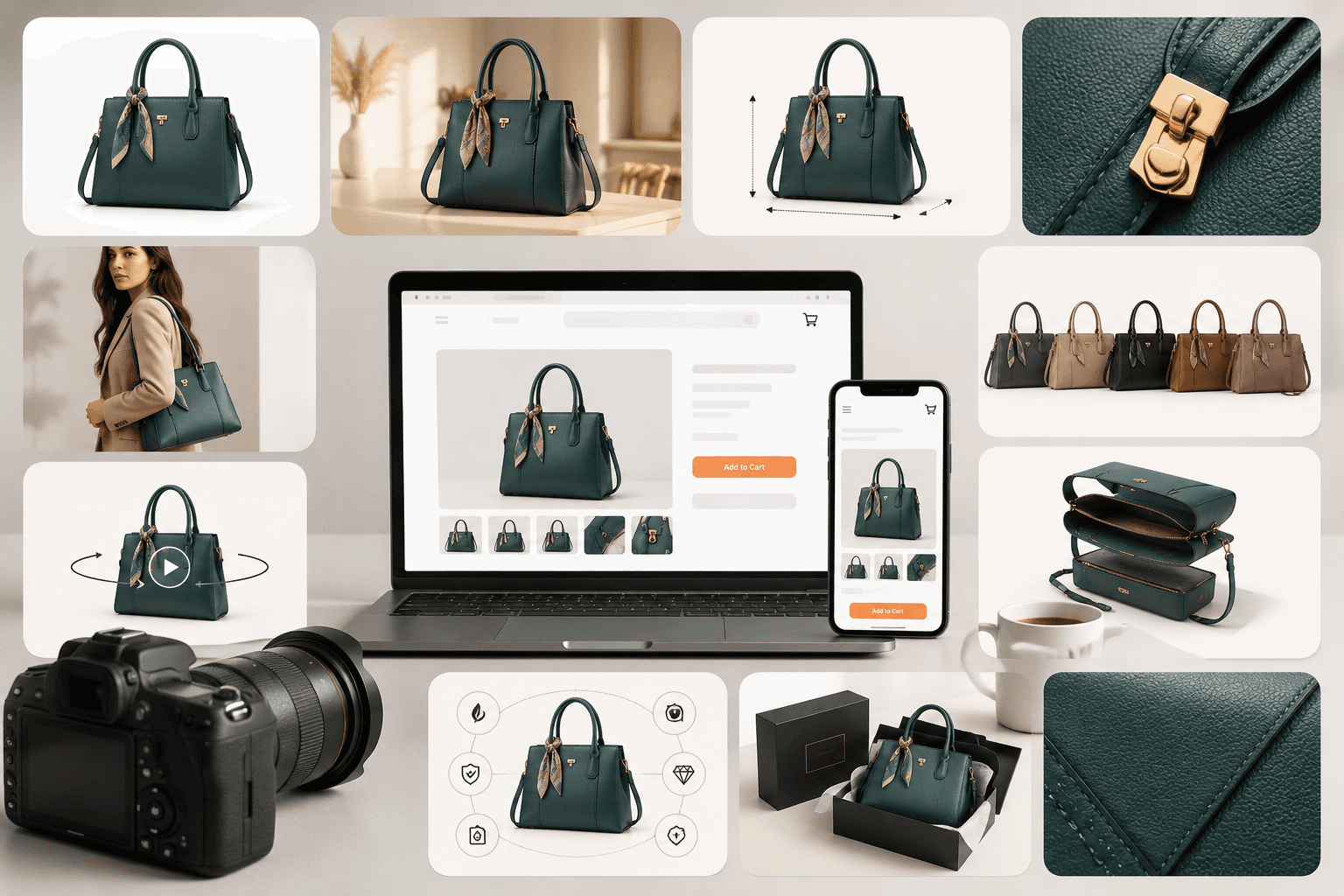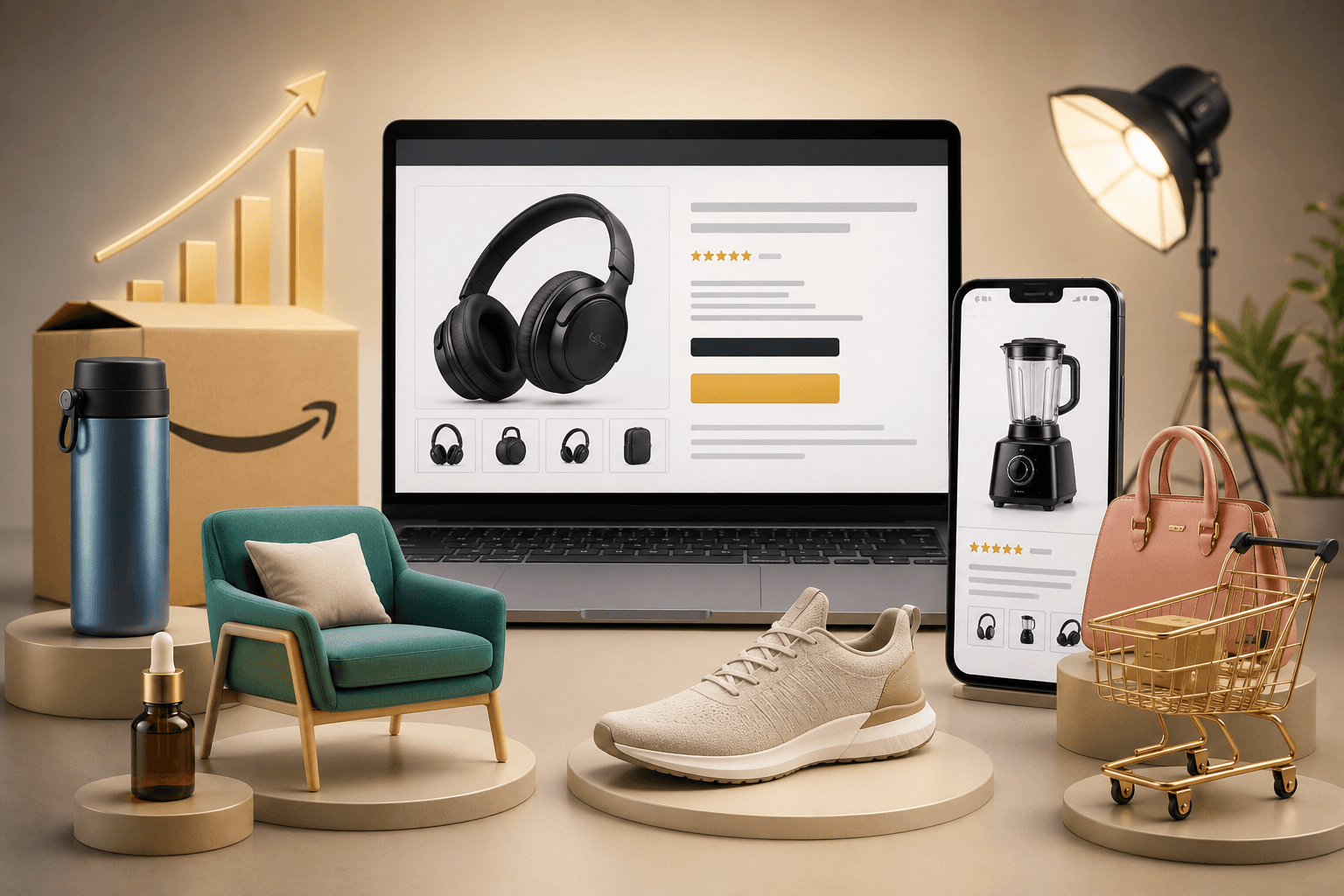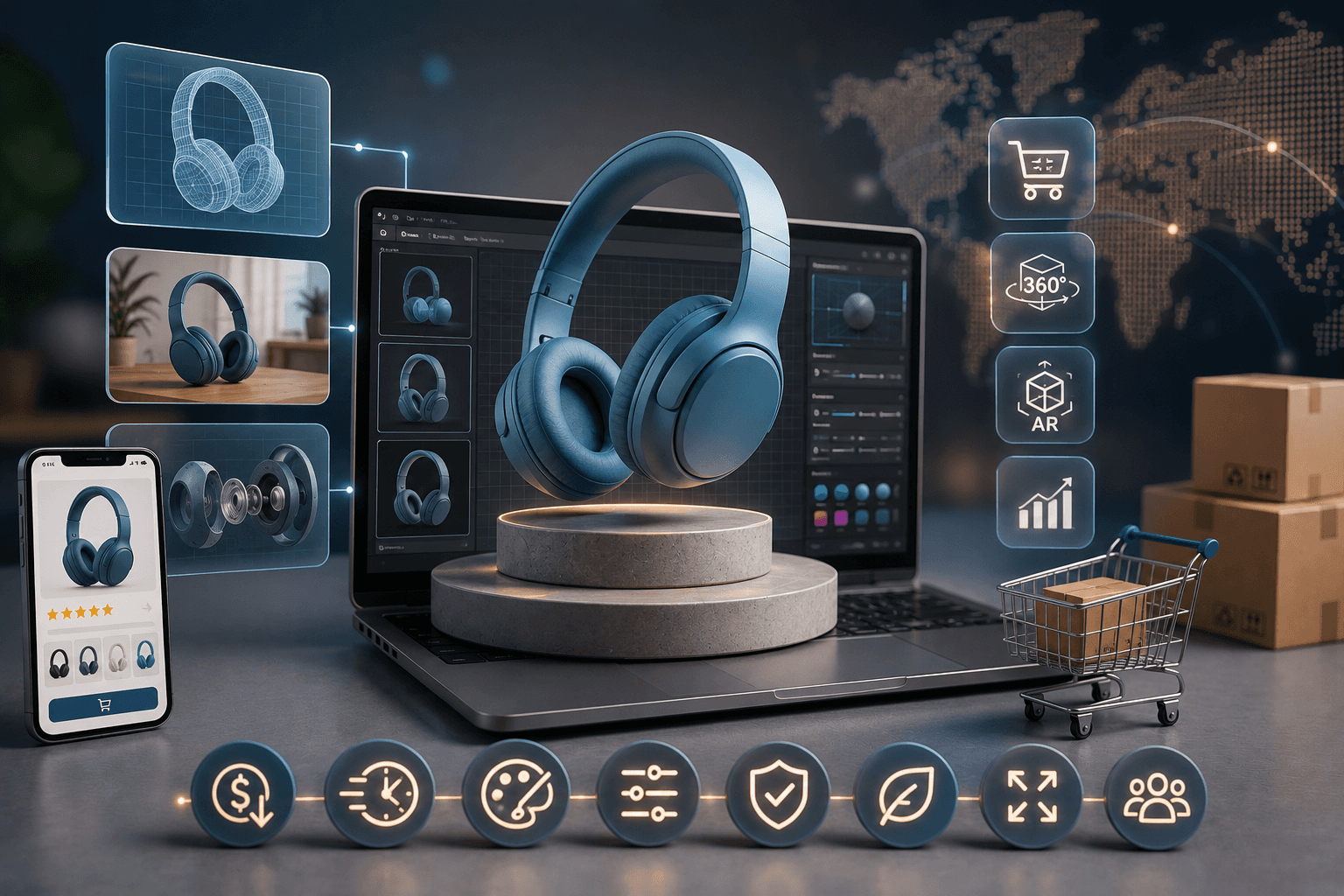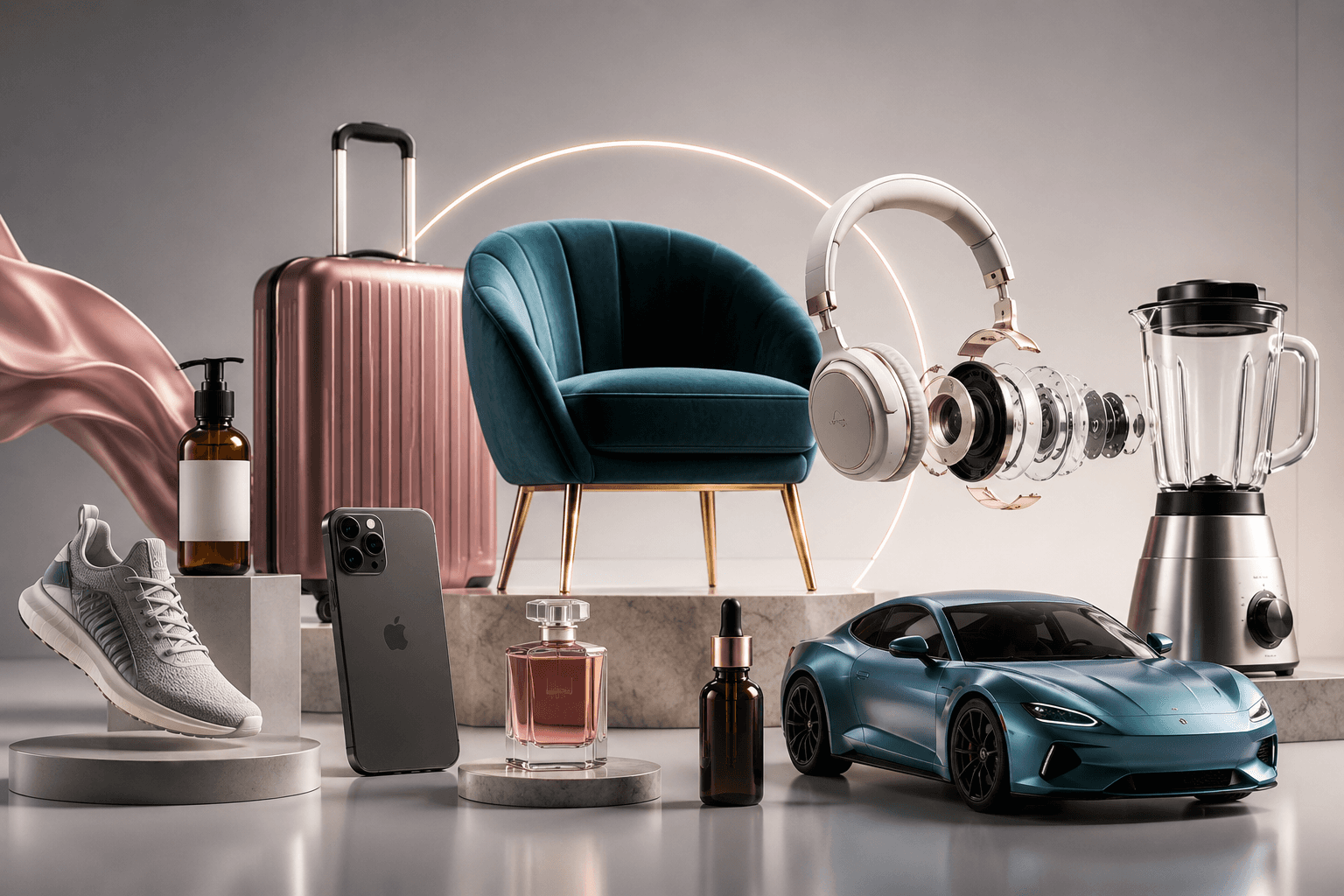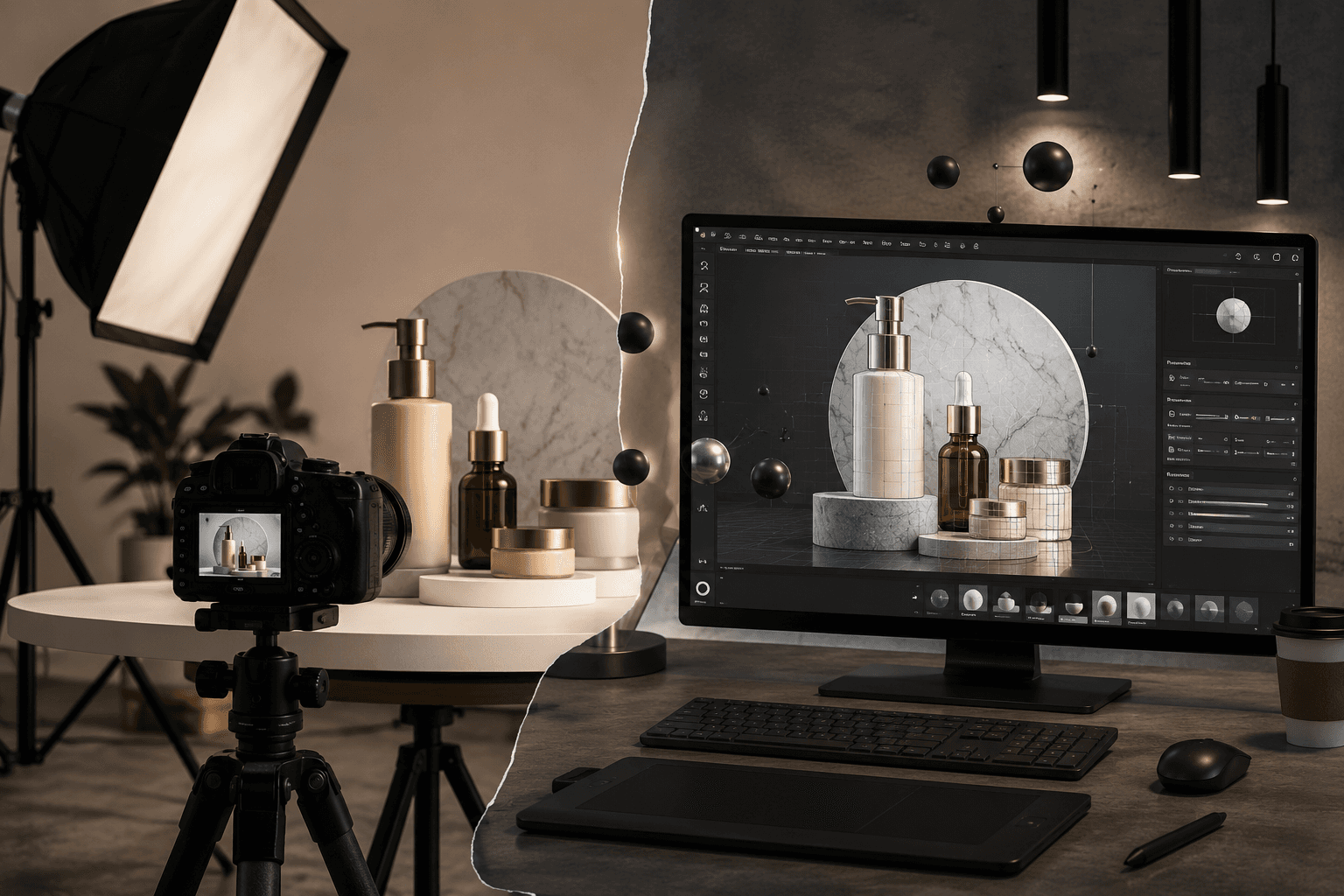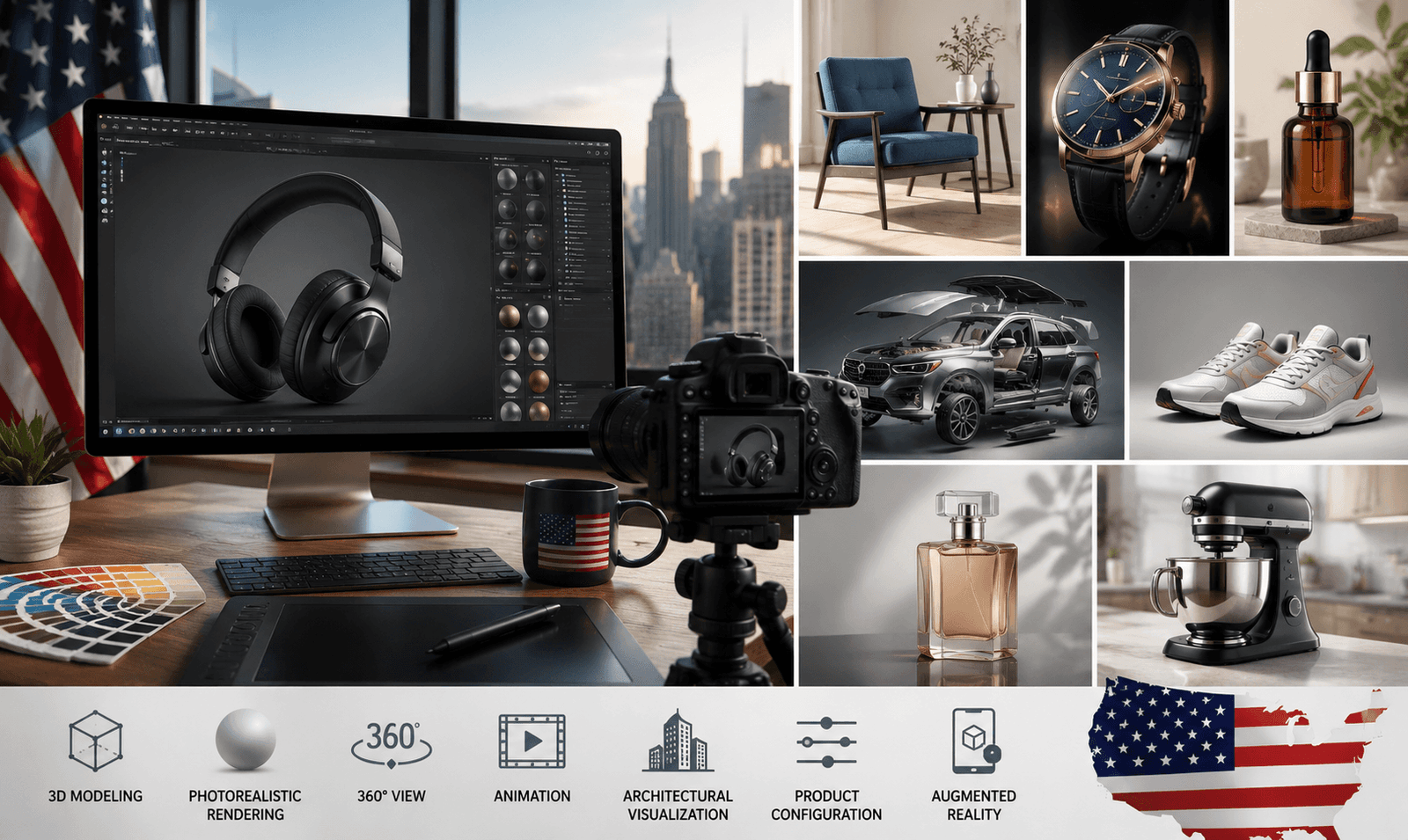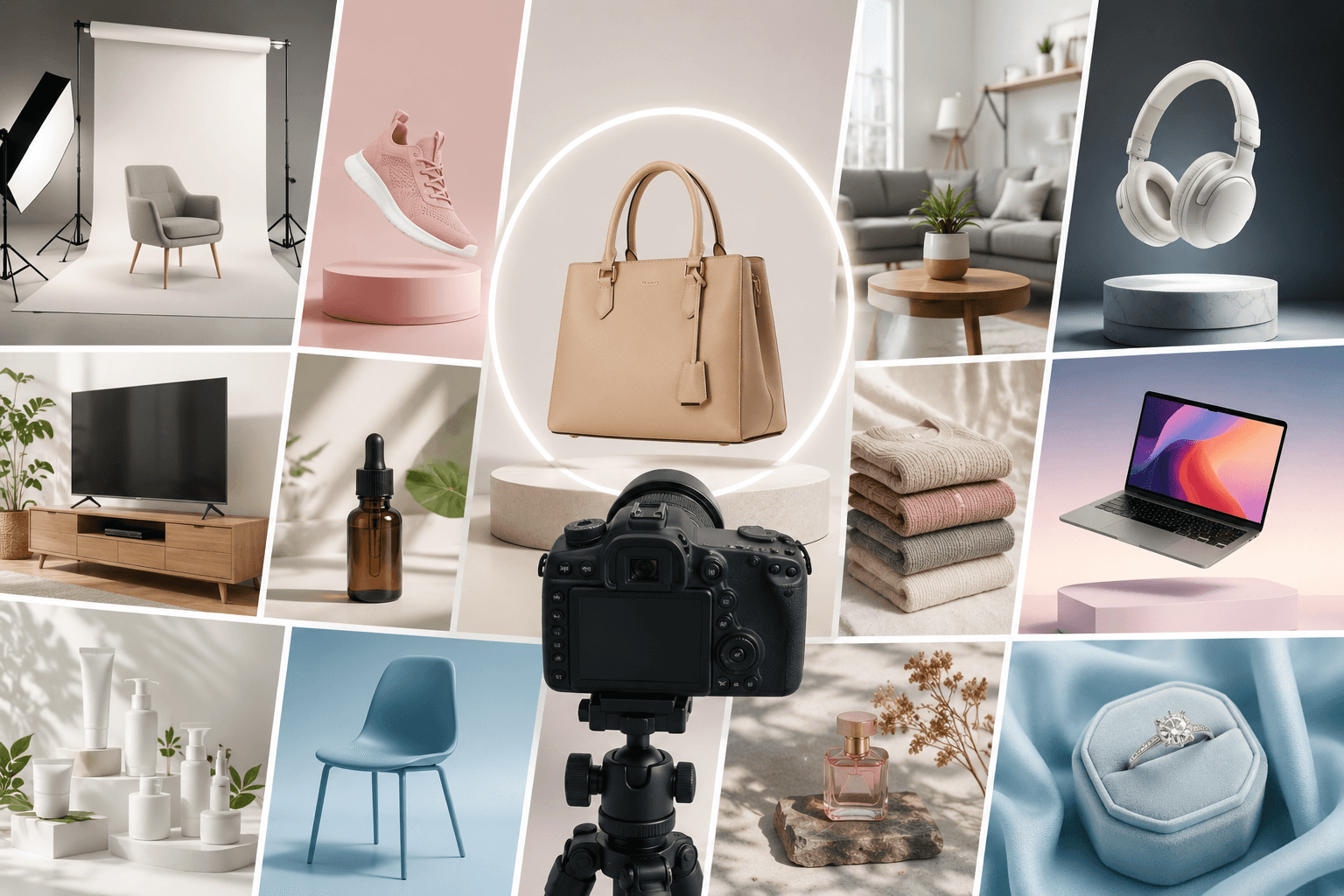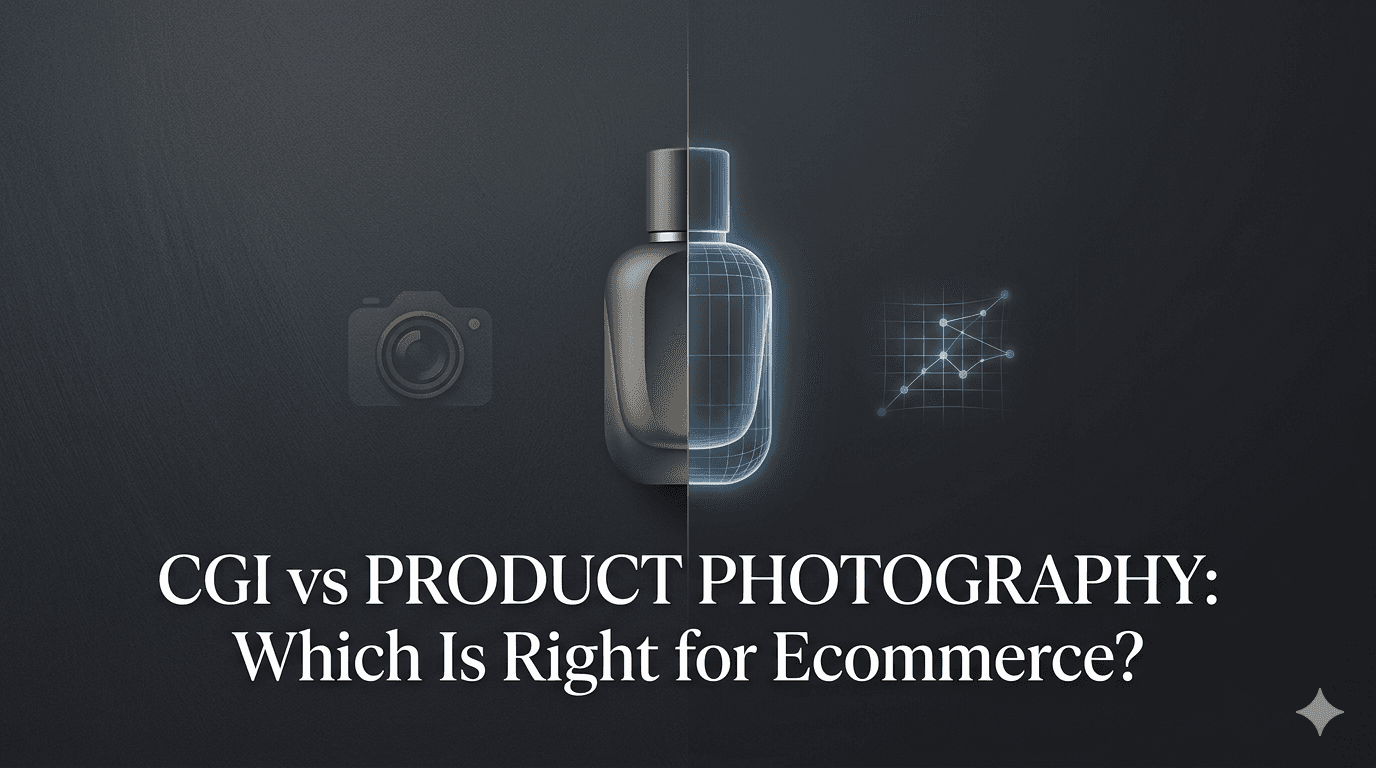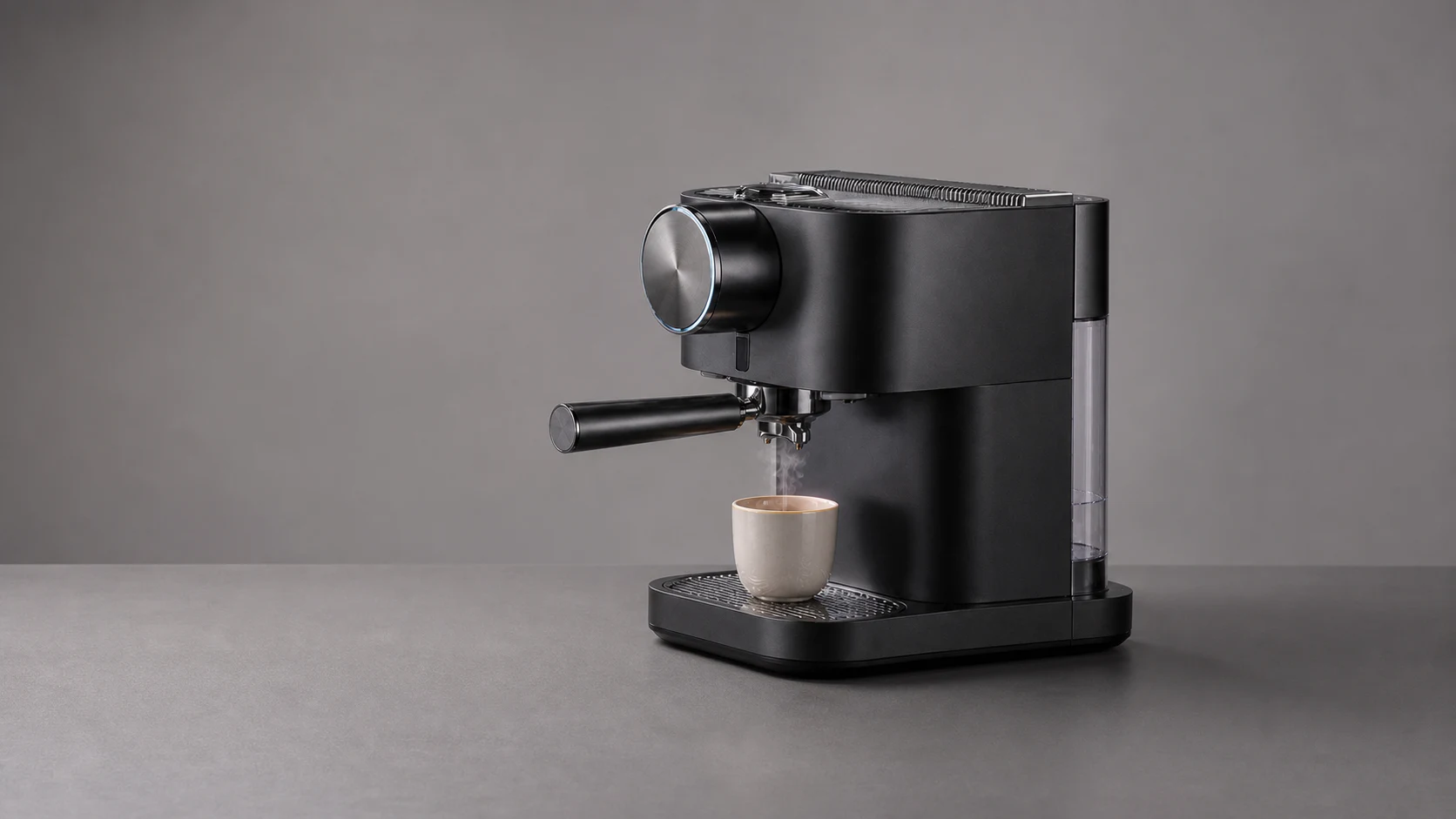
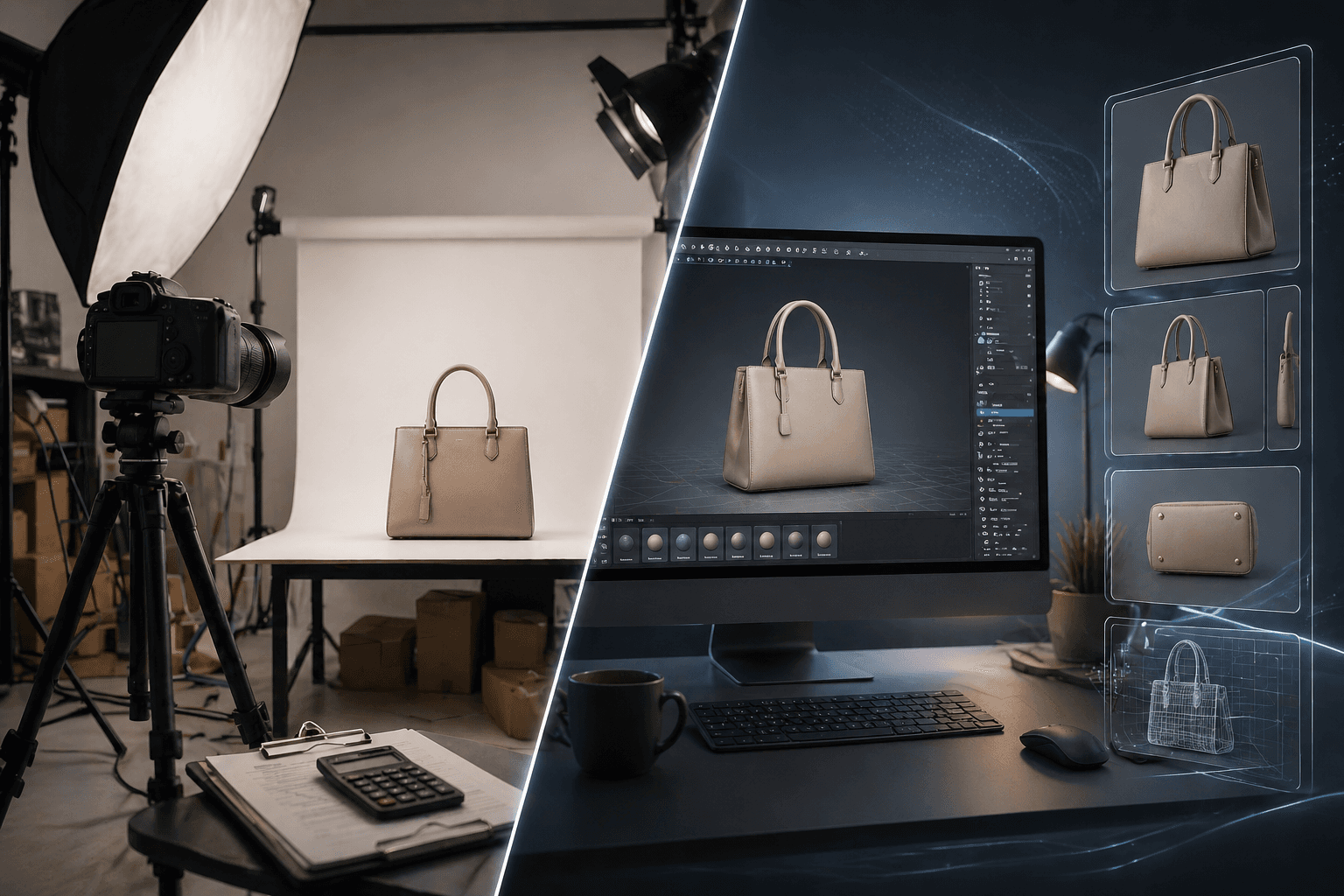
A traditional product shoot and a 3D pipeline cost about the same on a small first job. The gap opens the moment a second angle, a new colourway or a reshoot appears, because photography is priced per day and 3D is priced per image after the model is built.
What a photoshoot actually costs in India
The photographer's quote covers the shoot day. It does not cover the logistics before it, the retouching after it, or the reshoot when the sample arrives damaged. That is where most of the number lives.
- Studio rental: ₹8,000 to ₹25,000 for a half day, roughly double for a full day
- Photographer fee: ₹15,000 to ₹60,000 per day
- Stylist and props: ₹8,000+ day rate, plus ₹5,000 to ₹20,000 in props
- Retouching: ₹500 to ₹2,000 per image
- Sample logistics: ₹3,000 to ₹15,000 per shoot
A worked example: 8 SKUs, 48 images
For 8 SKUs and roughly 48 delivered images, a traditional shoot lands at about ₹1,38,600 all-in. That is ₹17,325 per SKU and ₹2,888 per image once every line item is counted honestly.
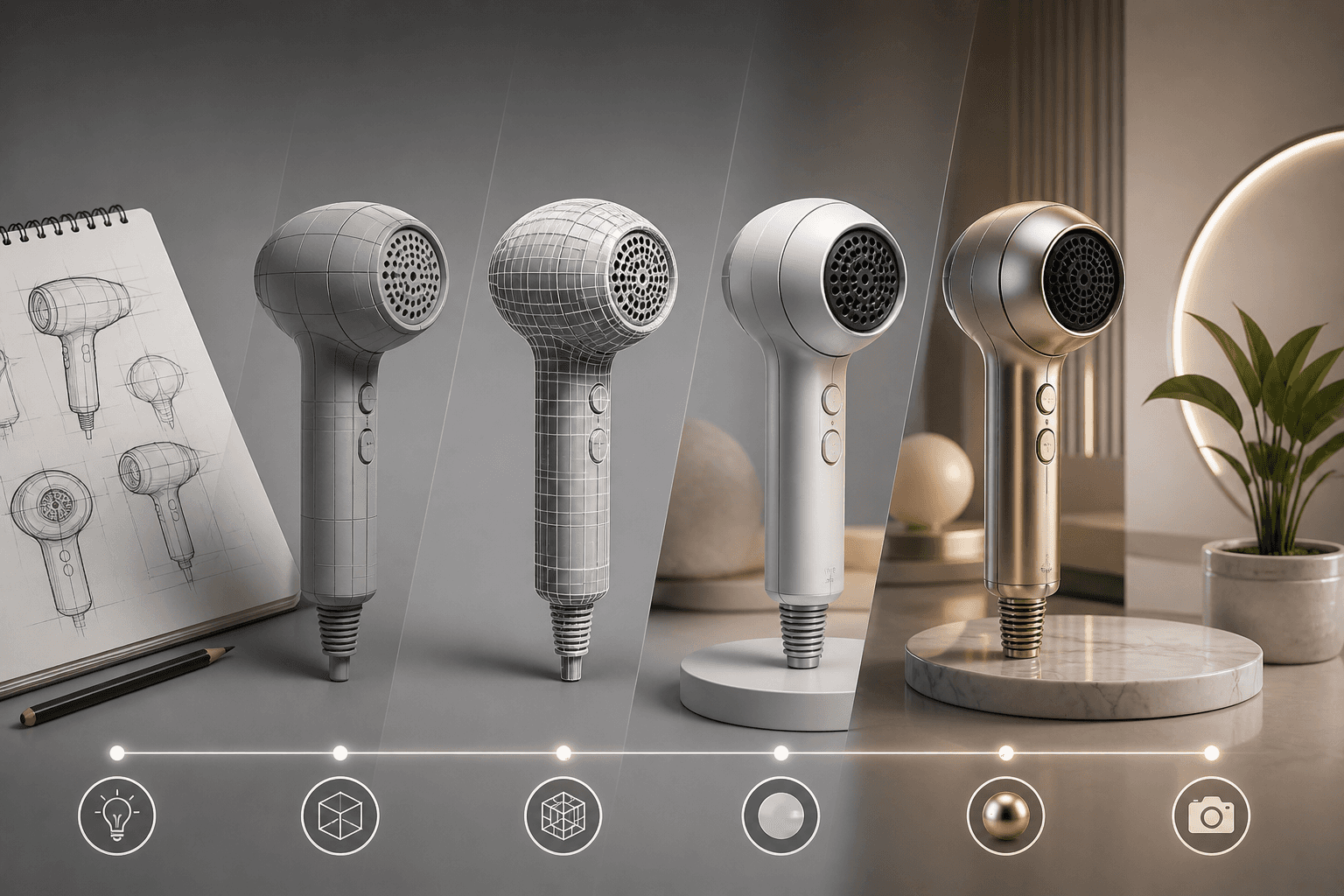
A 3D pipeline for the same brief runs about ₹1,24,000. Modelling at ₹3,000 to ₹12,000 per SKU (average around ₹7,000), plus ₹800 to ₹3,000 per white-background render, with lifestyle composites slightly higher. Per SKU that is ₹15,500 and per image ₹2,583.
On the first small project the two methods are close. The difference on paper is roughly ten percent. On the second project, they stop being comparable.
Where the gap turns dramatic
Add a new colourway. Photography needs a fresh session: samples, studio, crew, retouch. Realistically that is ₹40,000 to ₹70,000 minimum. The same colourway in 3D is ₹800 to ₹2,000 per image because the model already exists and only the surface changes.
The same logic applies to size variants, packaging refreshes and market-specific text. In a 3D file, these are edits. In a studio, they are shoots.
The time cost is often bigger than the money cost
- Photography timeline: sample prep 3 to 7 days, studio lead time 5 to 14 days, shoot 1 to 2 days, retouching 3 to 7 days. Total 12 to 30 days.
- 3D timeline: brief and asset handover 1 to 2 days, modelling 2 to 5 days, first proofs within 48 hours of the model, revisions and delivery 1 to 3 days. Total 4 to 10 days.
For a marketplace launch or a campaign with a fixed live date, two extra weeks is often the more expensive number on the page.
When a traditional shoot is still the right answer
Some briefs still favour the camera. Raw denim, ceramics and leather where texture sells the product. Food and beverage where steam, condensation and organic imperfection carry the image. And full-page hero campaigns where a specific human moment matters more than infinite scale.
The decision framework
- SKU count above 10 in the next 12 months
- Any colour, size or material variants at all
- Product needs images before it exists physically
- You will need to refresh or extend the content later
If two or more of those are true, the maths has already tipped. If none are true and this is a one-off hero image, book the shoot. The comparison is not about which method looks better, both can look excellent. It is about scale, speed and how much of the cost you have to pay again the next time.