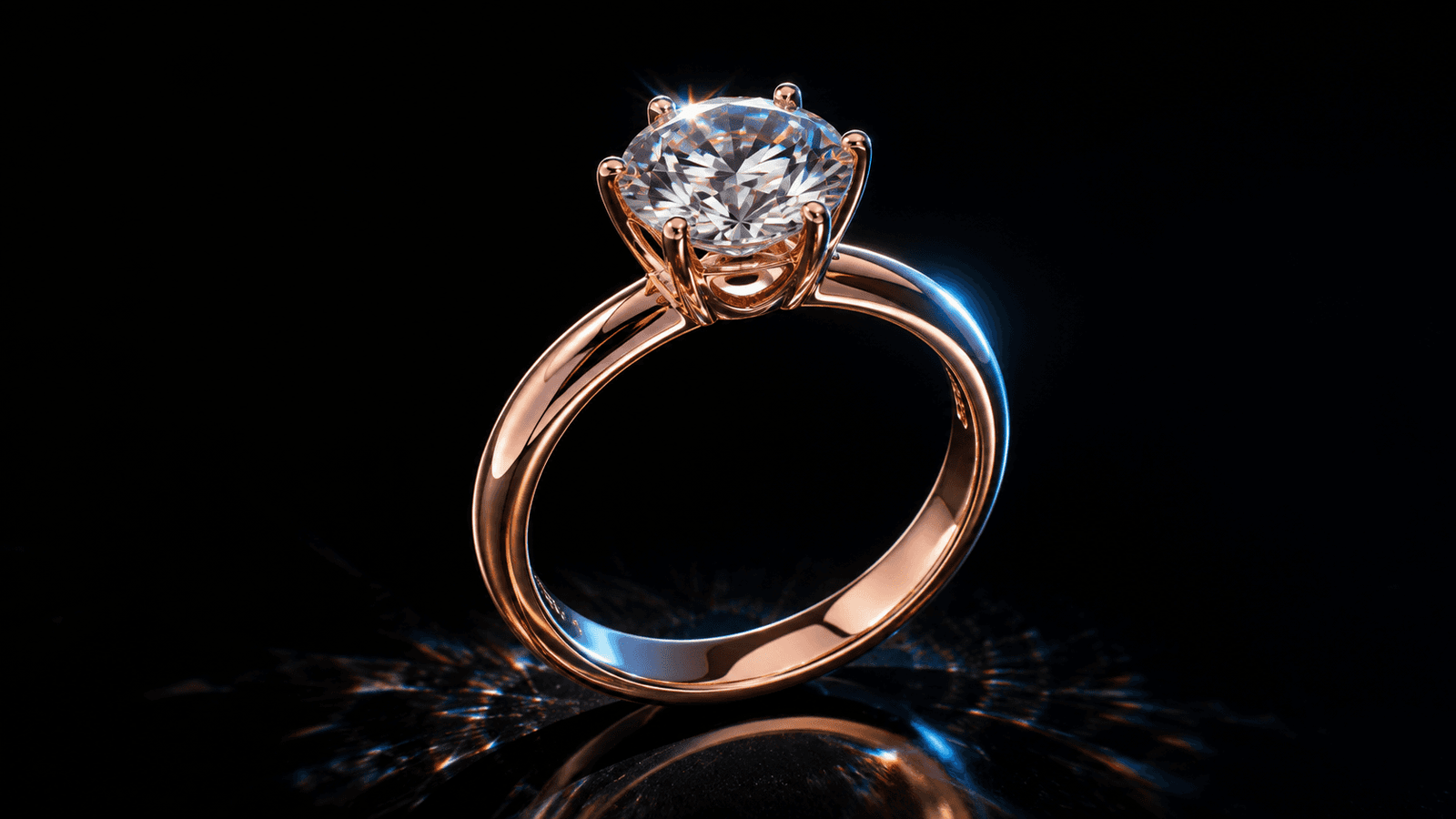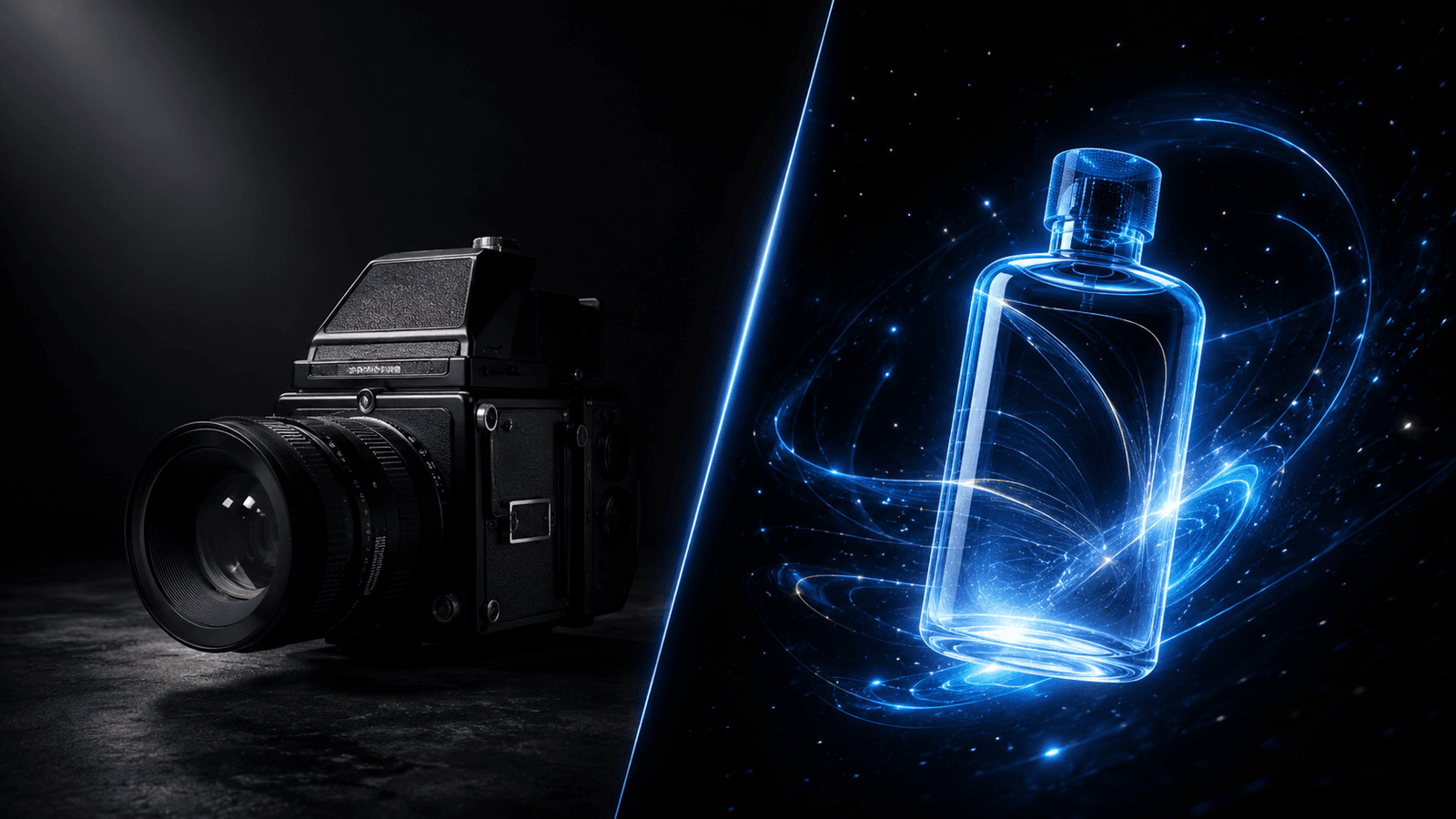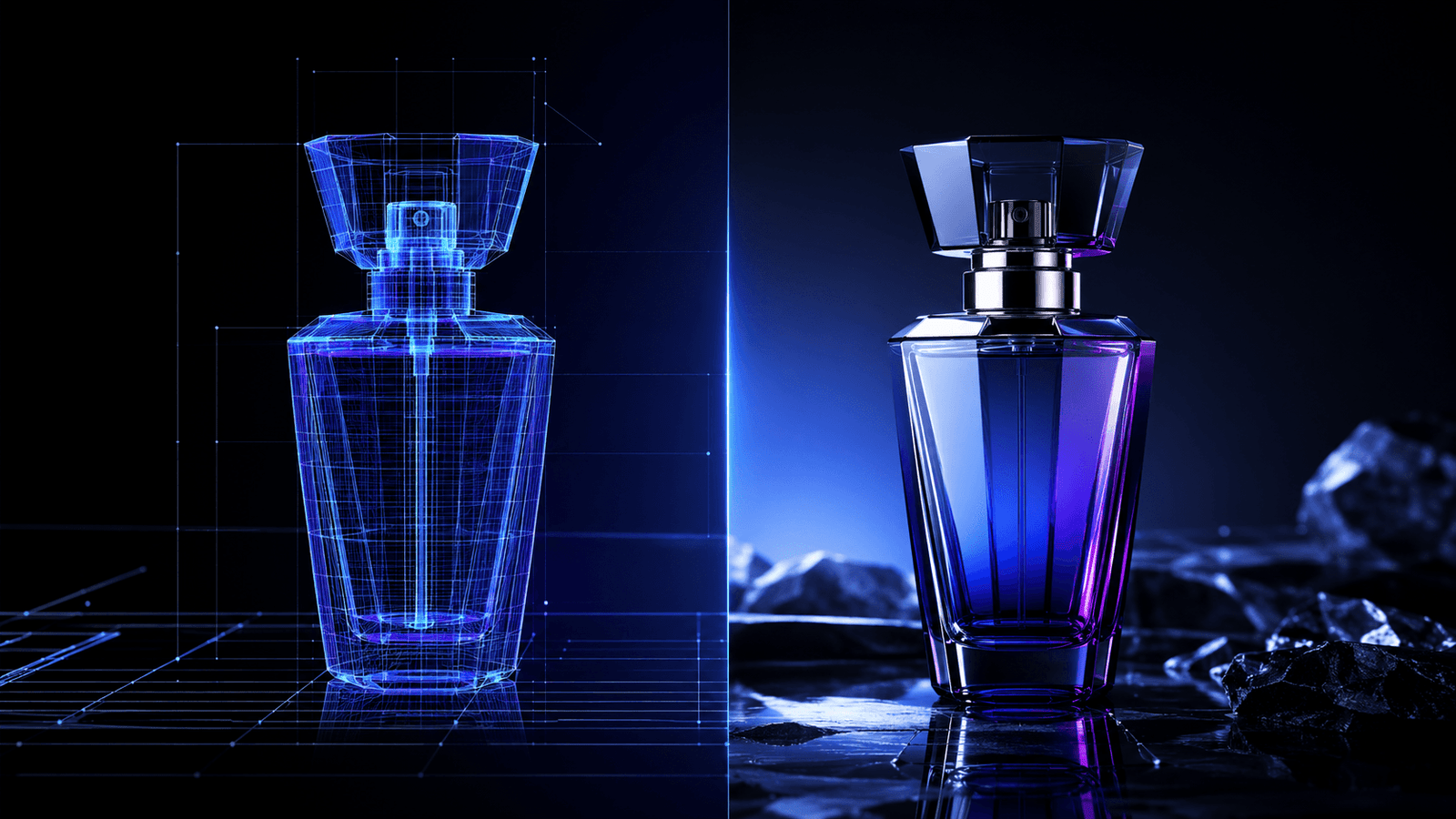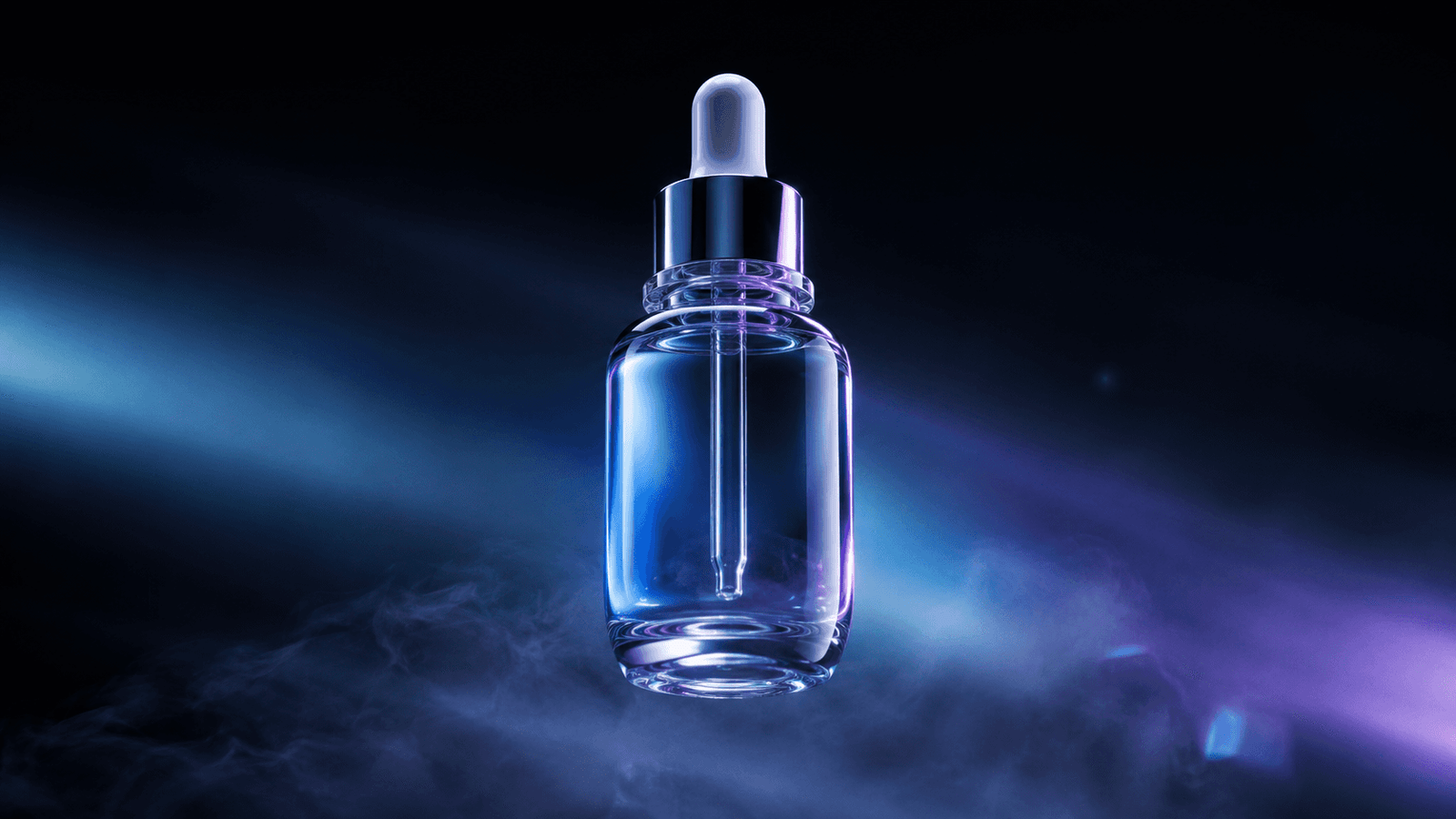
Beauty and skincare brands are moving to 3D visualization because the category is bought almost entirely on visuals, and the visuals it needs (glass, liquid, refraction, exact finish) are the hardest things to photograph reliably and the easiest things to solve in a render.
Why the category fits 3D better than photography
A customer cannot smell a fragrance, feel a serum's viscosity or test a lipstick colour through a screen. The image is the product. If the label is slightly off, the bottle looks empty, or the highlight sits wrong on a cap, the sale doesn't happen.
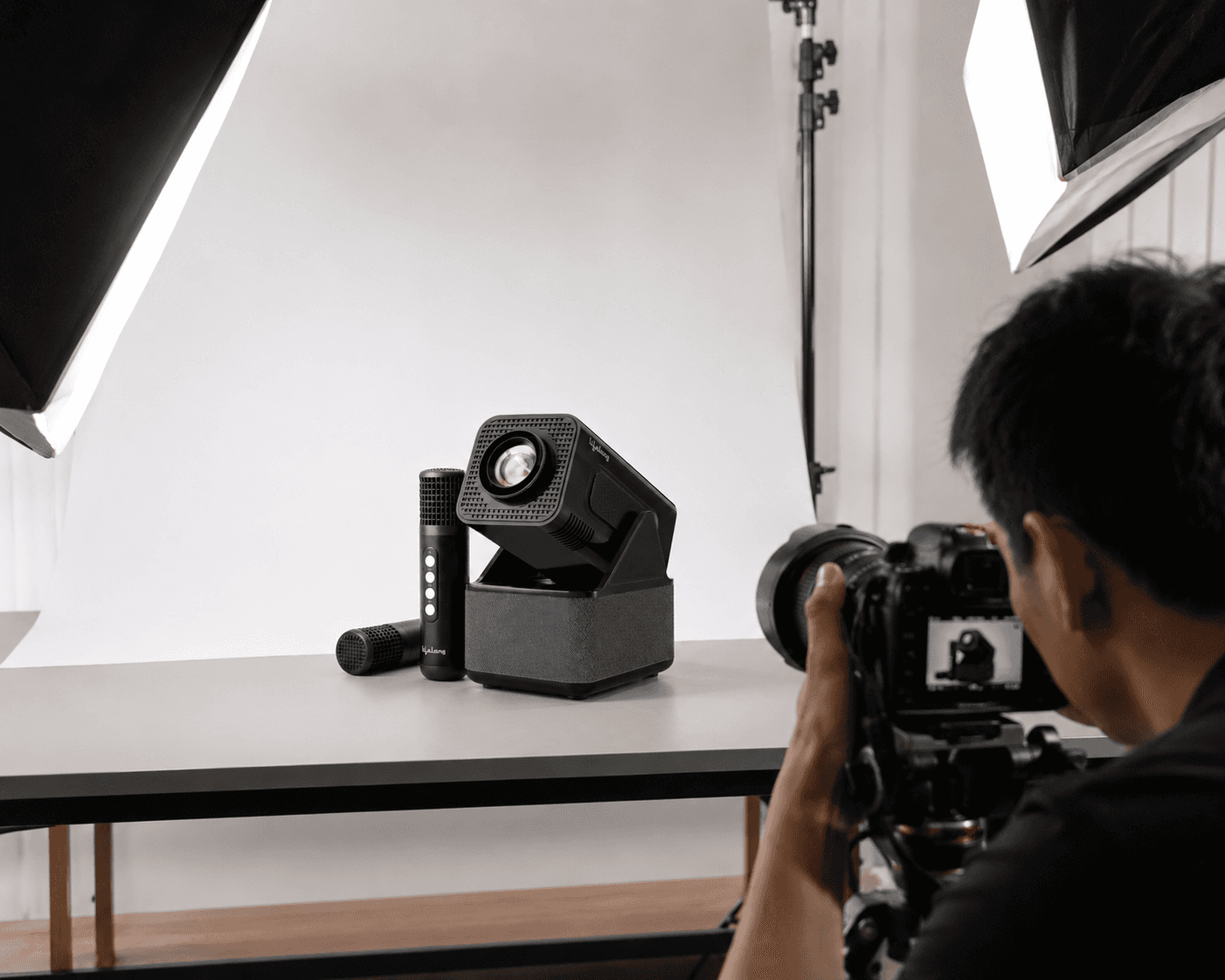
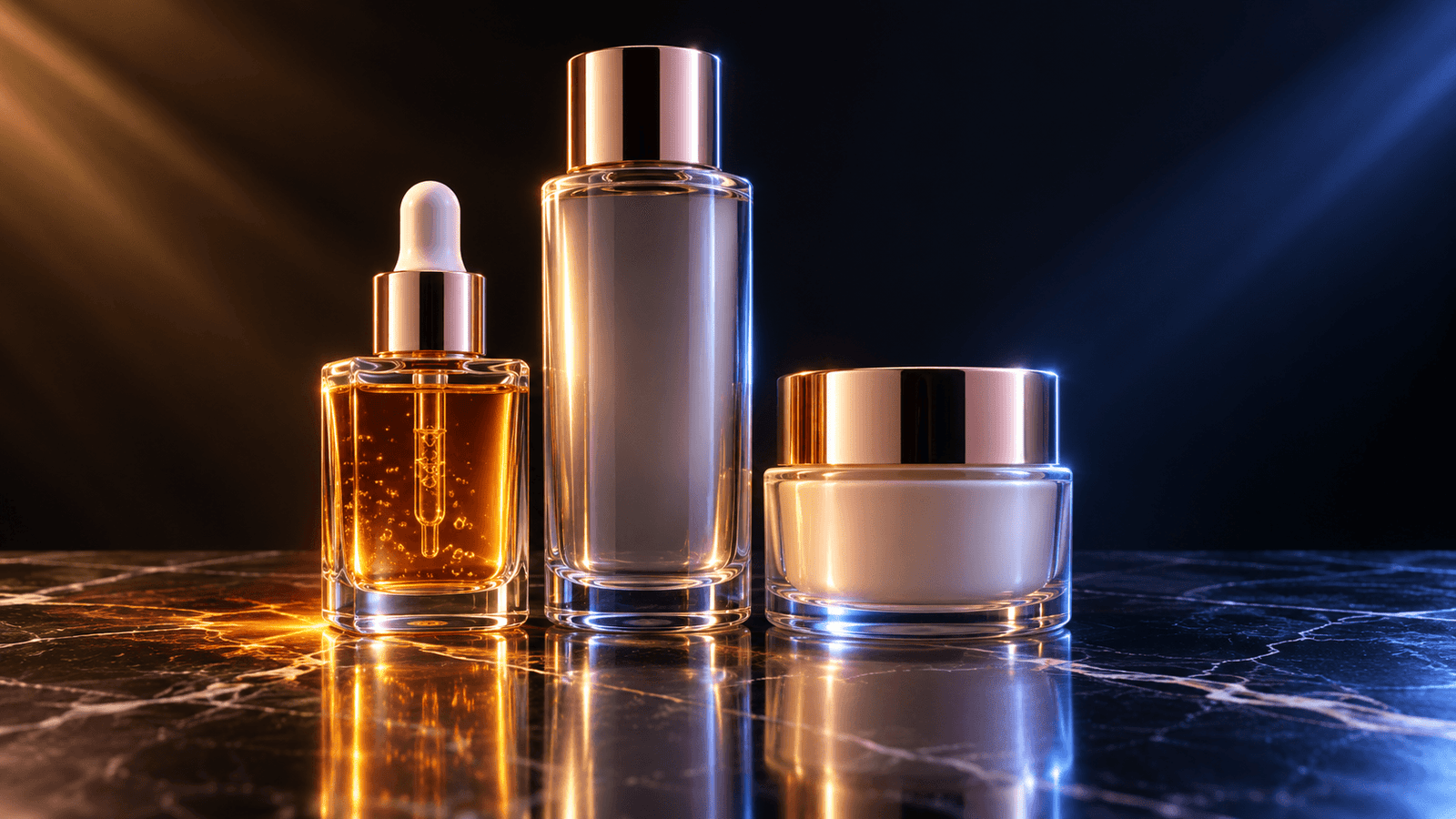
Beauty products are also technically hard to photograph. Glass reflects everything on set. Liquids shift under light changes. Metallic caps create highlights that go wrong the moment the sun moves. 3D handles all of that in a controlled render environment, with the same lighting rig used across the range.
What a beauty CGI deliverable set looks like
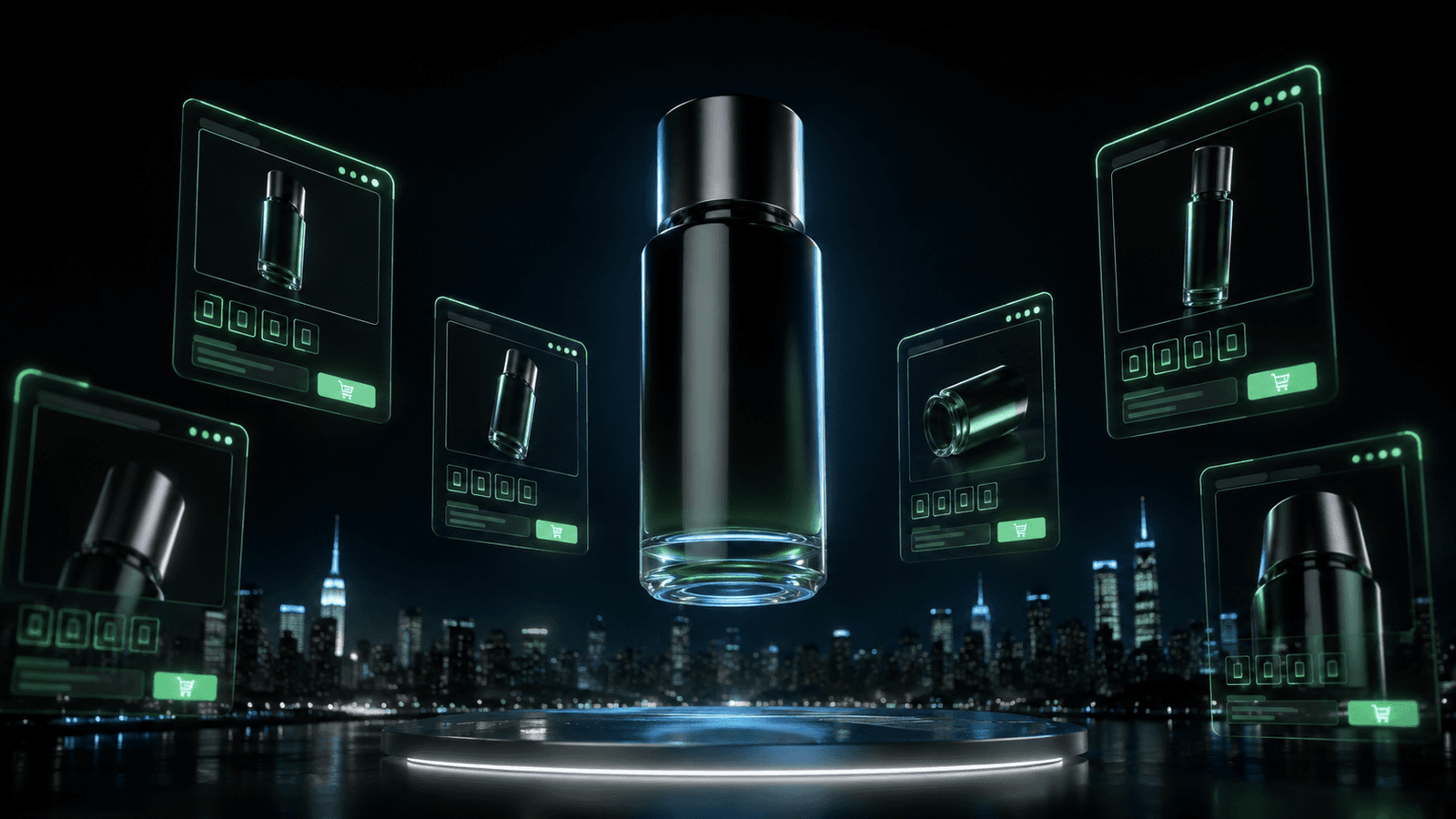
- Hero product renders: single-product cinematic shots for PDP heroes, Amazon and campaign banners
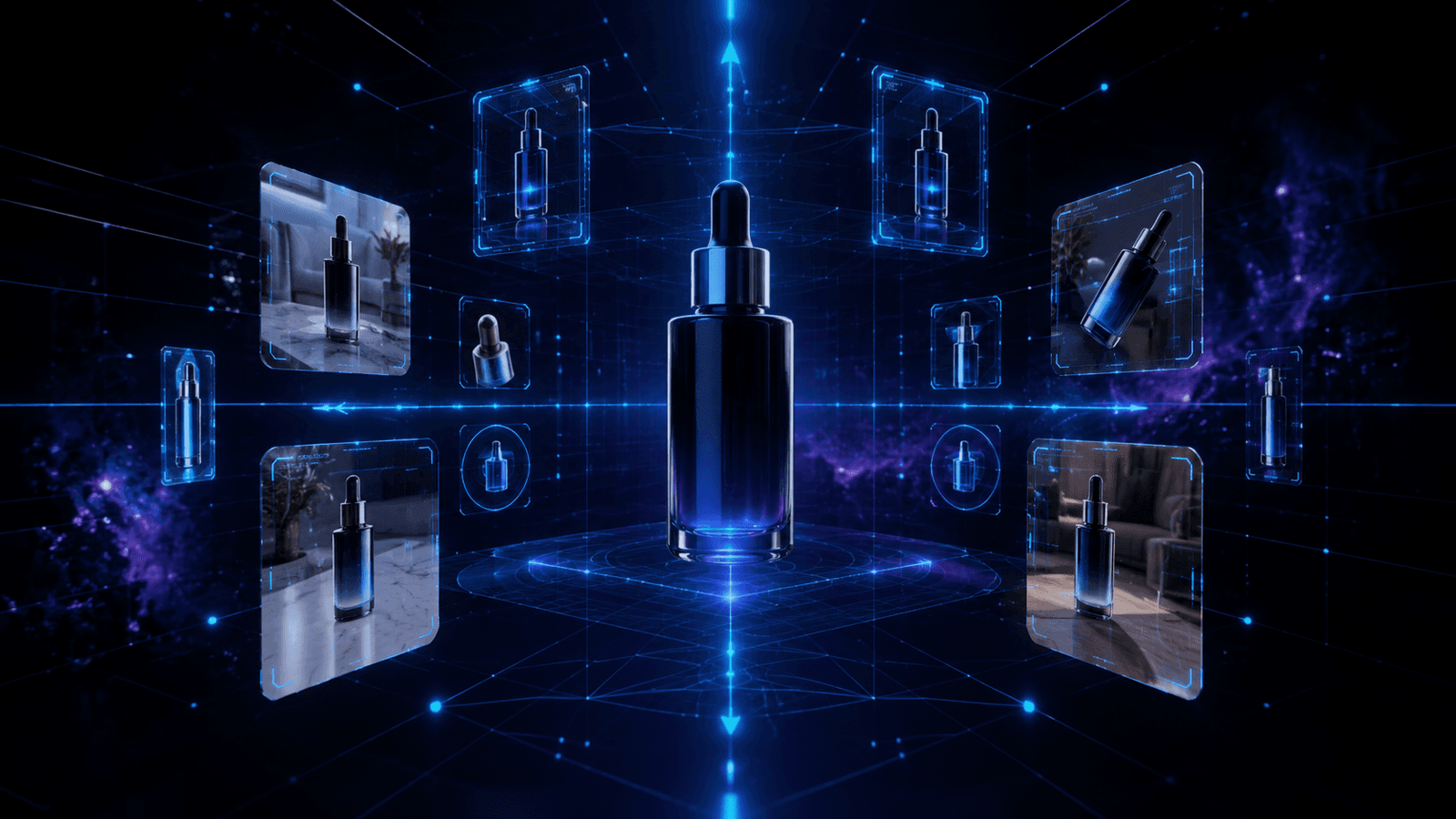
- 360° render sets: 8-12 angles including front, back, cap, base and label close-ups
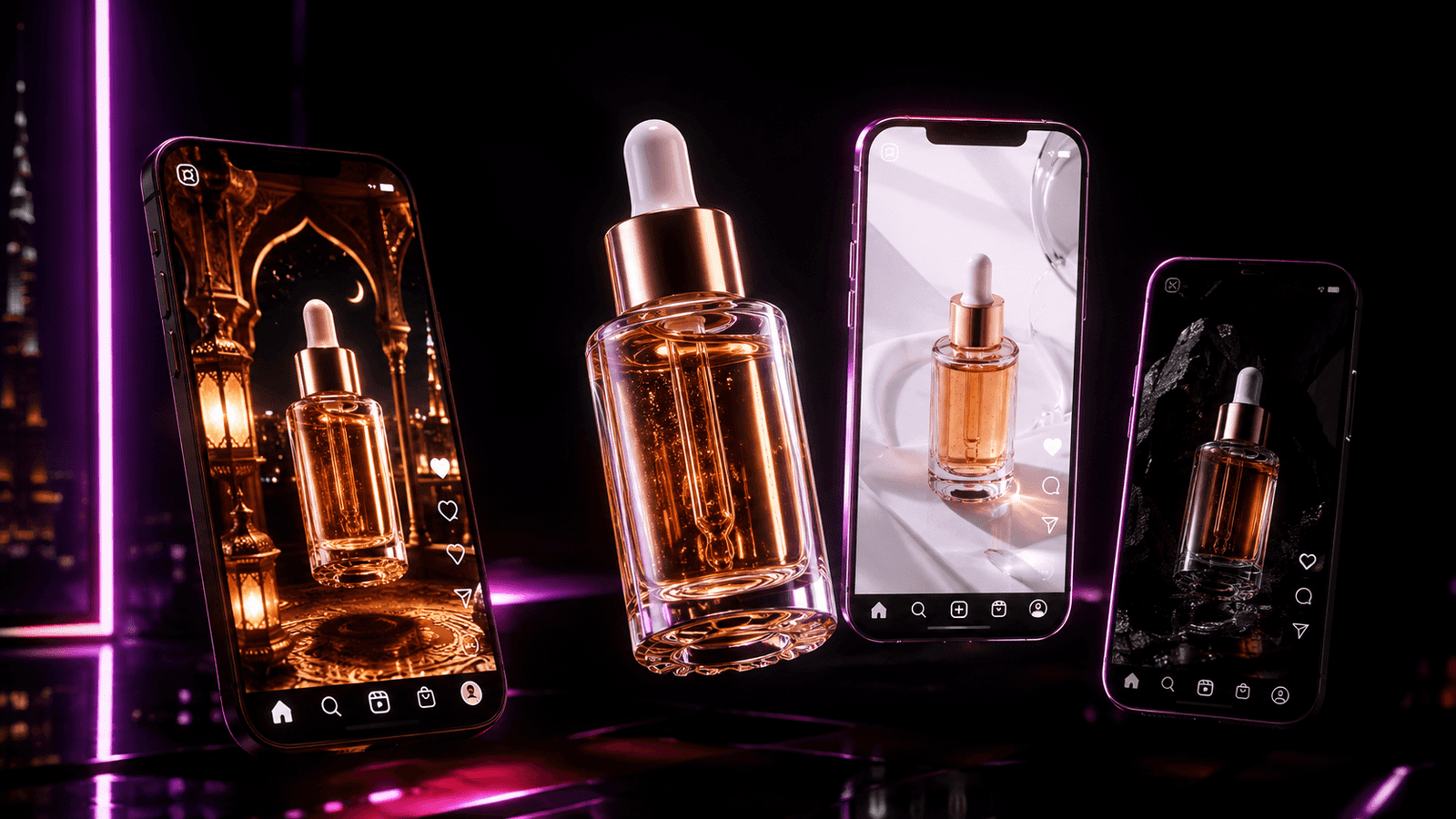
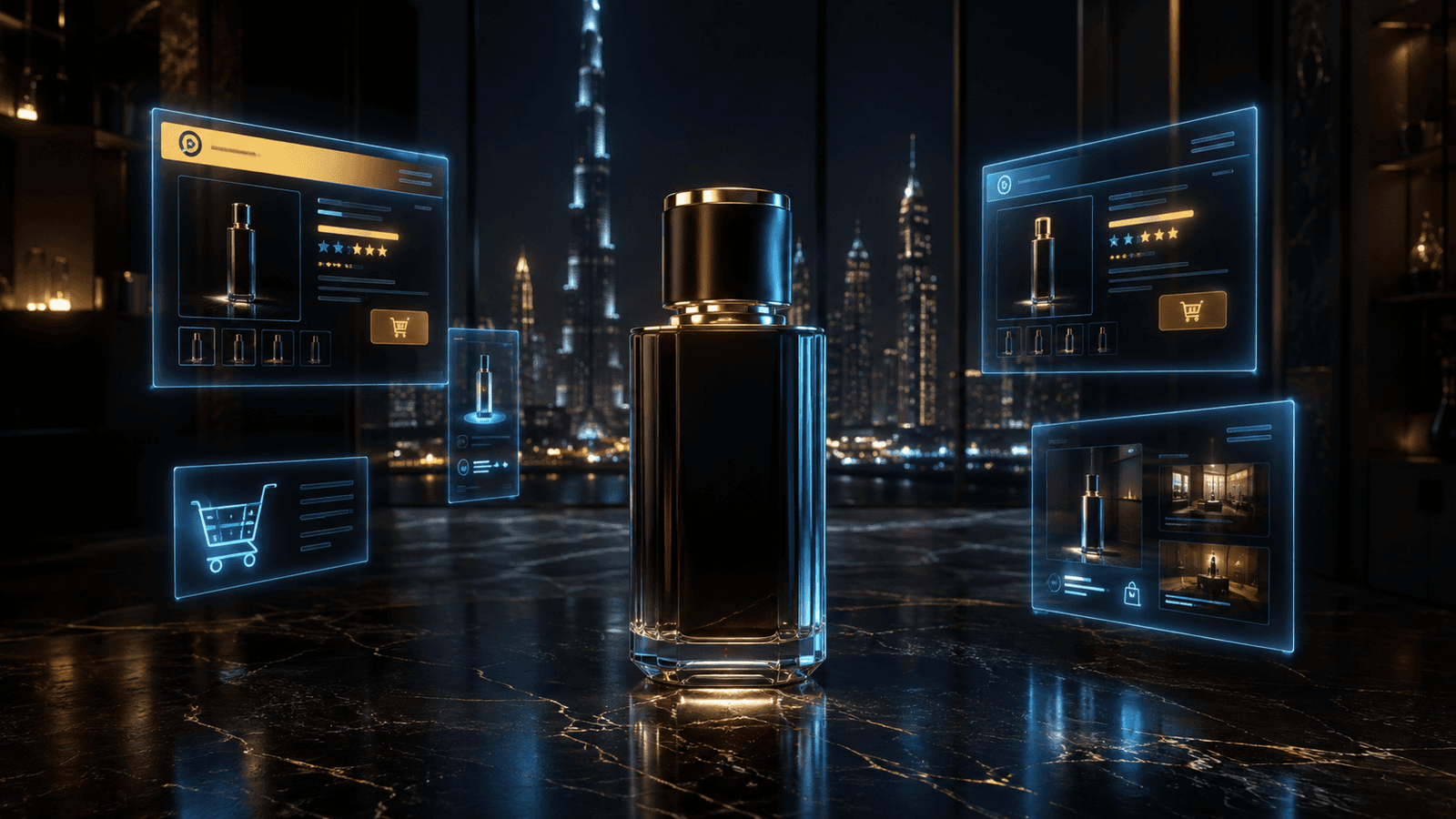
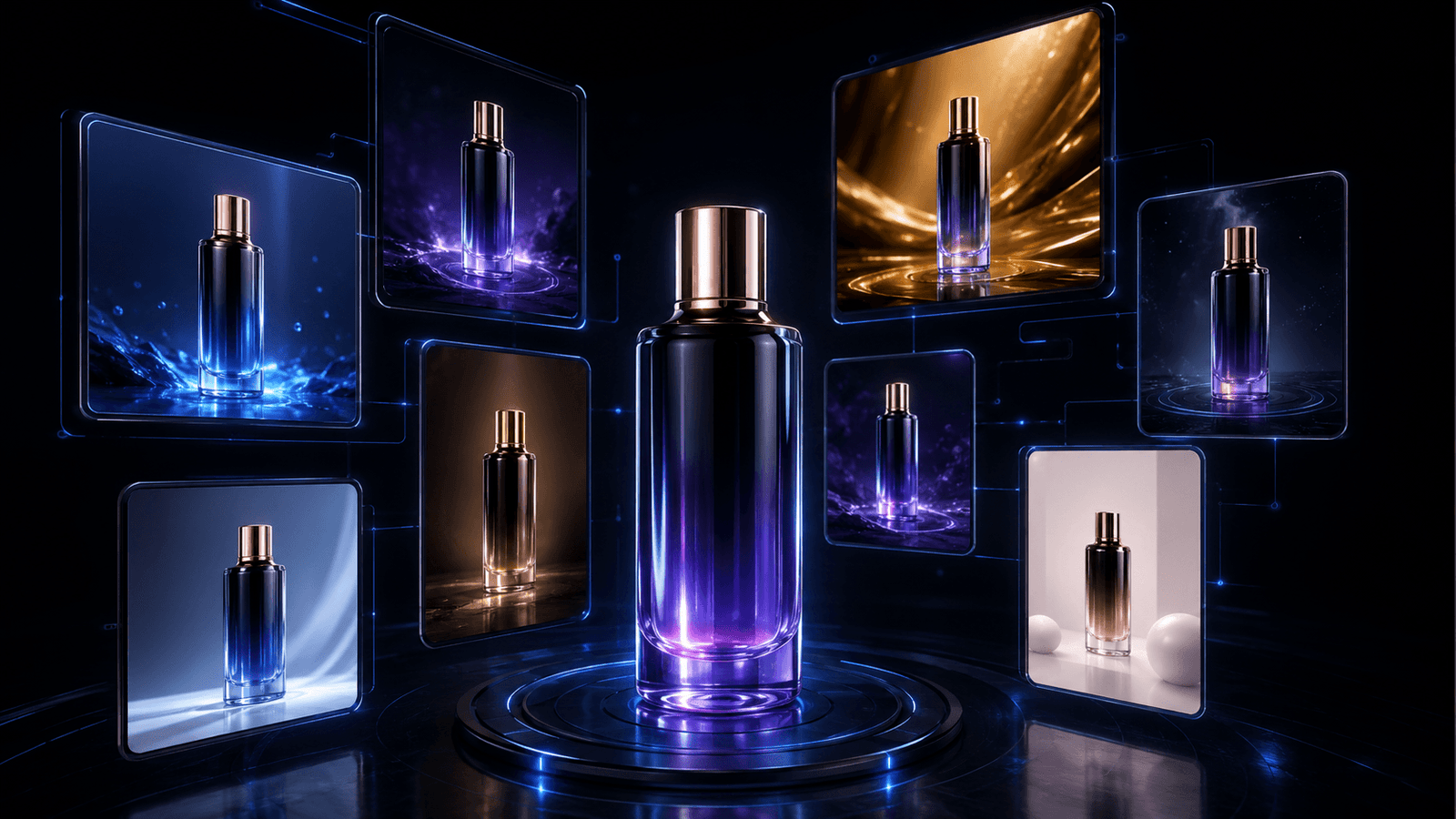
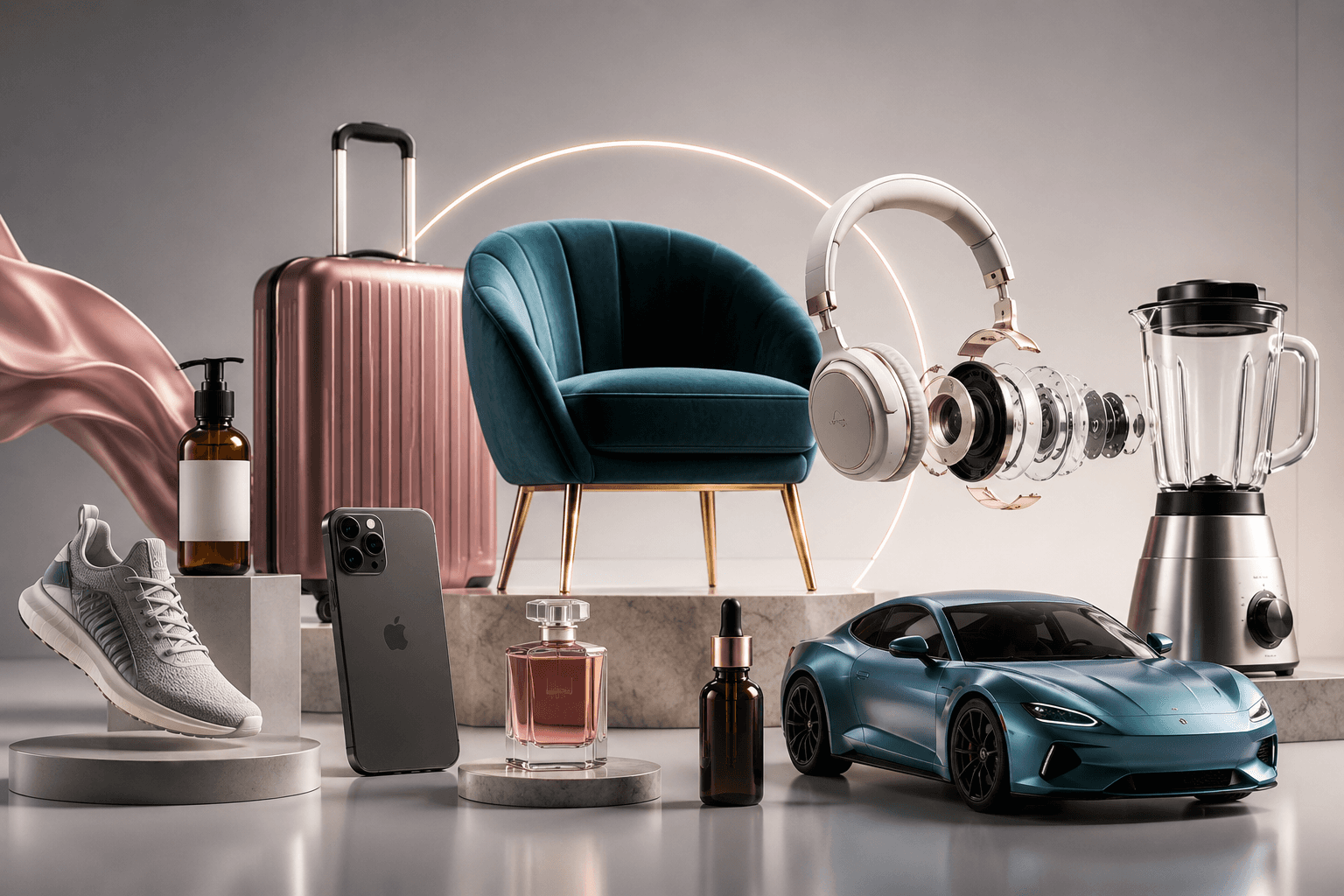
- Lifestyle composites: the product placed in a marble bathroom shelf, a vanity, a styled shelf, built as a scene, not shot on location
- Texture and ingredient visuals: close-ups of cream, gel, particles or moisture droplets rendered rather than fought for on set
- Colourway libraries: once the model exists, a 30-shade lipstick range is a material swap: days, not months
The four material problems, and how a render solves them
Glass and transparent packaging: modern render engines simulate refraction, caustics and environmental reflections physically, using HDRI lighting to place the bottle inside a believable world.
Liquid and formulation: volumetric rendering solves the interaction between the liquid and its container, the meniscus, the subsurface light passing through, the optical density. A serum reads as full and viscous rather than painted on.
Frosted and matte surfaces: the way the surface scatters light is defined mathematically, so texture shows without the render-to-render inconsistency that plagues even careful studio photography.
Metallic caps and closures: the environment that gets reflected is a controlled digital one. Every render shows the same clean reflection, which is difficult to guarantee across a real range on real set days.
How the production actually runs
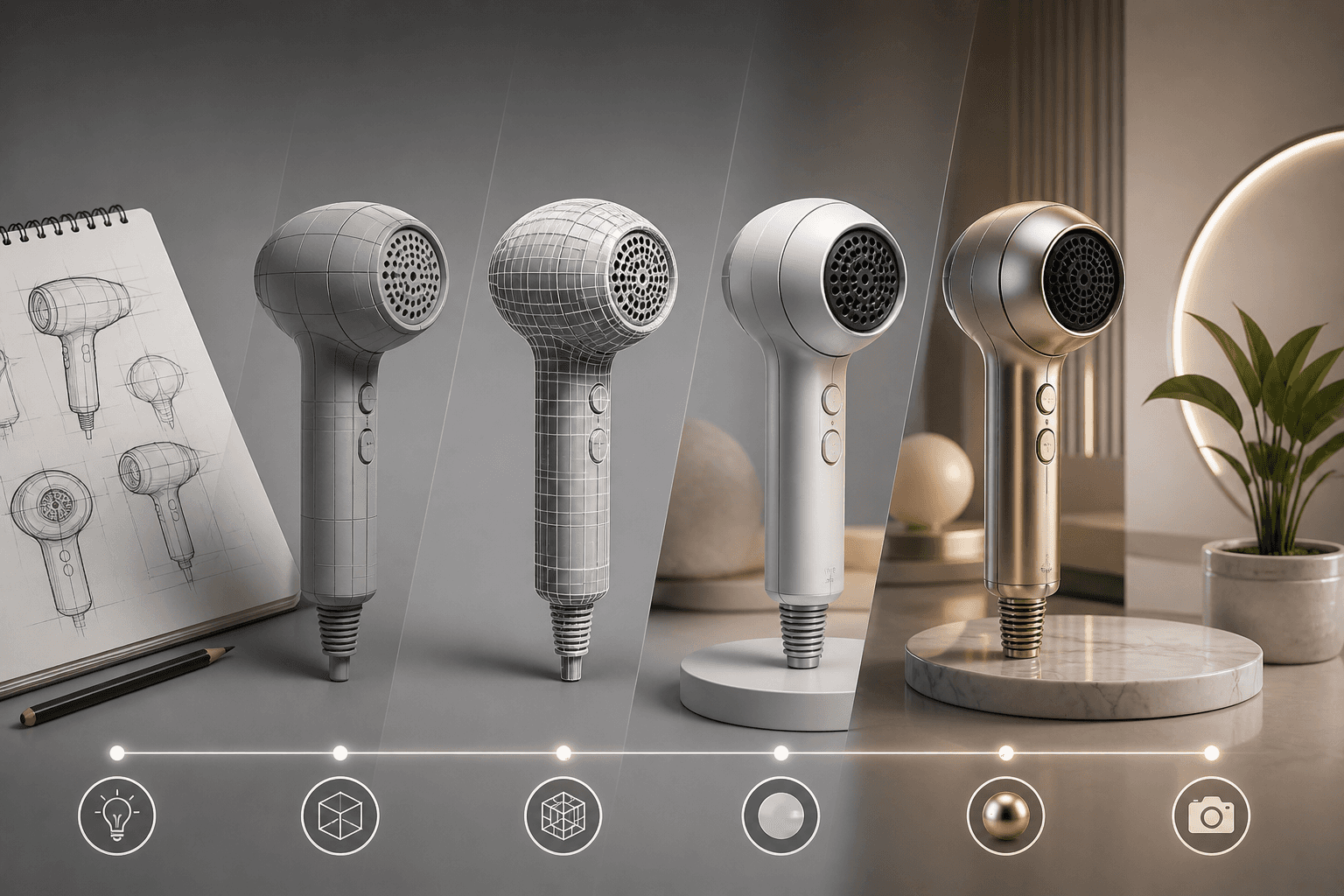
- Reference and brief: physical sample or packaging dielines, label files, CAD if available, plus a mood board
- Modelling: bottle, cap, pump mechanism, label placement, glass thickness, liquid fill level, usually two to three days for complex packaging
- Material and lighting setup: physical properties per surface, HDRI environment, three-point lighting for heroes
- Draft renders: low-res passes for review, one to two revision rounds is typical
- Final delivery: usually 4000×4000 or larger, PNG with transparency, JPEG, layered PSD
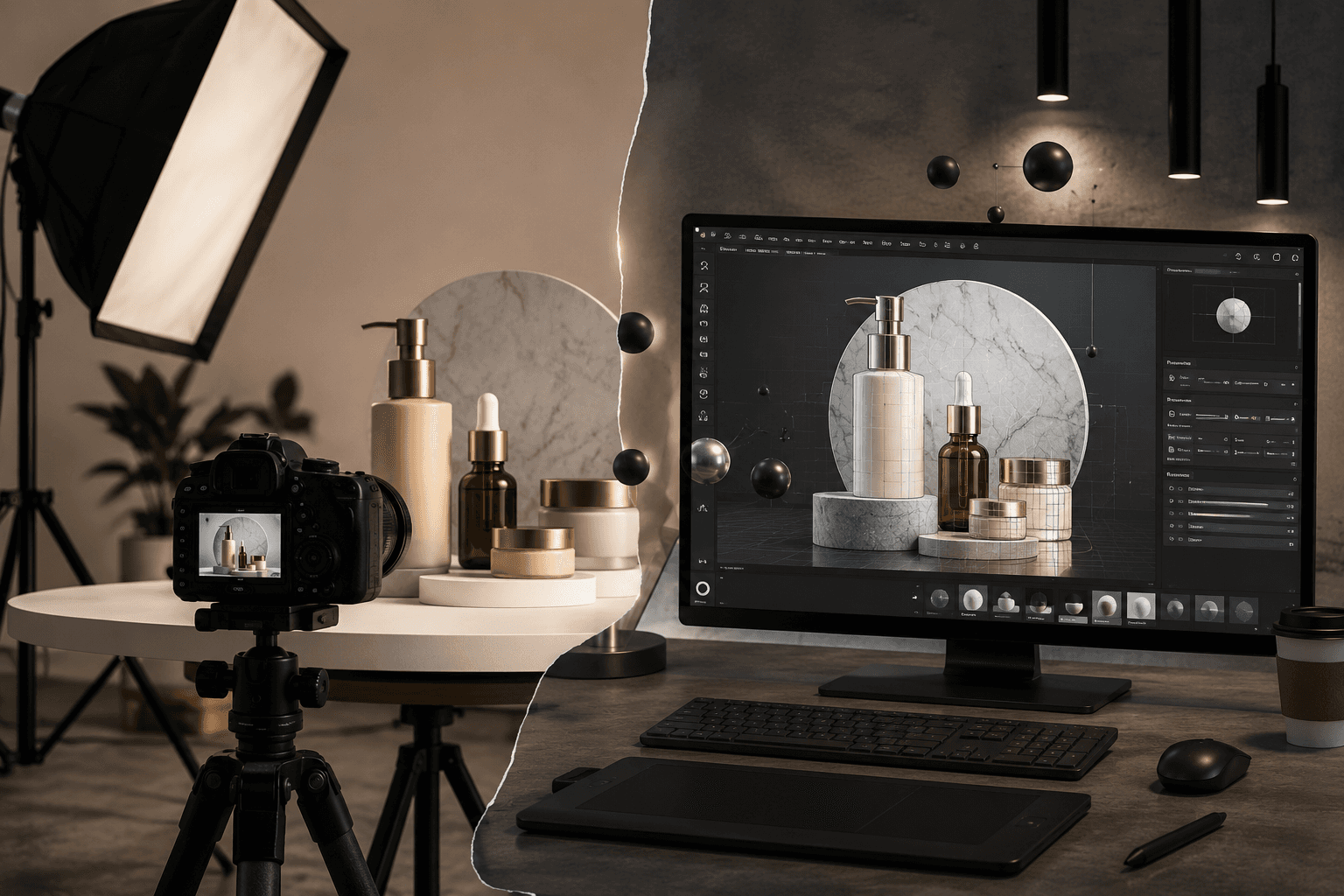
3D vs a beauty photoshoot
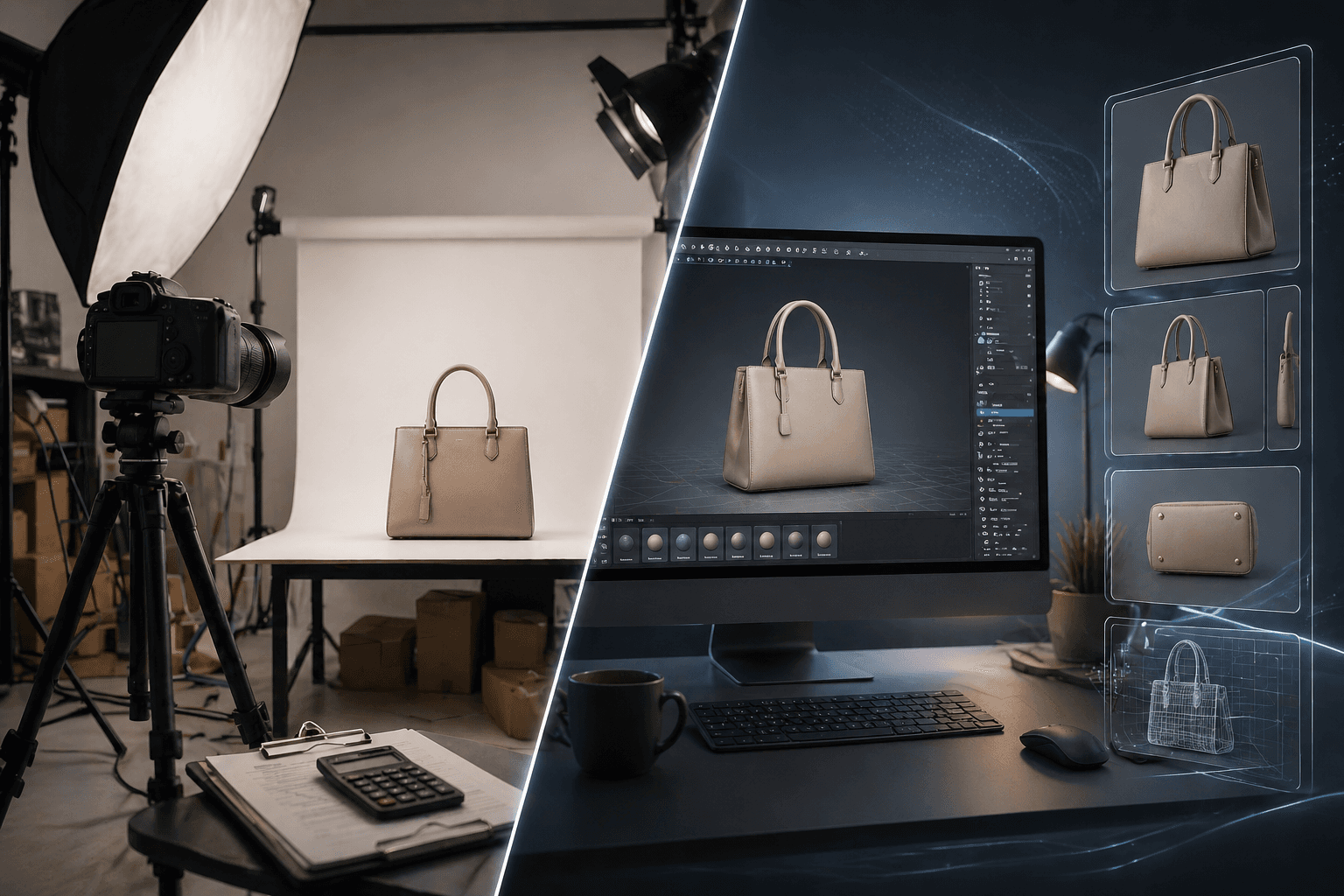
A studio shoot for a ten-product skincare range with hero, lifestyle and variant coverage runs into a few lakh once studio, photographer, styling, props and retouch are all counted. Turnaround is typically two to four weeks from booking to delivery.
The same range in 3D delivers first renders in three to seven business days with lifestyle in the same window, at a fraction of the shoot cost. Twelve lipstick shades that would need twelve shoots become twelve material swaps rendered in one session.
The under-appreciated advantage is timing. Photography needs a finished, packaged product in the studio. A CGI pipeline works from dielines and CAD, so launch visuals can be finished before the product ships from the factory.
What to look for in a studio
- A real glass and liquid portfolio, ask specifically. General 3D skill will not close that technical gap
- Label accuracy: correct colour values, print finish, edge wrap on curved surfaces
- Lighting range across premium minimalist, warm editorial, clinical clean and dramatic luxury: not one aesthetic on repeat
- Full lifestyle capability, not only clean packshots