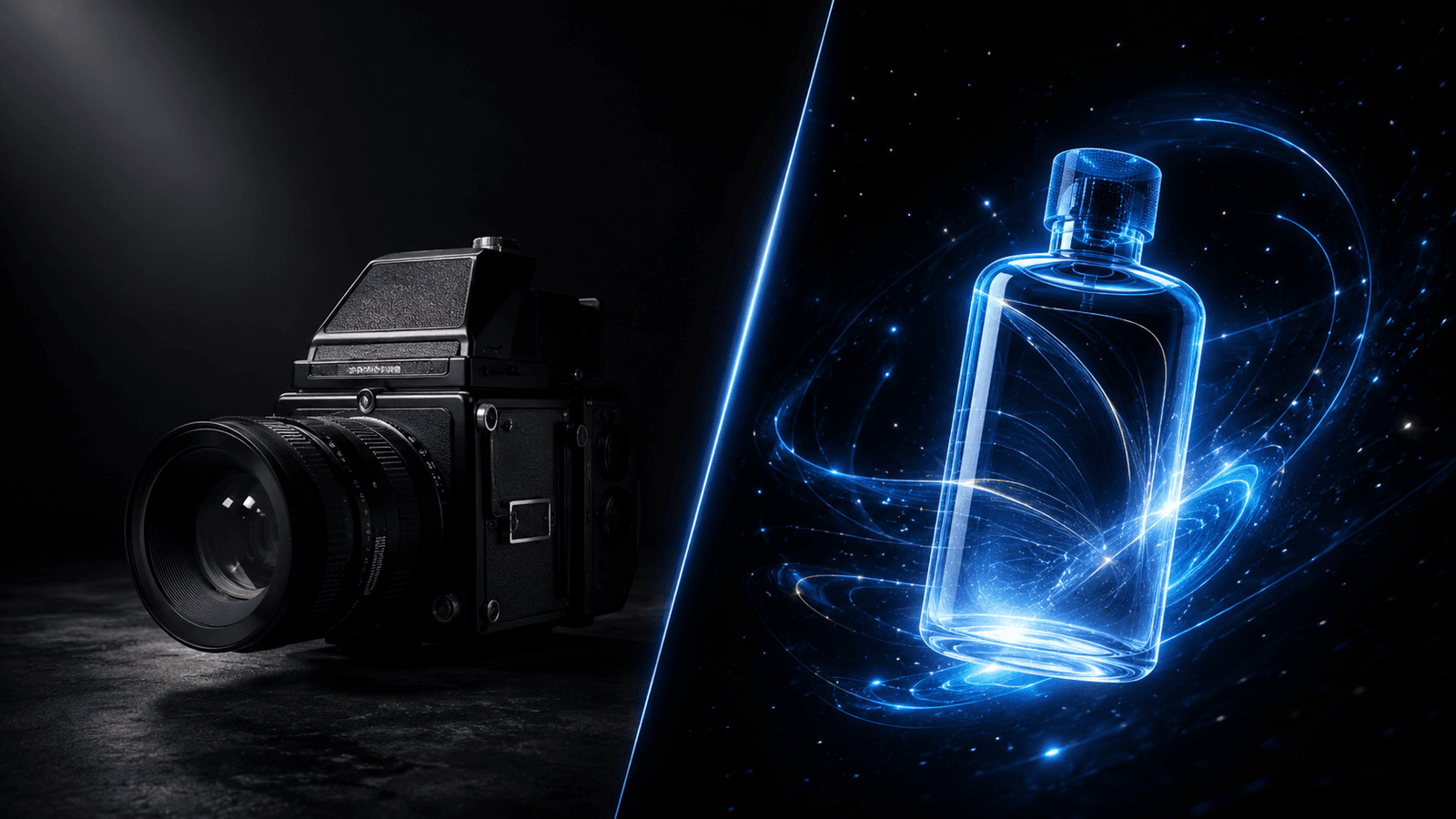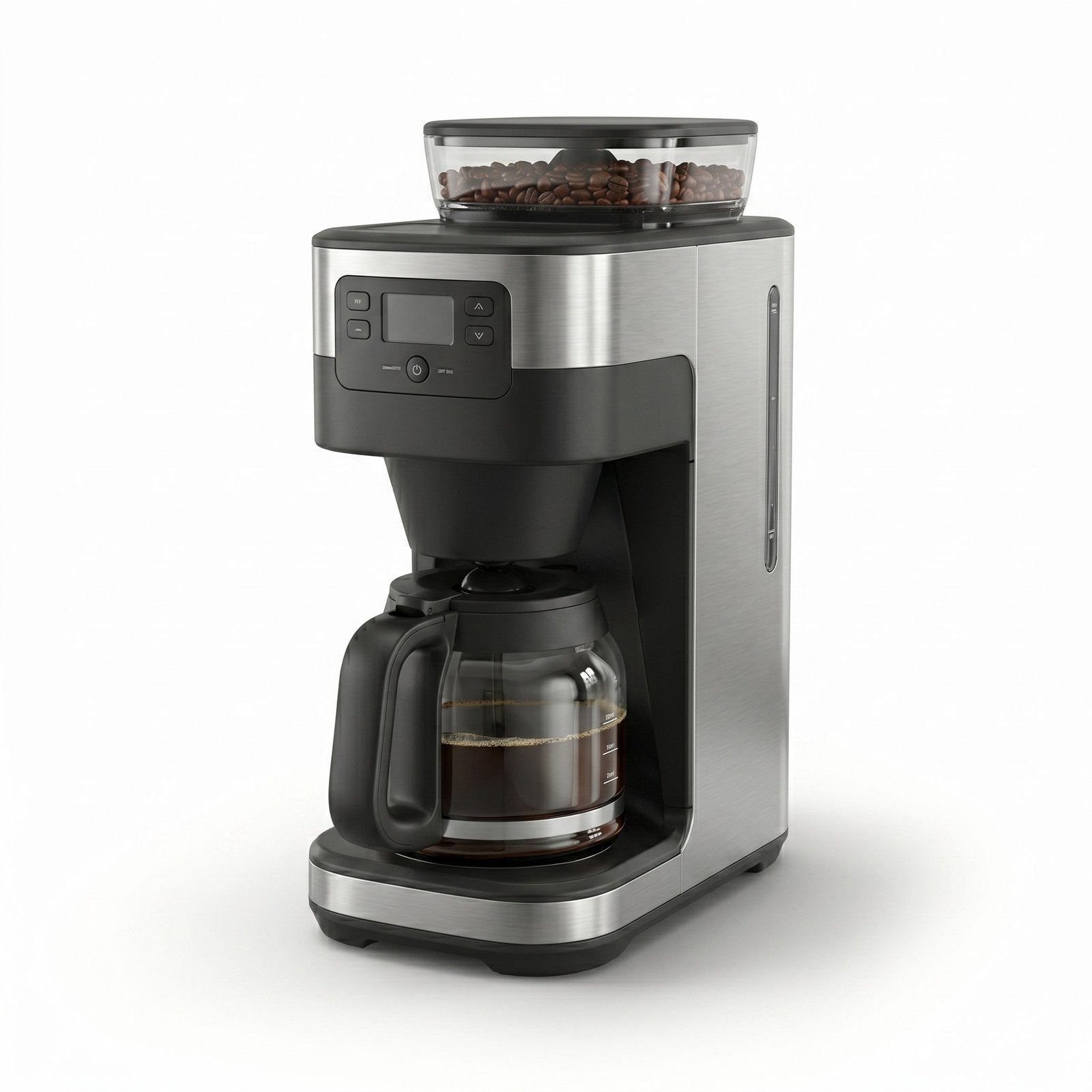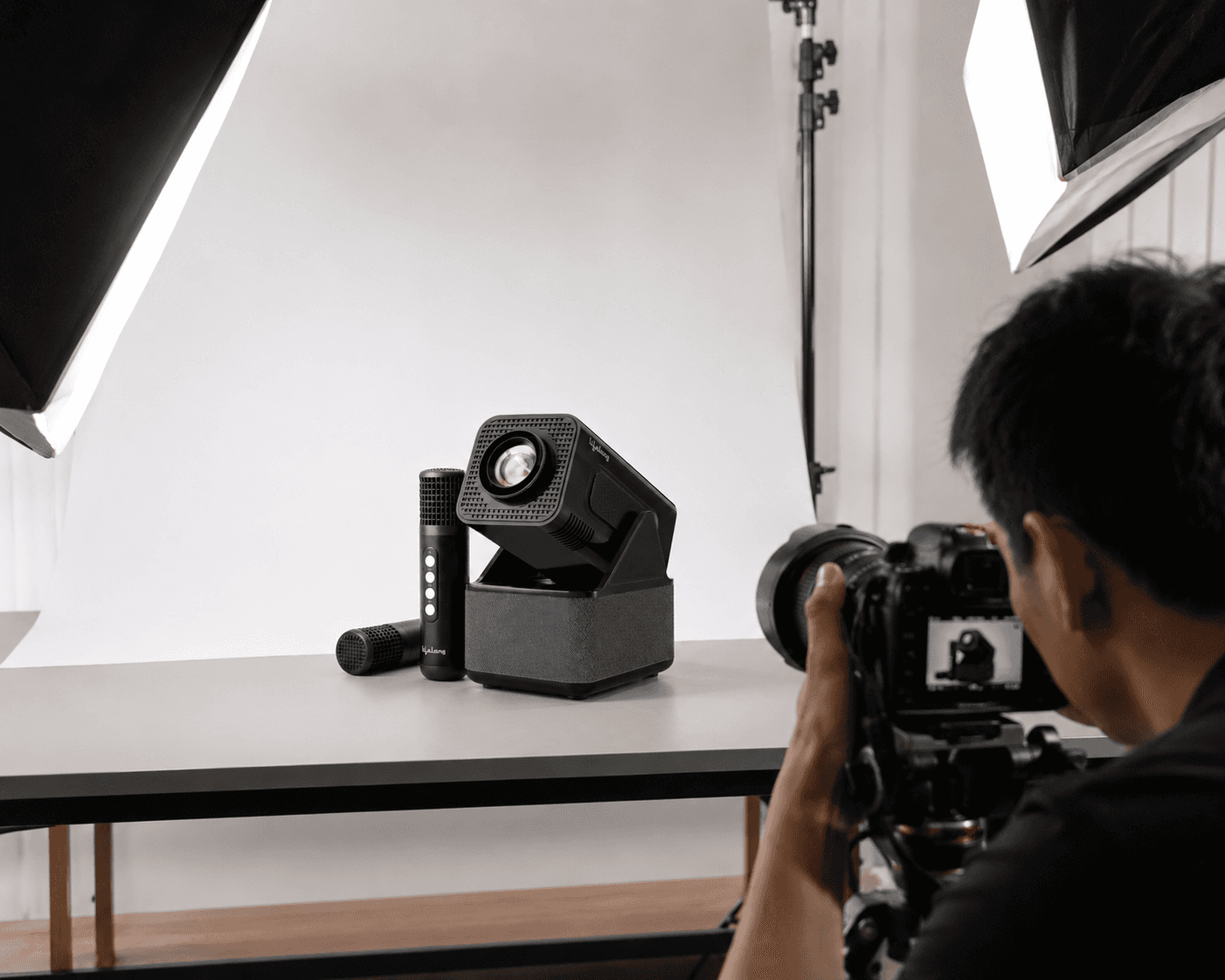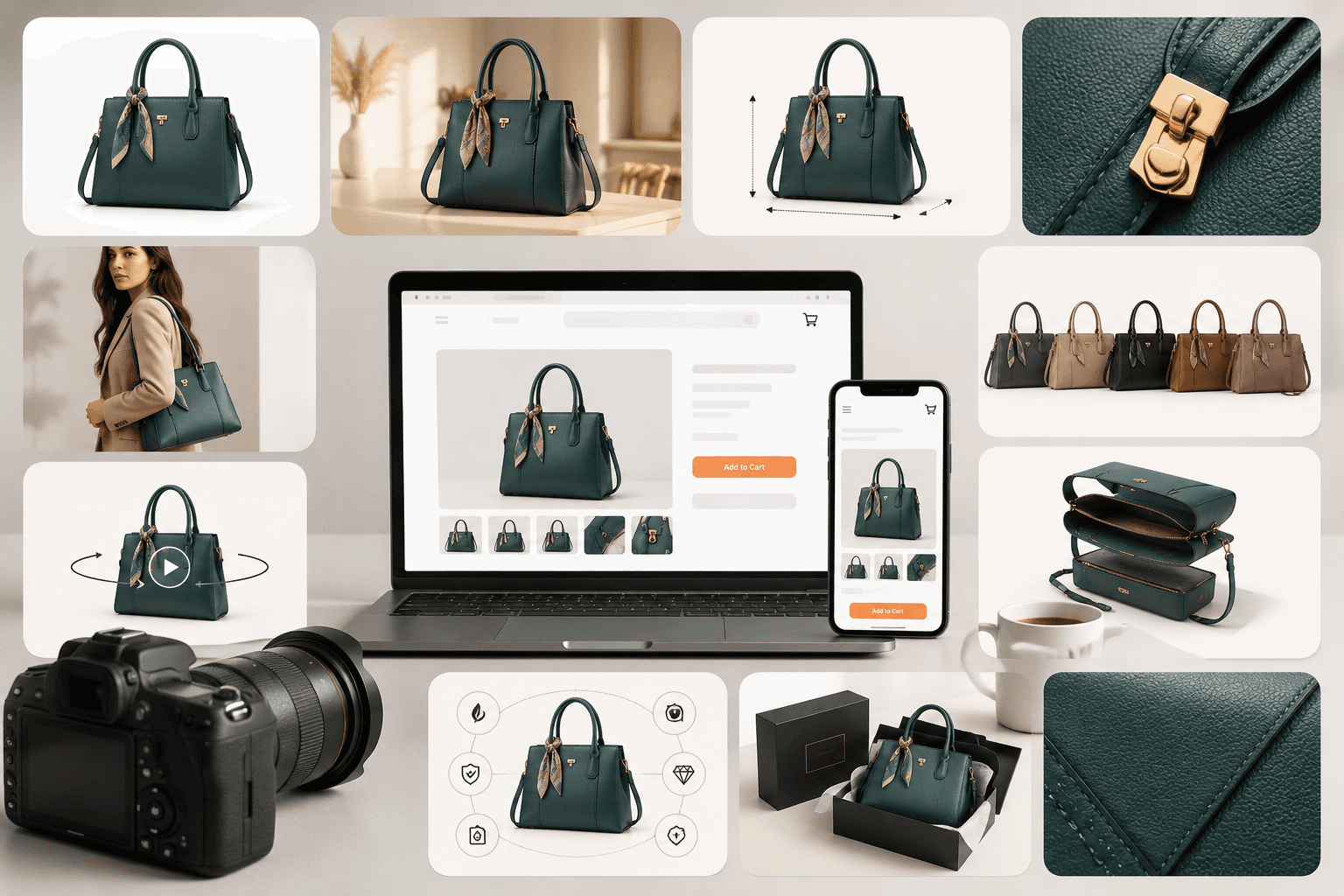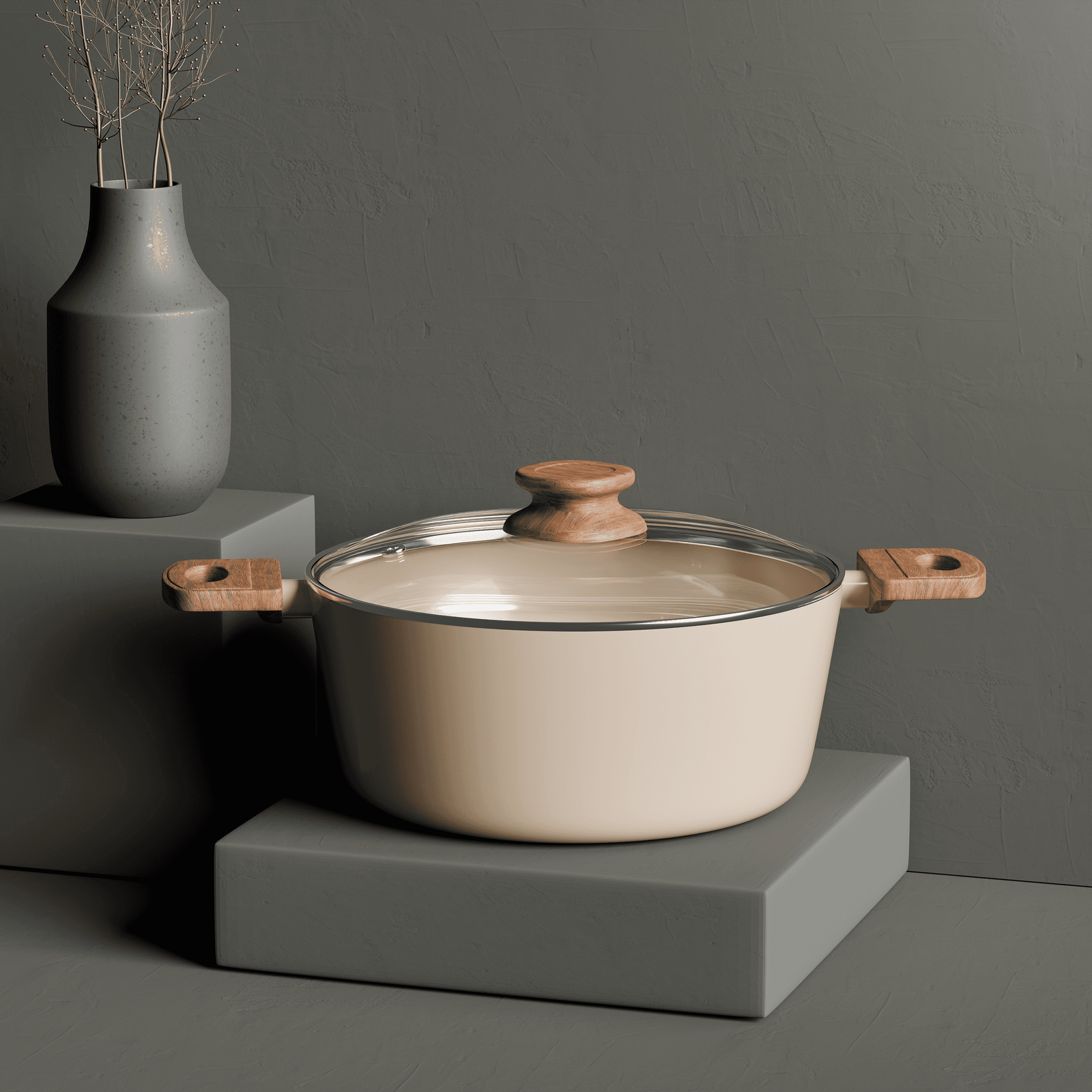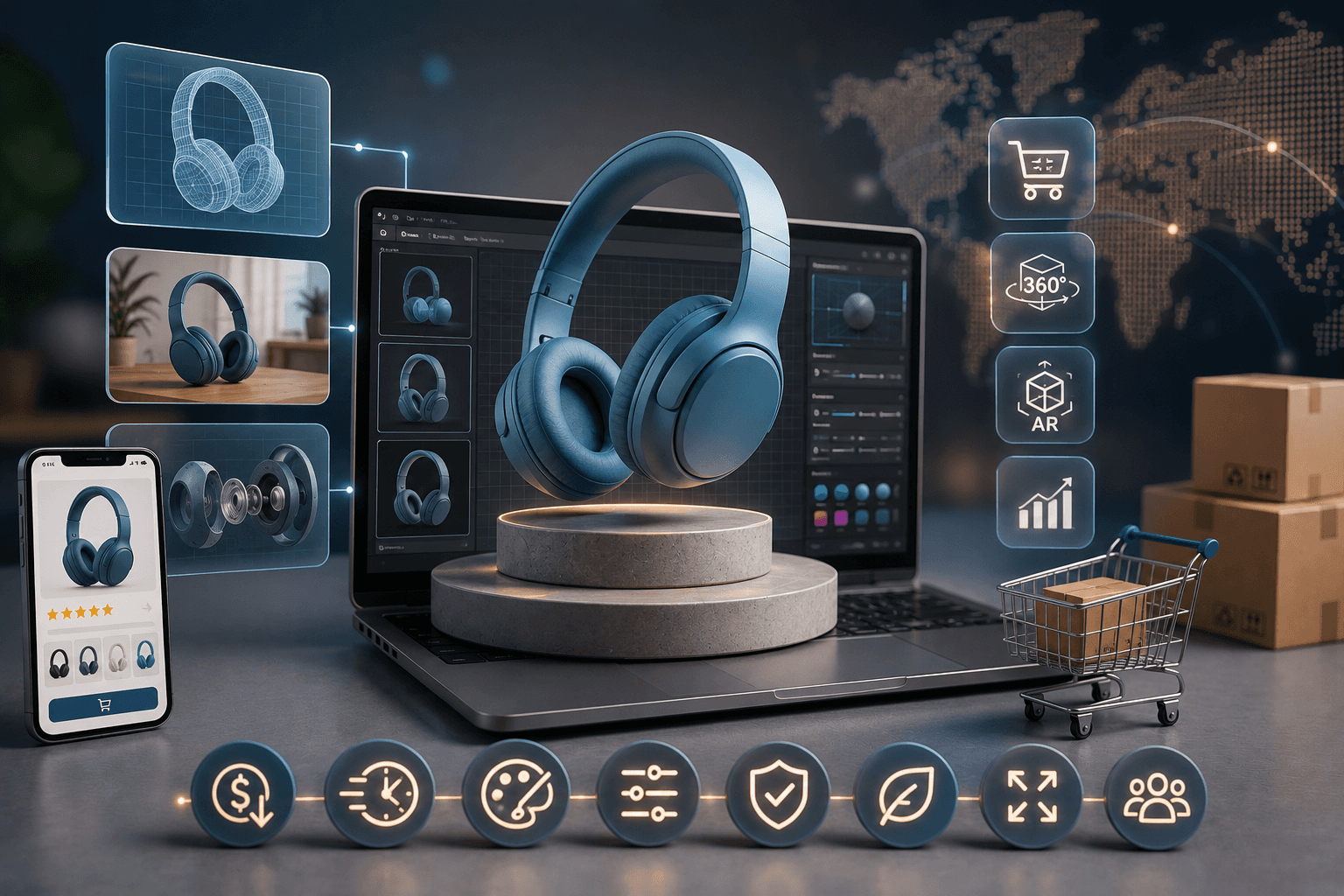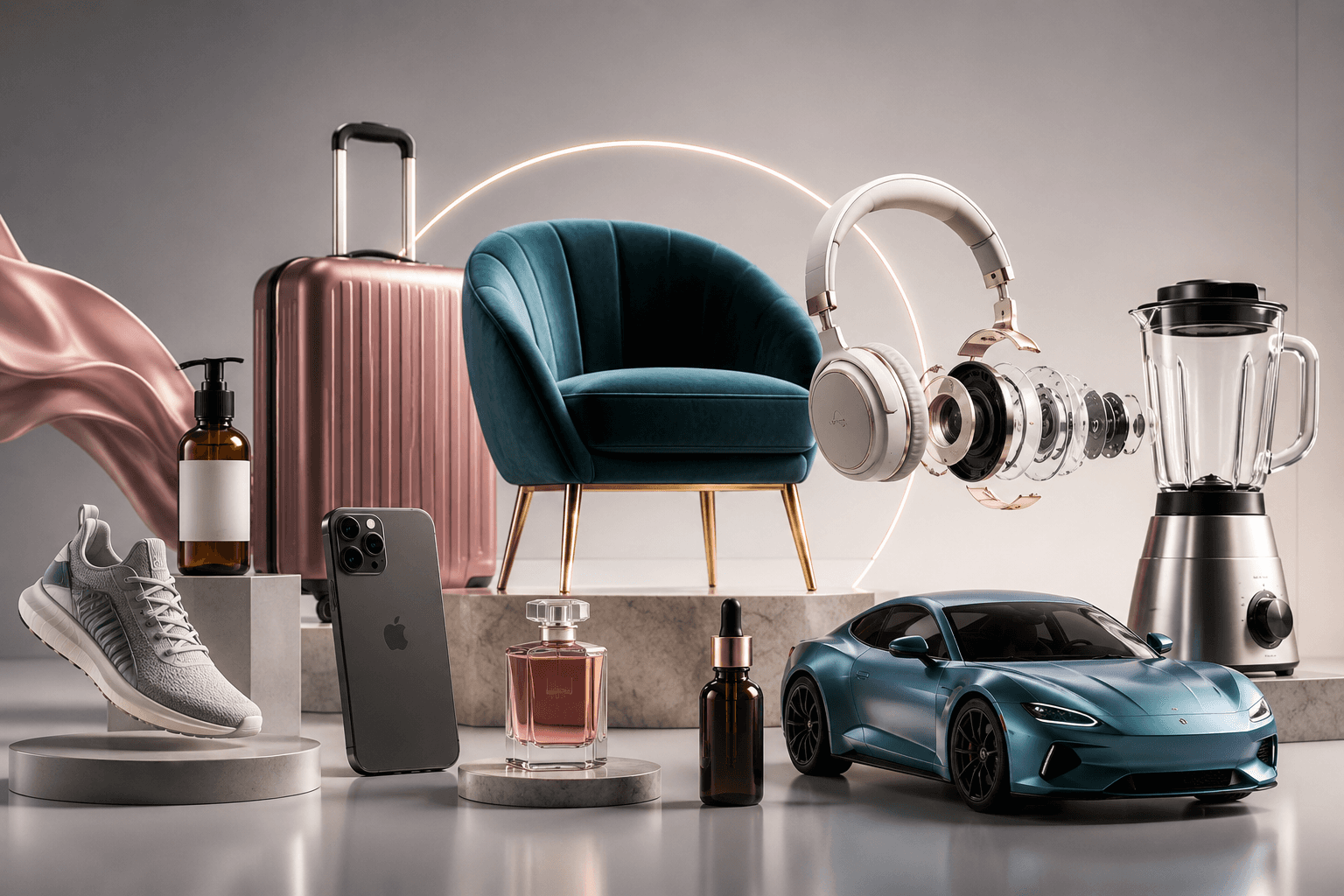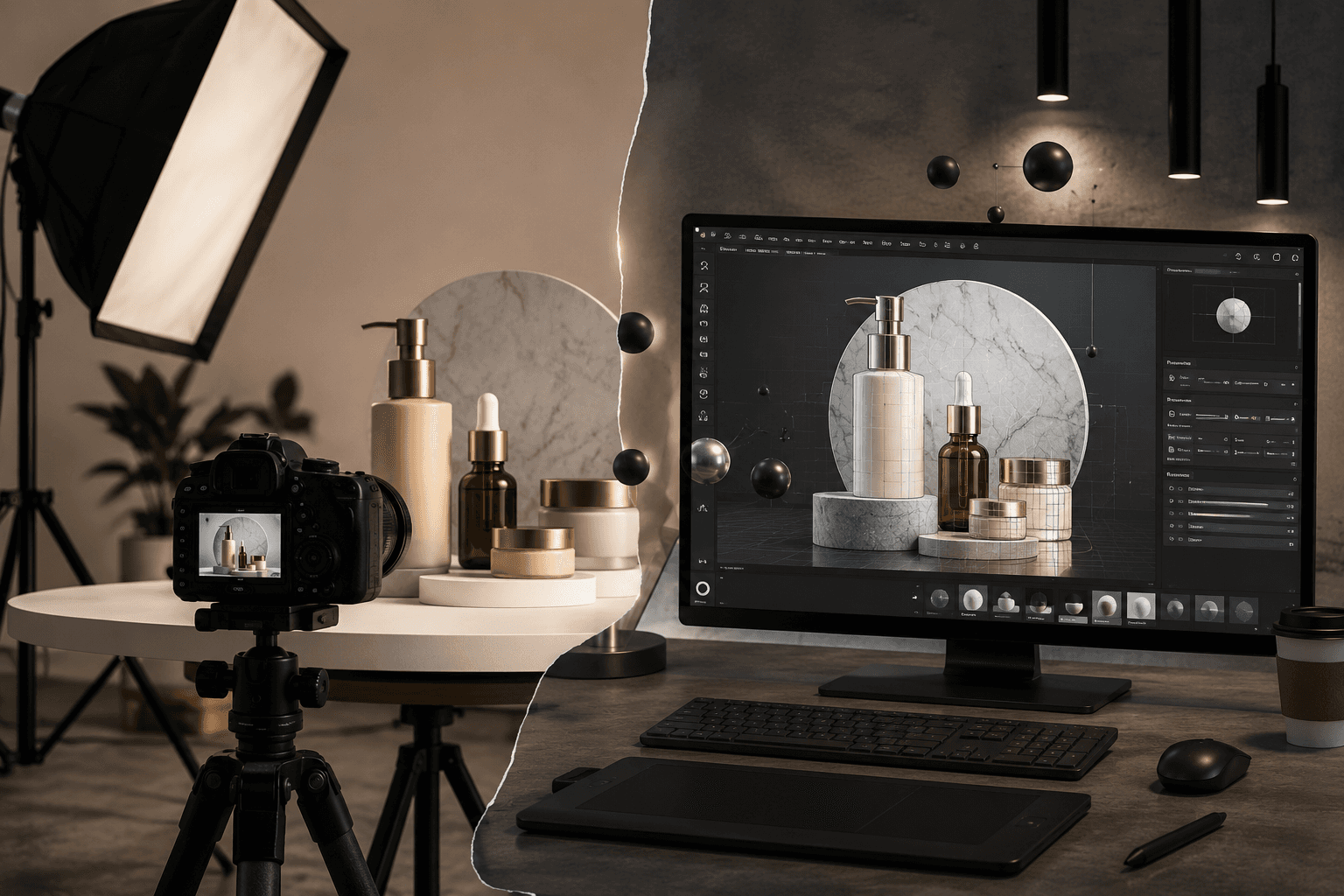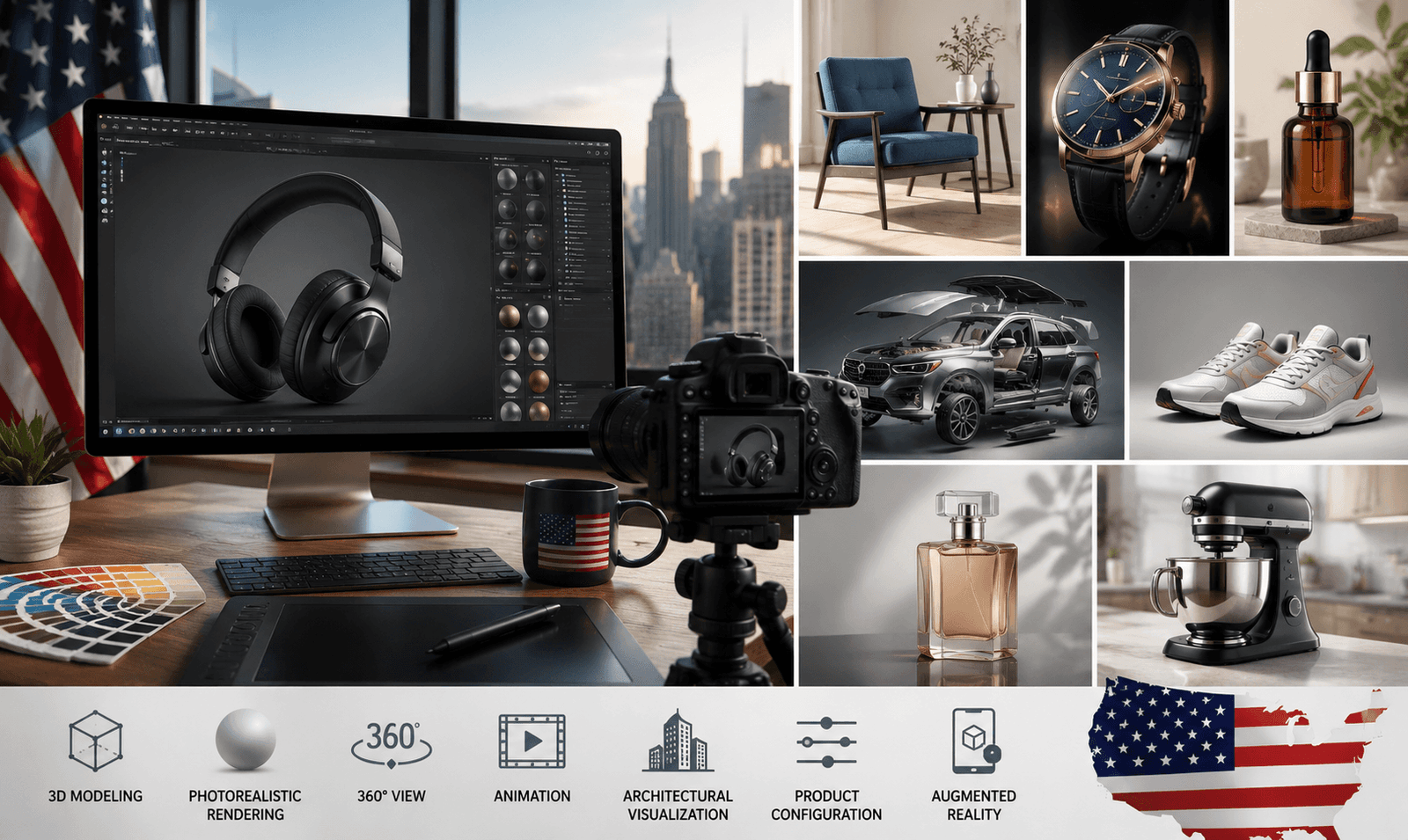
D2C brands are moving catalogues to 3D because the cost stops scaling with the number of images. A photoshoot is priced per day, per angle and per reshoot. A 3D model is built once and reused, so the second angle, the festival variant and the size chart all cost a fraction of the first render.
Where the money actually goes in a photoshoot
The camera is rarely the expensive part. The cost sits in coordination: booking a studio day, shipping samples that arrive late or damaged, a crew waiting while a stylist fixes a label, and the second shoot you book because the packaging changed after the first one.
A full brand film runs $50,000 or more by the time all of that is counted. Even a modest catalogue shoot carries the same shape of cost: you pay for the day, not for the images, so every extra angle competes for time you already paid for.
What changes when the product is modelled instead
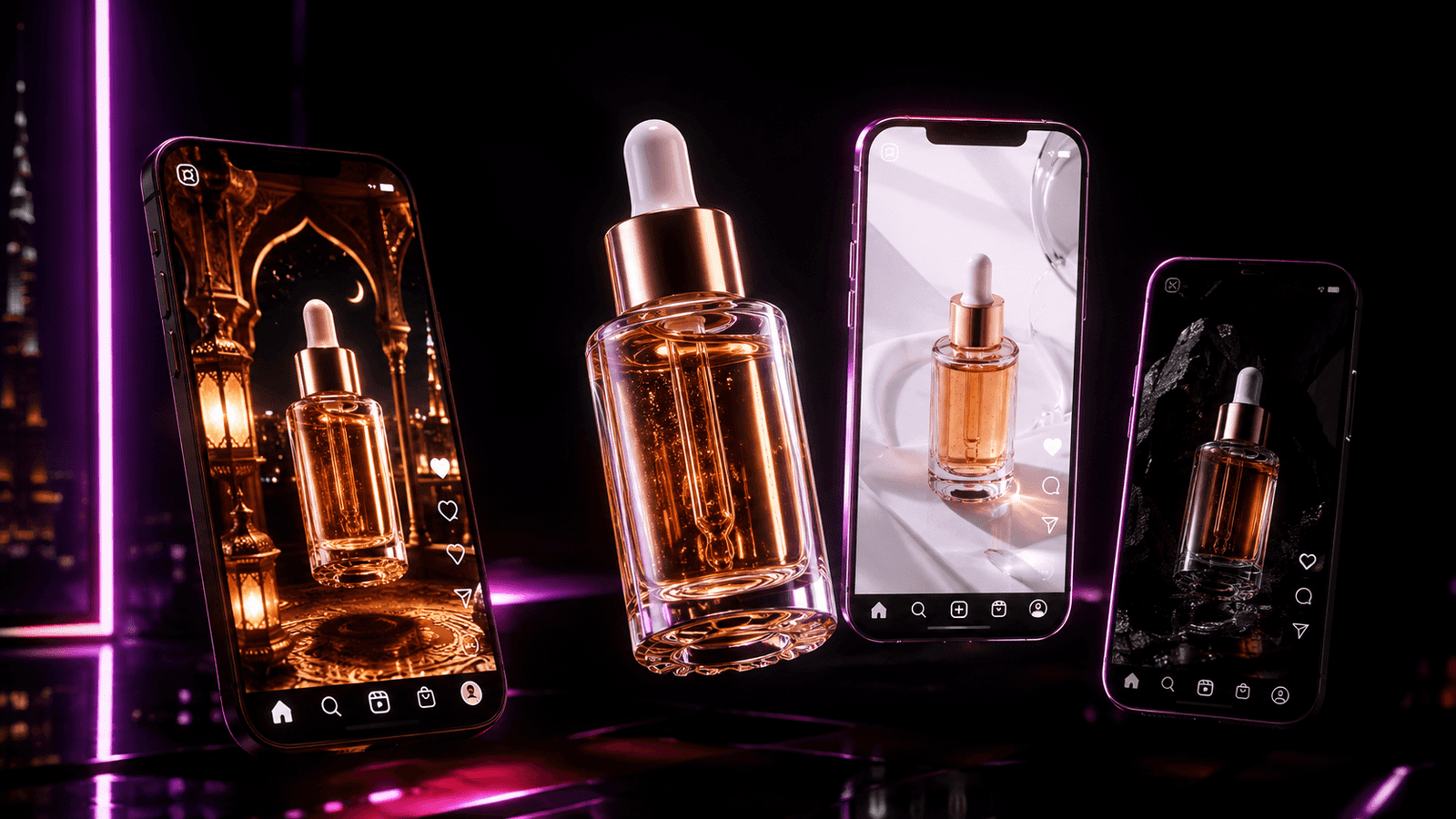
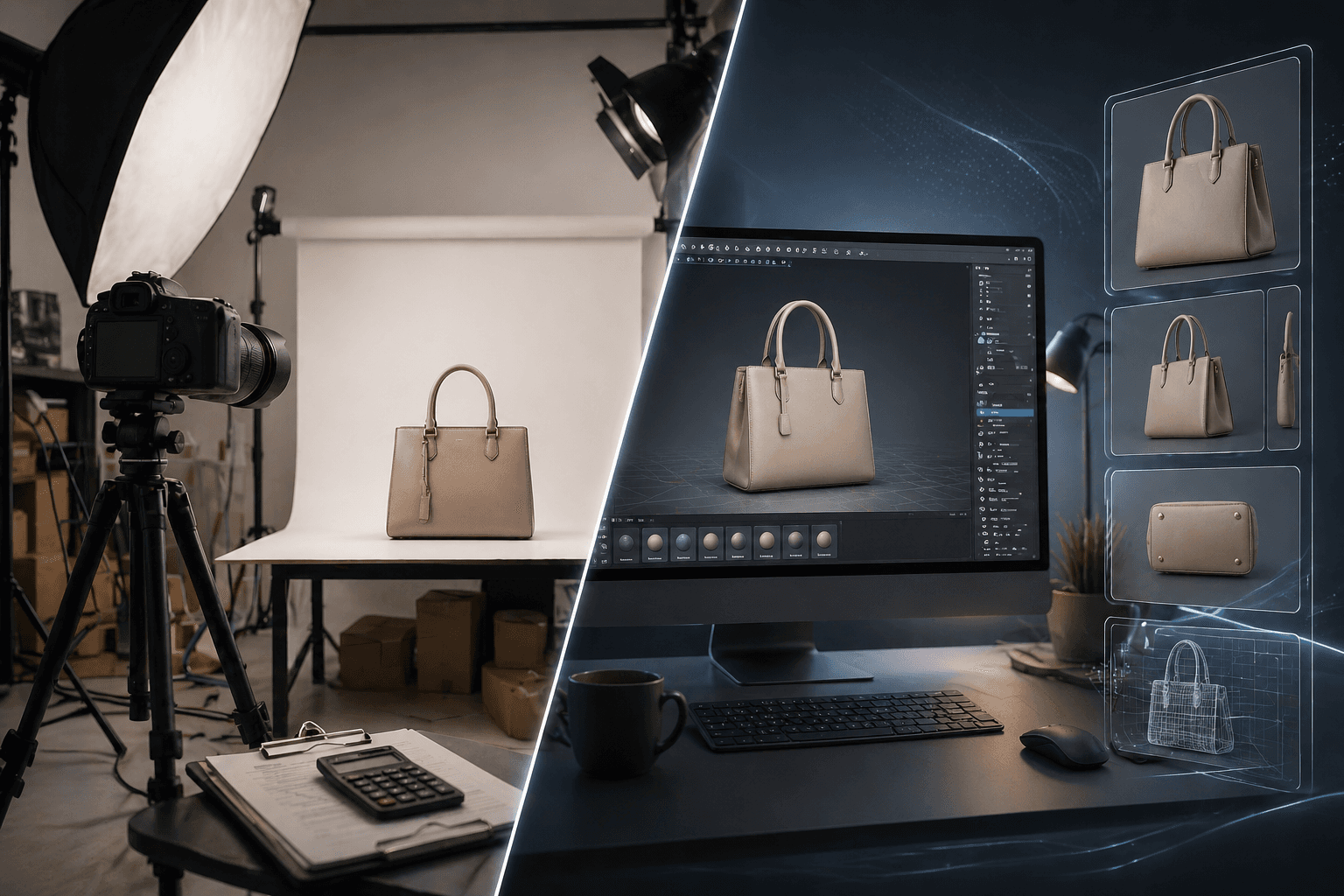
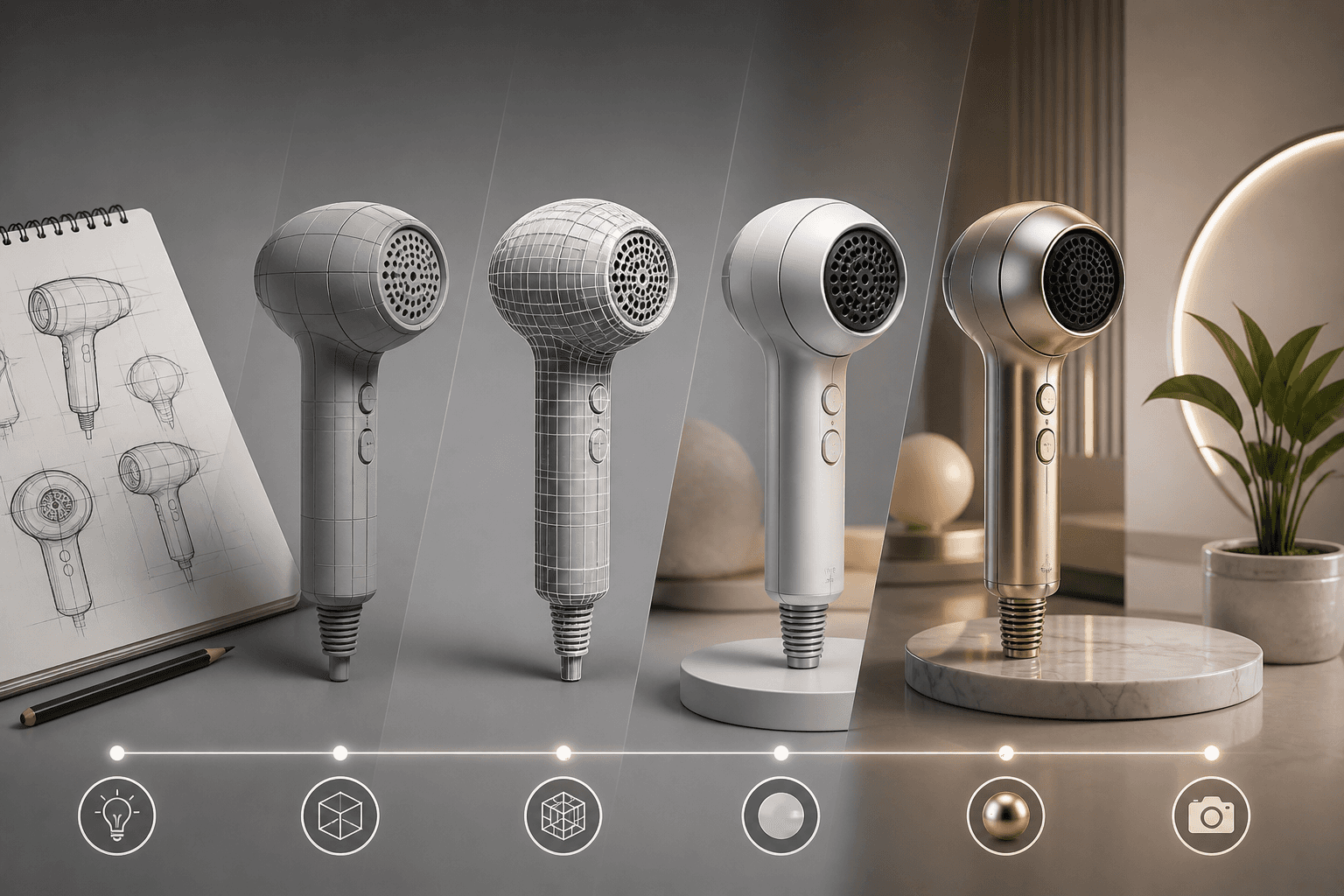
Once the product exists as an accurate 3D model, images stop being events and become outputs. The set is virtual, so a white background, a bathroom scene and a festival key visual are the same file with different lighting. Nothing has to be shipped, and nothing has to be rebuilt to try an idea.
- Any angle, including ones a camera cannot physically reach
- Any background or scene without building or booking one
- Colourways and variants before the factory produces them
- Exploded views and cutaways for products that come apart
This is why most brands we work with cut production cost by up to 70%. The saving does not come from a cheaper day rate. It comes from the day rate disappearing after the model exists.
The reshoot that never happens
The reshoot is the cost most teams forget to budget for. A label revision, a new SKU size or a market that needs different text usually means booking the studio again and hoping the light matches.
In a 3D pipeline that is a file change. The geometry stays, the lighting stays, and only the thing that changed gets updated. Work that would have been a second shoot becomes an afternoon.
Can you start before the product exists?
Yes, and this is where the switch pays off hardest. Drawings, a spec sheet or a CAD file are enough to model from, so launch creative can be finished while the first production run is still in a factory. Photography cannot start until a sample is in a room.
Where photography still wins
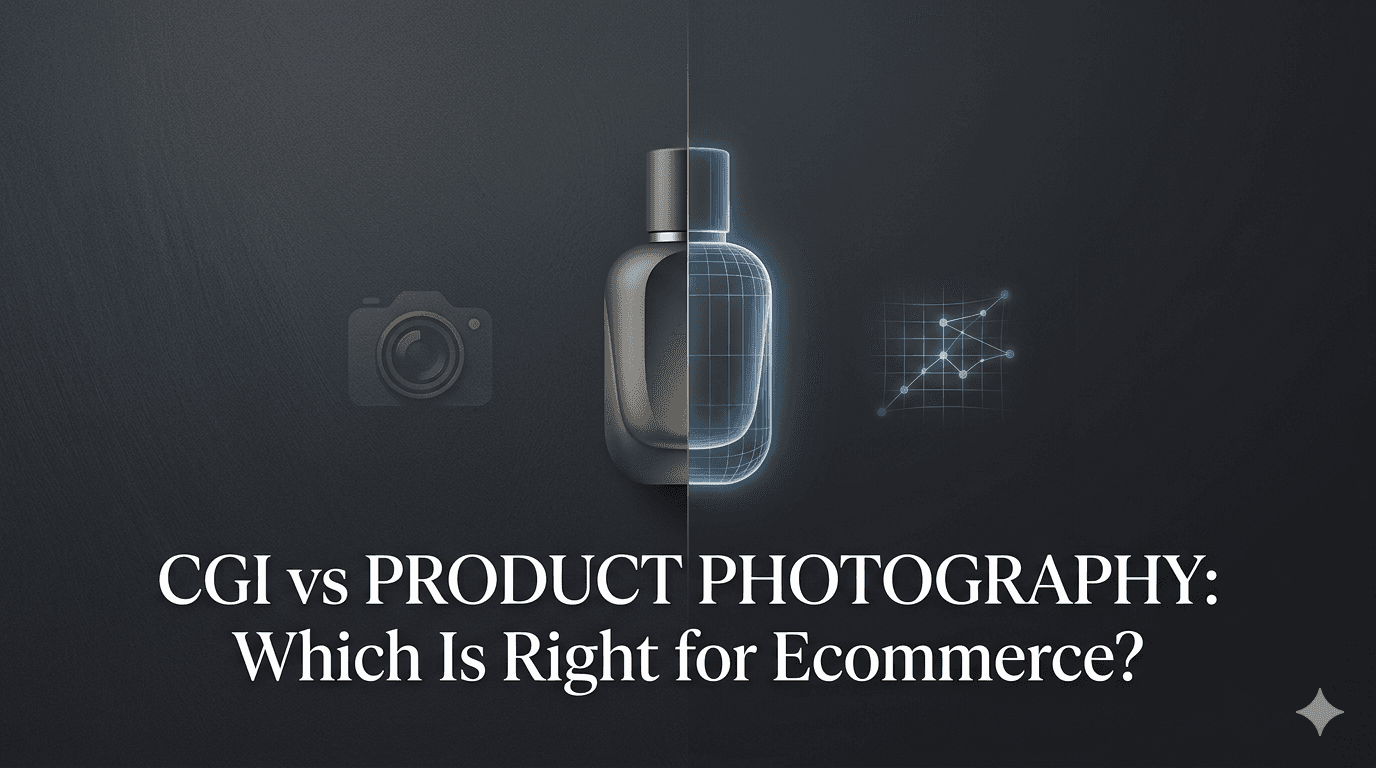
It is worth being straight about this. Photography is still the better tool for candid human moments, real environments with unrepeatable light, and one-off images where building an accurate model would cost more than the shoot itself.
If you need two images of a single product and will never need them again, book the shoot. The 3D case gets stronger with every additional angle, variant and market.
When it makes sense to switch
The maths tips once a product needs to appear in more than a handful of contexts, or once the same product will be shot again within a year. Catalogue ranges, seasonal campaigns, marketplace listings and anything with colourways are the clearest cases.
The output only holds up if the model is accurate, which is the part worth being careful about. A render built from a rough approximation of the product will look convincing until a customer zooms in on the logo. That is the difference between a 3D pipeline and a prompt.