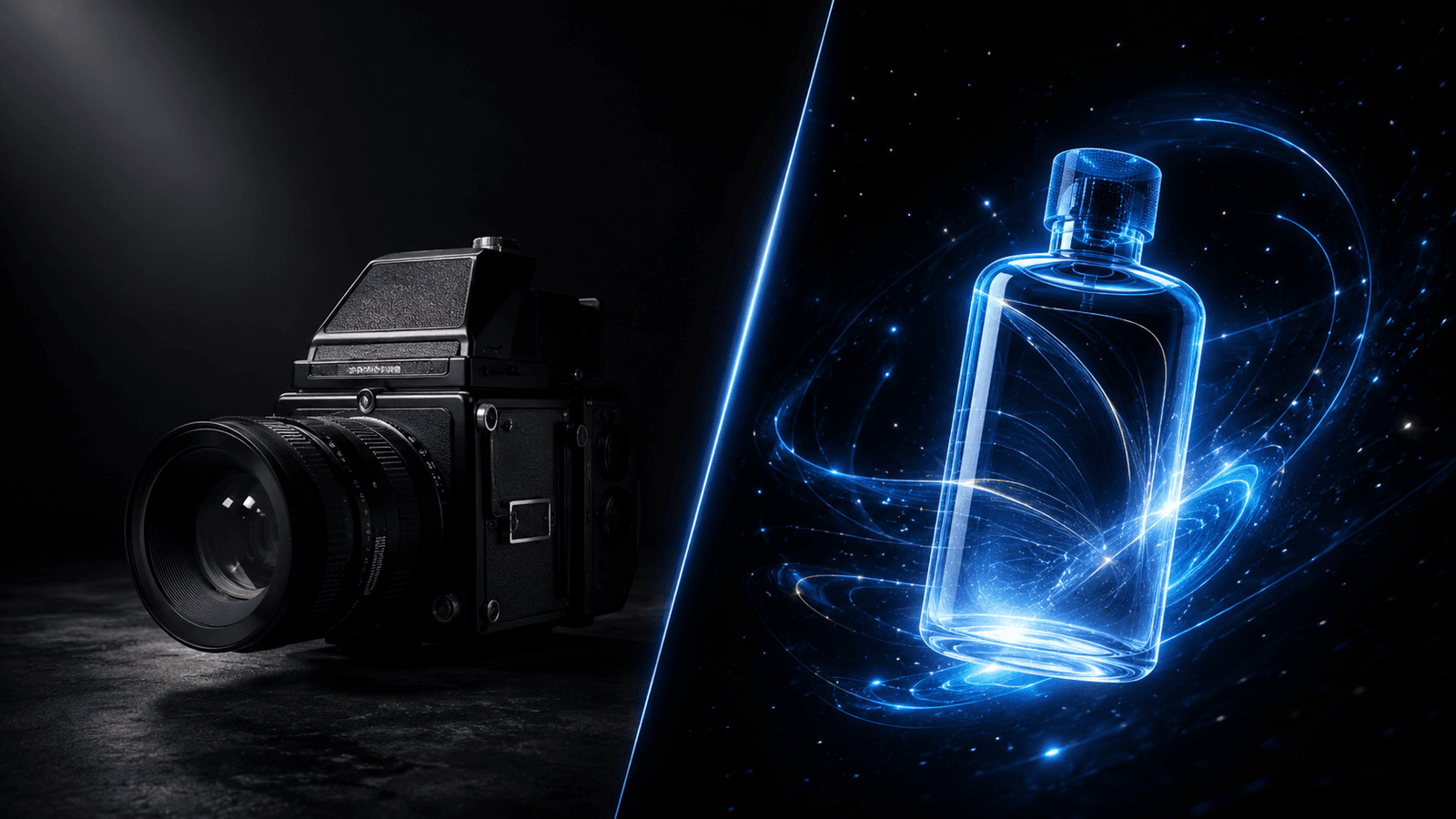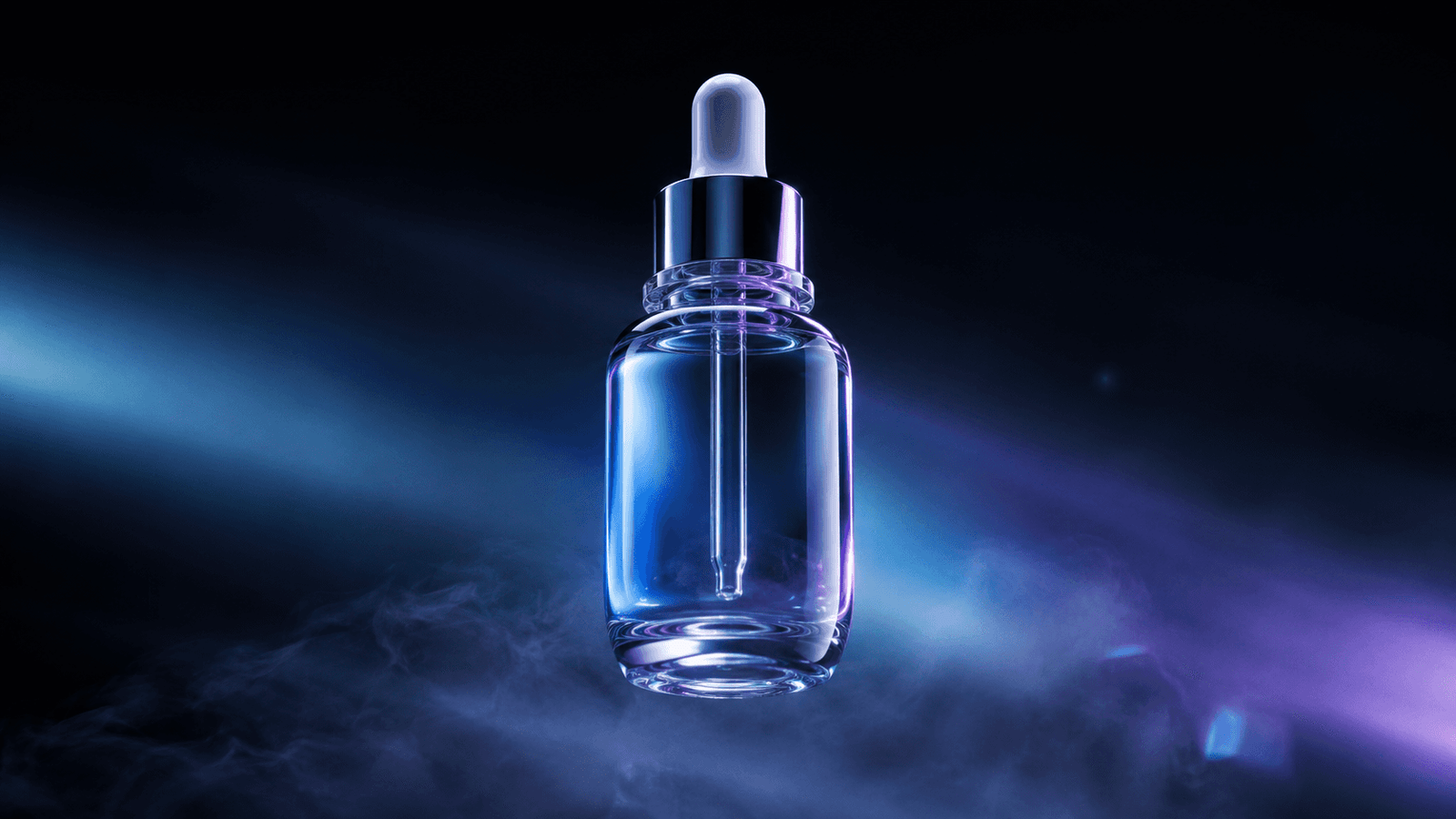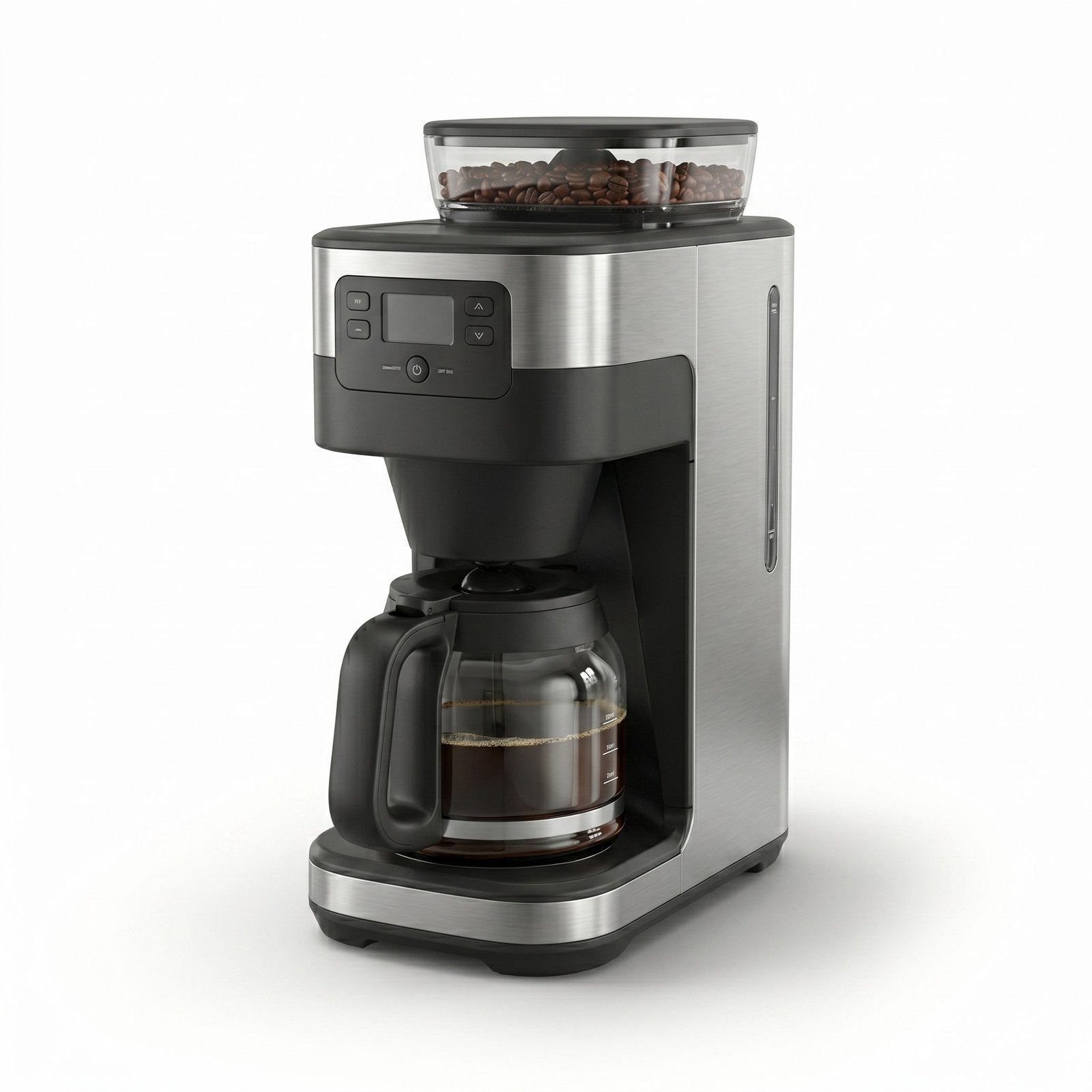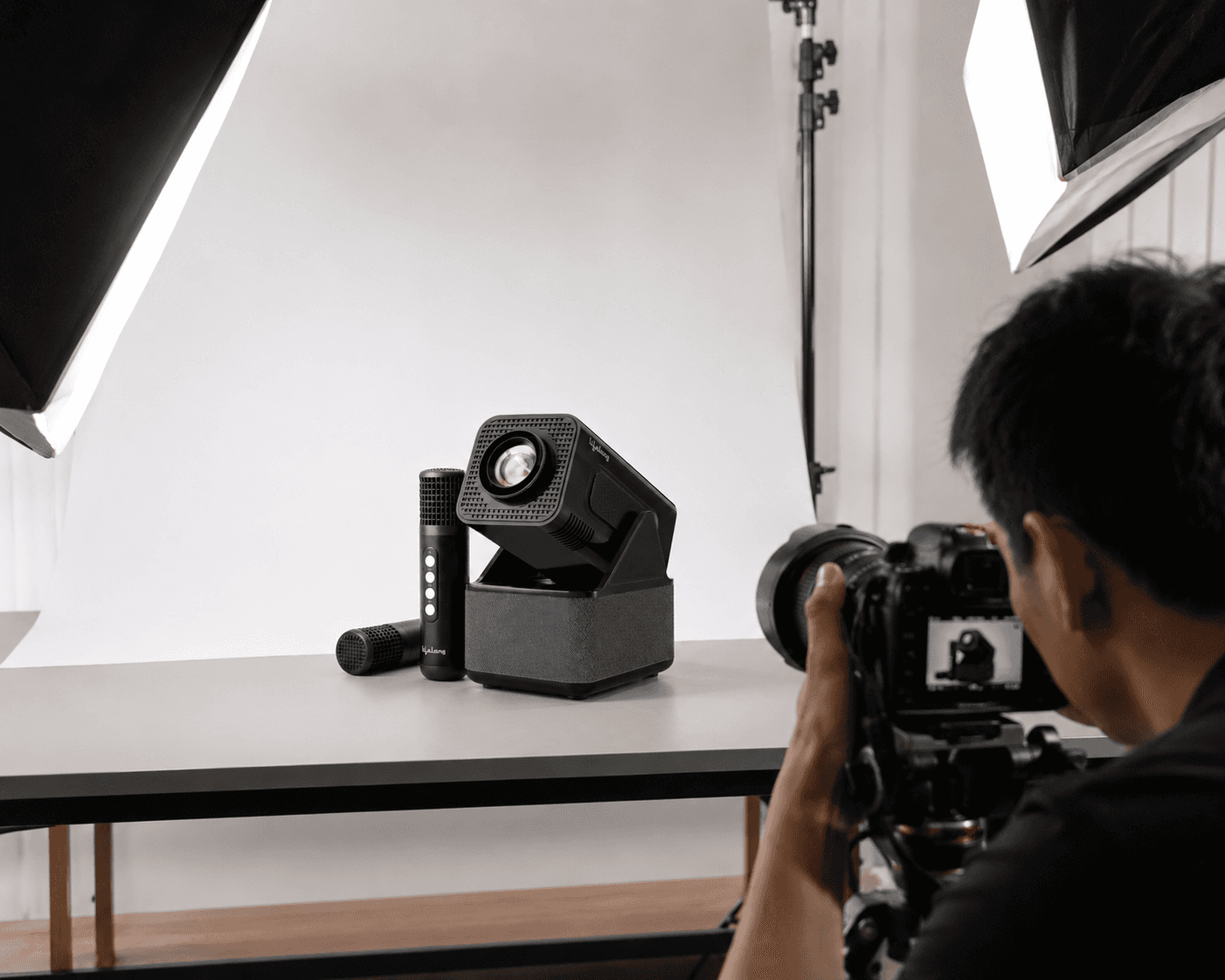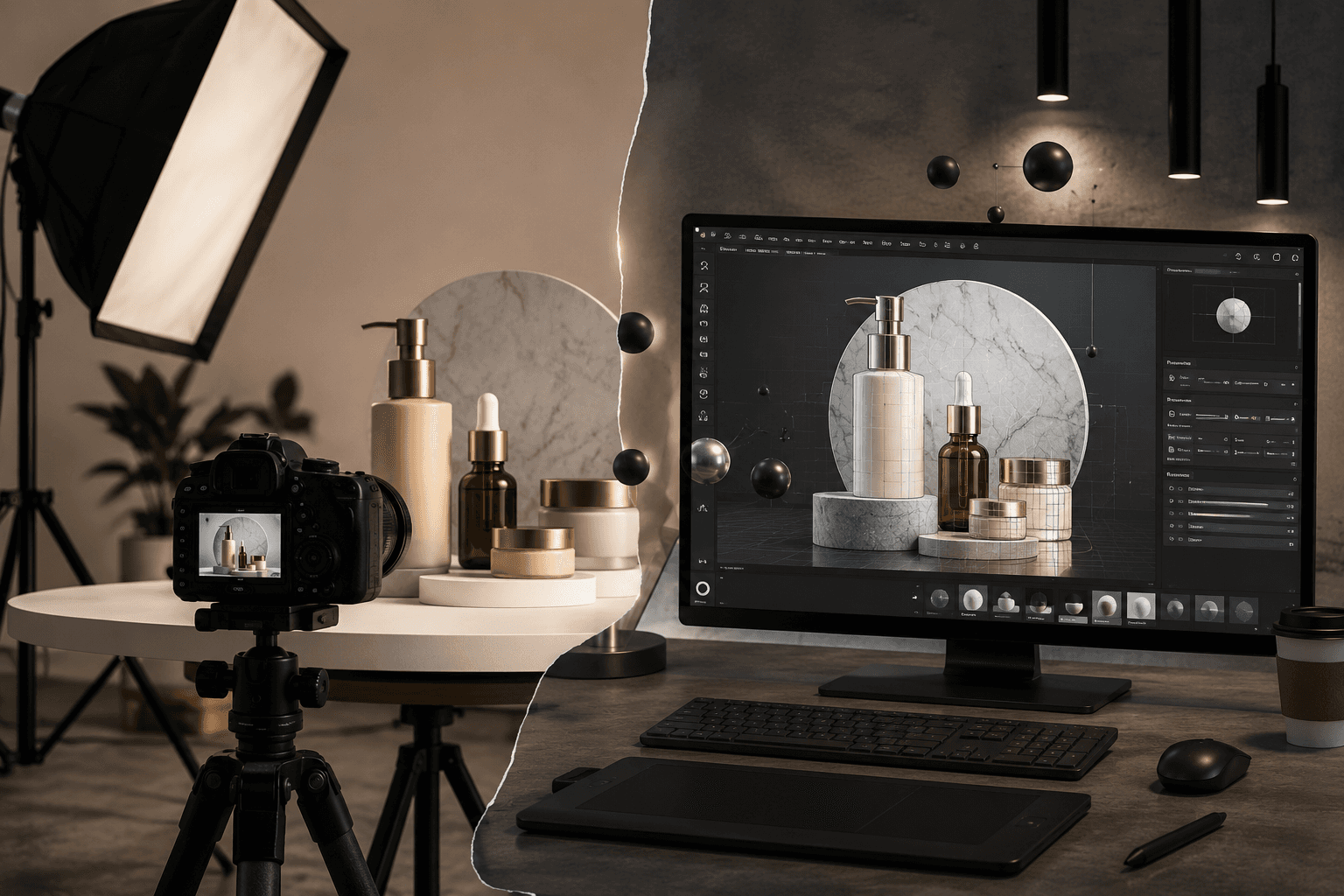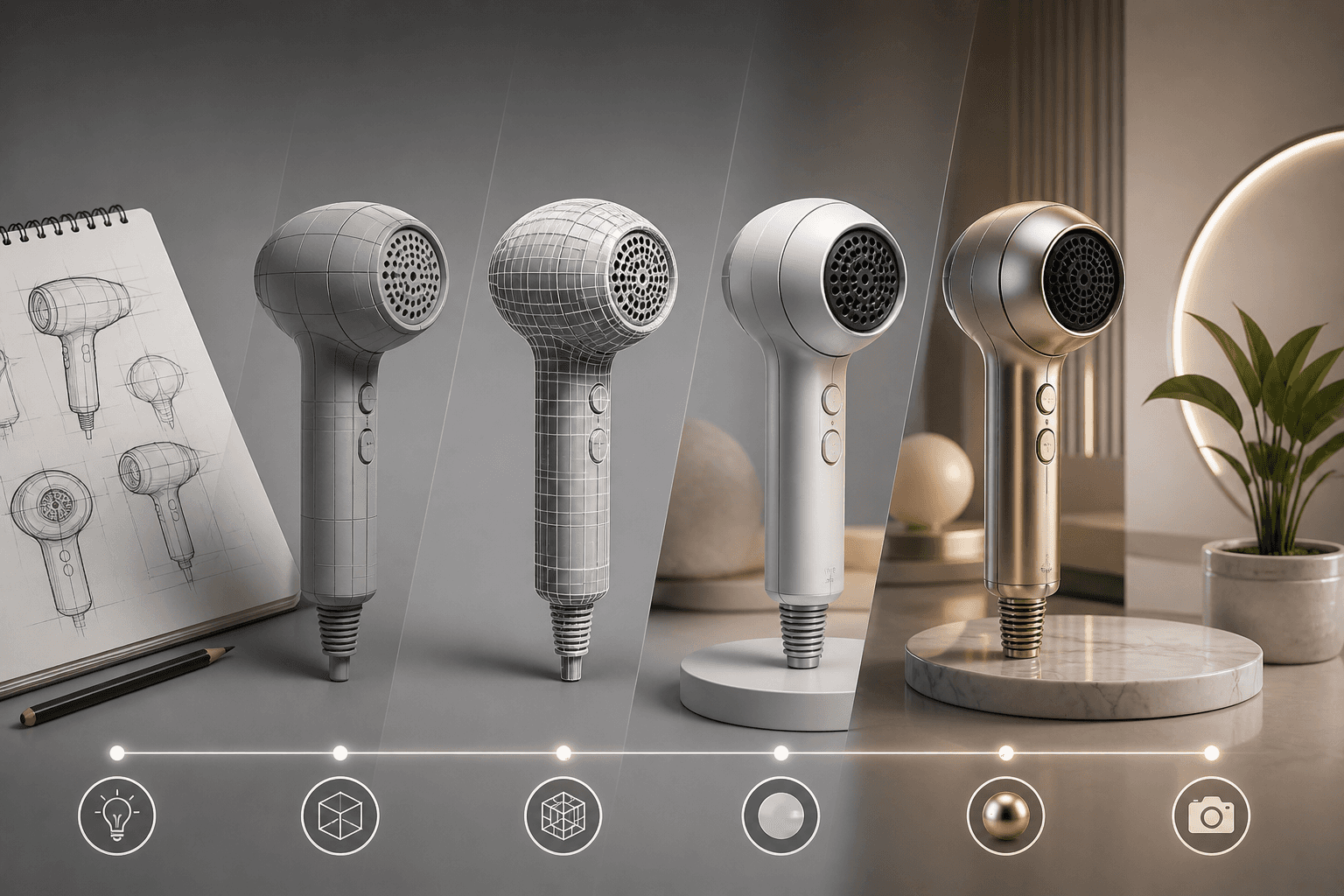

AI content production studios help e-commerce brands ship more product imagery faster and cheaper than a traditional pipeline, and the gap keeps widening as the catalogue grows. The first render is not the point. The tenth, hundredth and thousandth are, because that is where per-asset cost stops scaling with volume.
1. Faster production at every scale
Traditional photography takes 2 to 4 weeks between scheduling, shoot day and post. SMAPIT delivers a standard product image stack in 3 to 5 business days, and full Amazon packages that would take 8 weeks the old way arrive in 2 to 3 weeks. The compression matters most when a launch date has already been announced.
2. Lower cost per creative asset
AI production runs on reusable 3D foundations, so the second image of a product is not priced like the first. Brands with 10 to 20 SKUs see 40 to 50% cost reduction against photography. At 50 to 100 SKUs the saving grows to 60 to 70%. Above 100 SKUs it holds at 70% or more.
3. Unlimited creative variations without proportional cost
Once a product exists as a 3D asset, every additional angle, background, seasonal variant or platform crop is a render, not a reshoot. Per-asset cost keeps falling as the library grows, which is the opposite of how photography scales.
4. Photorealistic quality that stays consistent
Physically based rendering handles lighting and materials the same way whether the render is the first of the year or the thousandth. Nothing in the pipeline gets tired at 4pm, and no artist has to remember the setup from six months ago.
5. Ad creatives built to perform on paid platforms
Brands running AI-produced ad creative report lower cost per click, higher click-through, and better return on ad spend than their old photography-fed accounts. Some of the lift is quality. Most of it is volume: paid platforms need many variants to actually optimise, and this pipeline can supply them.
6. Consistent brand identity across every platform
Every render off the same master rig shares lighting, framing and colour handling. The Amazon listing, the D2C site, the Meta ad and the marketplace tile all read as one brand instead of four different studios' interpretations of it.
7. AI UGC ads that convert like real UGC
AI-generated UGC now matches or exceeds real user content on engagement and conversion in most reported ad tests, without the sourcing delay or the quality lottery. Casting a creator, shipping product, negotiating rights and waiting for a delivery date all disappear from the schedule.
8. Faster creative testing and iteration
Ten variations used to cost ten times a single production. In this pipeline the ratio collapses, which is what makes creative testing an actual habit instead of a quarterly project. Decisions stop being opinion calls and start being data ones.
9. Full-spectrum content from one studio
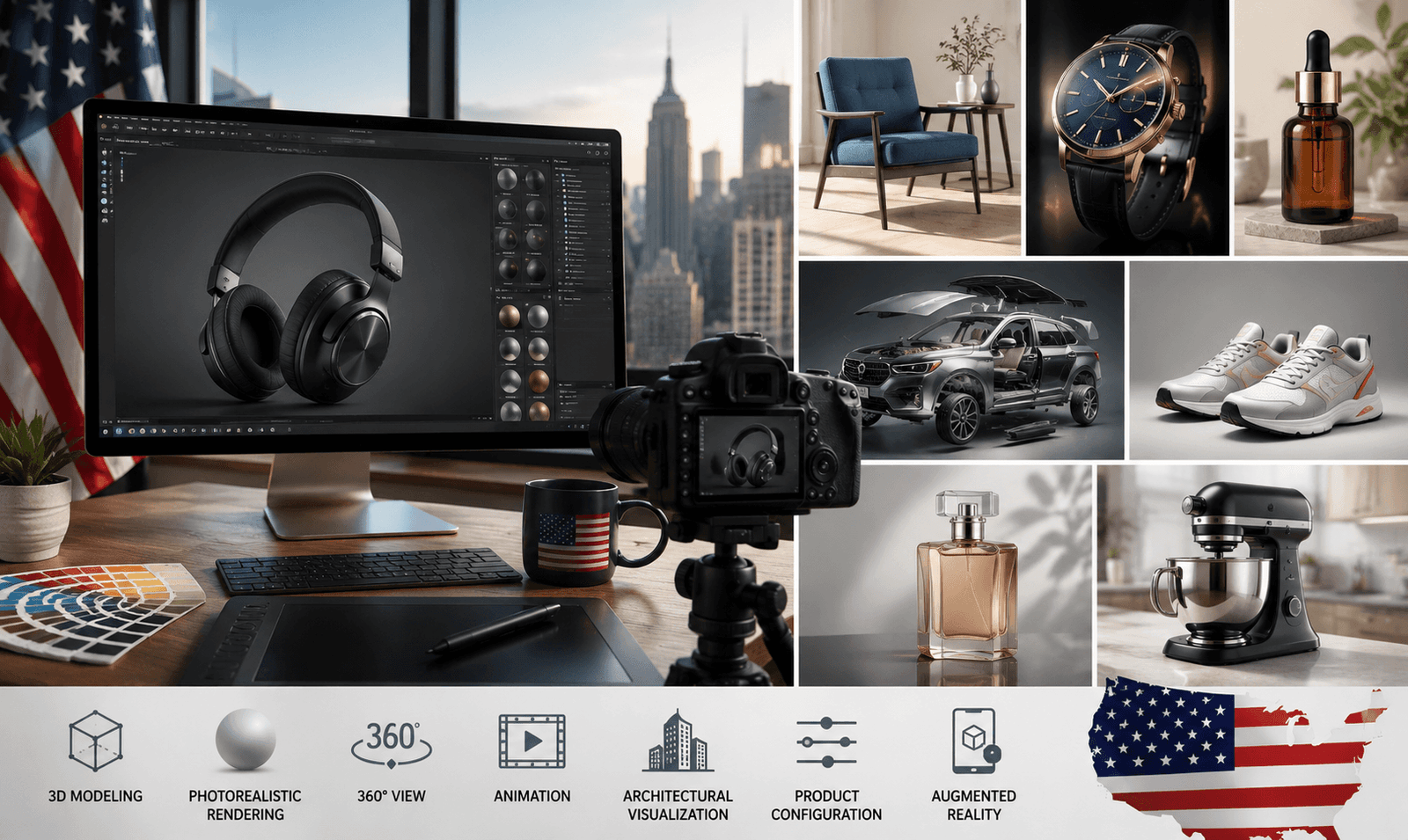
The same team produces listing images, lifestyle renders, A+ modules, infographic panels, 360-degree views, product animations, AI UGC ads, CGI ad creatives and AR-ready assets. That matters because none of these formats have to be rebuilt from scratch when the source model is shared.
10. A content infrastructure that keeps compounding
The 3D model library built along the way is the asset. Every future campaign, format and market draws from it, so cost per new asset falls further each year the brand keeps producing. That is the difference between an expense and an investment.
Where this stops being an obvious win
Two-product catalogues that will never need another image, or one-off editorial campaigns tied to a specific human moment, do not benefit from a reusable 3D asset. The case for AI production sharpens with catalogue depth, variant count and refresh frequency.